
Living in a small Massachusetts apartment can quickly make you feel boxed in as clutter piles up and floor space disappears. Research shows that women living in cluttered homes have elevated cortisol levels, a major stress hormone, compared to those with organized spaces. Now here is the part you might not expect. The fastest way to reclaim calm and sanity is not deep cleaning but building tiny daily habits that keep chaos from sneaking back in.
Table of Contents
- Why Decluttering Small Spaces Matters
- Room-by-Room Decluttering Strategies
- Decluttering Tips for Rentals and Businesses
- Keeping Small Spaces Clutter-Free Long Term
Quick Summary
| Takeaway | Explanation |
|---|---|
| Decluttering reduces stress and boosts focus | A cluttered environment can negatively affect cognitive performance and emotional well-being, impacting overall mental health. |
| Implement a systematic decluttering approach | Use the four-box method (discard, recycle, relocate, undecided) to make organized decisions about items. |
| Create sustainable organizational habits | Adopt practices like the “one in, one out” rule to maintain clutter-free spaces long-term. |
| Tailor decluttering methods to specific rooms | Different spaces require unique strategies; prioritize functionality and designate storage zones based on room type. |
| Schedule regular maintenance for organization | Commit to short, consistent decluttering sessions to prevent overwhelming buildups and keep spaces organized. |
Why Decluttering Small Spaces Matters
Small spaces can quickly become overwhelming when clutter accumulates, transforming your living environment from a sanctuary into a source of stress. Understanding the psychological and practical implications of decluttering is crucial for maintaining both mental well-being and functional living spaces.
The Mental Health Connection
The impact of a cluttered environment extends far beyond mere physical disorganization. Research from Princeton University reveals that our physical surroundings directly influence our cognitive performance and emotional state. When spaces are cluttered, our brain’s ability to focus and process information becomes significantly compromised.
In a remarkable study exploring the relationship between home environments and stress levels, researchers discovered that women who described their homes positively demonstrated lower cortisol levels compared to those who perceived their spaces as cluttered. This scientific evidence underscores a critical truth: our physical environment acts as a mirror reflecting our internal psychological landscape.
Practical Benefits of Decluttering
Beyond mental health, decluttering small spaces offers tangible advantages that enhance daily living. Removing unnecessary items increases mobility, reclaims valuable square footage, and creates opportunities for improved functionality. When you strategically organize your space, you’re not just cleaning – you’re redesigning how you interact with your environment.
Moreover, a well-organized space can indirectly boost social interactions. With clear, accessible areas, you’ll feel more confident inviting friends and family over, transforming your compact living area into a welcoming gathering spot. Learn more about creating organized spaces with our guide on storage solutions.
Decluttering is more than a cleaning task – it’s a deliberate strategy for improving quality of life. By understanding its profound psychological and practical benefits, you can transform small spaces from chaotic zones into efficient, peaceful sanctuaries that support your well-being and productivity.
To help you compare the psychological and practical benefits of decluttering, the table below summarizes key points mentioned above.
| Aspect | Description |
|---|---|
| Psychological Benefit | Reduces stress, lowers cortisol, and enhances cognitive focus |
| Emotional Impact | Improves mood and emotional well-being |
| Practical Advantage | Increases mobility, reclaims square footage, and enhances room functionality |
| Social Benefit | Boosts confidence to invite guests and improves the usability of shared areas |
| Lifestyle Improvement | Supports overall well-being and productivity |
Room-by-Room Decluttering Strategies
Tackling decluttering can feel overwhelming, but a systematic approach transforms chaos into order. By breaking down the process room by room, you can create manageable goals and achieve meaningful progress in your small living spaces.
Strategic Planning for Effective Decluttering
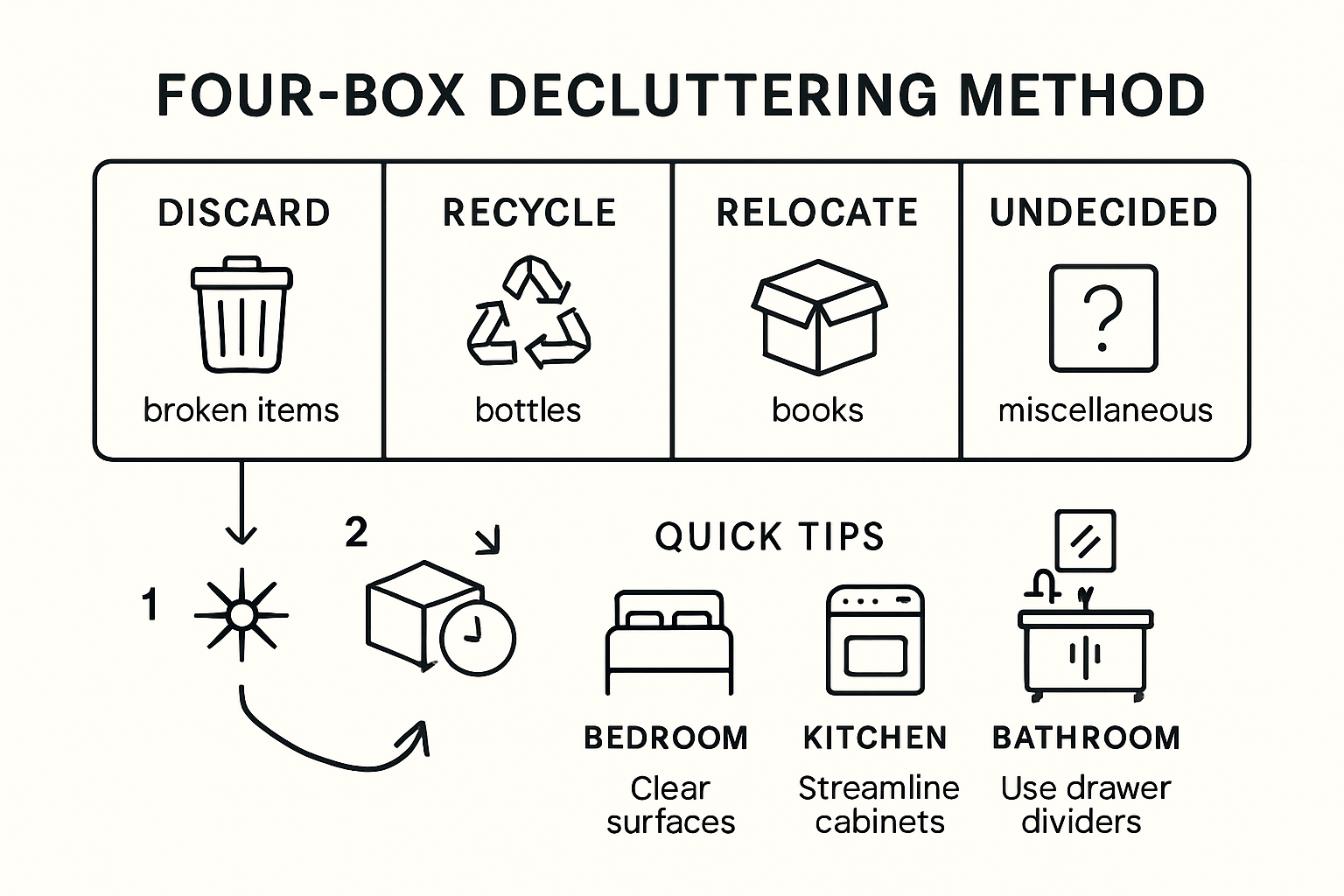
Research from the National University of Singapore’s Health Promotion Board recommends a four-step method that revolutionizes home organization. First, categorize your items systematically. Then, prepare four distinct boxes labeled discard, recycle, relocate, and undecided. This approach helps you make deliberate decisions about each item, preventing emotional attachment from derailing your progress.
The key is approaching decluttering in bite-sized tasks. According to AARP’s Smart Guide, focus on specific sections within each room rather than attempting to organize entire spaces at once. For instance, in a bedroom closet, start with shoes, then move to hanging clothes, and finally tackle drawers. This method prevents burnout and provides consistent motivation through small victories.
To clarify the recommended four-box decluttering method, the table below outlines its process and purpose.
| Box Label | Purpose |
|---|---|
| Discard | Get rid of broken or unwanted items |
| Recycle | Separate items that can be recycled or reused |
| Relocate | Move items to their proper place elsewhere |
| Undecided | Set aside items you are not sure about for now |
Room-Specific Decluttering Techniques
Different rooms require unique strategies. In living areas, prioritize functionality and visual appeal. Remove items that haven’t been used in the past year, create designated storage zones, and maintain clear surfaces. For bedrooms, implement a rotation system for clothing and accessories, keeping only seasonally appropriate items accessible.
Kitchens demand a ruthless approach to organization. Eliminate duplicate utensils, expired food items, and rarely used appliances. Learn more about smart storage solutions for your home that can help maximize your kitchen’s potential.
The most challenging spaces often involve sentimental items. Hennepin County’s decluttering guide suggests creating memory boxes for cherished mementos, allowing you to preserve memories without maintaining unnecessary physical clutter. For families with children, involve kids in the process by teaching them to rotate toys and books, creating valuable organizational skills.
Remember, decluttering is not a one-time event but an ongoing process. Schedule monthly review sessions to maintain your newly organized spaces, ensuring your home remains a peaceful, functional environment that supports your lifestyle.
Decluttering Tips for Rentals and Businesses
Decluttering in rental spaces and business environments presents unique challenges that require strategic approaches. Unlike personal homes, these spaces demand a balance between functionality, professional appearance, and efficient use of limited square footage.
Rental Space Organization Strategies
Rental properties often come with spatial constraints and specific limitations that make decluttering more complex. Tenants must navigate the delicate balance of maintaining a neat space while respecting property restrictions. The U.S. Environmental Protection Agency recommends implementing smart storage solutions that maximize vertical space and minimize unnecessary accumulation.
Start by conducting a comprehensive inventory of your belongings. For renters, this means critically evaluating items through the lens of potential moving requirements. Invest in multi-functional furniture with built-in storage capabilities – ottomans with interior compartments, bed frames with drawers, and wall-mounted shelving units that create storage without permanent modifications. These solutions allow you to optimize space while maintaining the flexibility required in rental environments.
Business Decluttering Approaches
Professional spaces require a systematic approach to organization that directly impacts productivity and professional image. Digital and physical decluttering become equally important. Create a robust filing system that minimizes paper accumulation, digitizing documents whenever possible. Implement a strict policy of regular purging unnecessary files, both digital and physical.
For small businesses and home offices, establish clear zones for different activities. Designate specific areas for equipment, reference materials, and active work projects. Check out our comprehensive guide on organizing workspace essentials to streamline your professional environment.
Consider the psychological impact of a well-organized workspace. Cluttered environments can significantly reduce employee productivity and create unnecessary stress. Develop monthly review processes where team members systematically evaluate and reorganize their immediate work areas. This approach not only maintains cleanliness but also promotes a culture of efficiency and mindfulness.
Special consideration must be given to shared spaces in rental and business environments. Common areas require collaborative maintenance strategies. Establish clear guidelines for shared storage, implement rotation systems for communal equipment, and create accountability mechanisms that encourage collective responsibility for maintaining an organized environment.
Whether you’re managing a small rental unit or a professional workspace, successful decluttering is about creating systems that work consistently. Regular assessment, strategic storage solutions, and a commitment to minimizing unnecessary accumulation will transform your space from chaotic to controlled. Remember that decluttering is an ongoing process – not a one-time event – requiring consistent attention and adaptive strategies.
Keeping Small Spaces Clutter-Free Long Term
Transitioning from an initial decluttering effort to maintaining a consistently organized space requires strategic planning and mindful habits. Long-term success is not about perfection but creating sustainable systems that integrate seamlessly into daily life.
Establishing Sustainable Organizational Habits
Research from Mental Health America emphasizes the importance of mindfulness in maintaining clutter-free environments. The key is developing daily practices that prevent accumulation and promote intentional living. Start by implementing a simple “one in, one out” rule where every new item that enters your space requires removing a similar item. This approach naturally limits unnecessary acquisitions and maintains a balanced living environment.
According to the University of Georgia Cooperative Extension, effective long-term decluttering begins with setting realistic boundaries and embracing the “container method.” This technique involves designating specific storage containers for different categories of items, ensuring that belongings have predetermined homes. When a container becomes full, it signals a need to reassess and potentially remove items before adding more.
The table below summarizes sustainable organizational habits mentioned in this section, helping you quickly review techniques for keeping small spaces orderly.
| Habit/Technique | Description |
|---|---|
| One In, One Out | For every new item brought in, remove a similar item to prevent accumulation |
| Container Method | Use dedicated containers for item categories; only keep what fits in each container |
| Setting Boundaries | Establish limits for categories or areas to control the quantity of possessions |
| Realistic Assessment | Regularly evaluate needs and remove items that no longer serve a purpose |
Creating Consistent Maintenance Routines
Developing a structured approach to space management prevents overwhelming buildup. Learn more about implementing smart cleaning strategies that can be adapted to various living situations. Schedule weekly 15-minute decluttering sessions where you quickly assess and reorganize high-traffic areas. These short, focused intervals prevent the accumulation of unnecessary items and maintain the organizational progress you’ve achieved.
Insights from Livingetc recommend breaking spaces into manageable categories and setting specific timers for focused organizing tasks. This approach transforms decluttering from an overwhelming chore into a structured, achievable activity. Consider implementing digital and physical inventory checks quarterly, systematically reviewing items and eliminating those that no longer serve a purpose.
Psychologically, maintaining a clutter-free environment is about creating systems that align with your lifestyle. Recognize that organizational needs evolve, and your strategies should be flexible. Regularly reassess your storage solutions, be willing to adjust your approach, and view decluttering as an ongoing process of mindful curation rather than a punitive exercise.
Remember that sustainable organization is a skill developed over time. Be patient with yourself, celebrate small victories, and understand that maintaining a clutter-free space is a continuous journey of intentional living and mindful consumption.

Frequently Asked Questions
What are some quick decluttering tips for small spaces?
To quickly declutter small spaces, start with the four-box method: discard, recycle, relocate, and undecided. Focus on specific areas and set a timer for short organizing sessions to keep the task manageable.
How can decluttering improve mental health?
Decluttering can lower cortisol levels and reduce stress, leading to improved cognitive focus and emotional well-being. A tidy space promotes a more peaceful environment conducive to relaxation and productivity.
What is the ‘one in, one out’ rule for decluttering?
The ‘one in, one out’ rule means that for every new item you bring into your home, you remove an existing item. This practice helps maintain a clutter-free space and prevents excessive accumulation of belongings.
How often should I declutter my small living space?
It’s recommended to declutter your small living space monthly. Set aside short sessions to reassess and organize items, ensuring that your home remains functional and peaceful.
Ready to Keep Clutter Out of Your Massachusetts Home?
Struggling to keep your small space tidy even after hours of decluttering? If you find that stress and stuff quickly return after your best efforts, you are not alone. The article shows how clutter builds up fast, especially in Massachusetts apartments, and even tiny lapses can pile up into major overwhelm. Daily routines, organizational systems, and eco-friendly choices are essential for lasting calm, but actually staying ahead of the mess can be tough in a busy life. If you are craving a truly fresh start, our House Cleaning services are designed to help.
Imagine coming home to a space that feels light, organized, and truly peaceful. Let E.C. House Cleaning step in with trusted techniques, safe products, and a passion for detail. Whether you want a deep reset or regular tidying in line with your decluttering goals, our team goes the extra mile for Massachusetts homes. Now is the time to reclaim your space and sanity. Take the next step and book a free consultation today at echousecleaning.com. Or, get even more practical strategies and inspiration from our Cleaning Tips hub.
Recommended
- Our Cleaning Blog | E.C. House Cleaning
- Powerful Guide to Storage Space: How to Organize Cleaning Supplies in 30 Days
- How to Keep a Clean House With a Busy Schedule’: To-Do List
- Powerful 5 Step-Guide: How to Pack Cleaning Supplies for Moving the Right Way
- 10 Space Saving Techniques for Stylish, Organized Homes 2025
– BLUSHBEES USA - Top Apartment Cleanout Tips for Easy Disposal 2025