Quick turnovers can pressure even the most experienced property manager, especially when juggling tenant satisfaction and eco-friendly standards in Massachusetts rentals. Making each unit truly move-in ready starts with a focused strategy that keeps cleaning efficient and effective. By combining a careful assessment, smart supply choices, and green practices, you can deliver a fresh space while meeting the expectations of both new tenants and local regulations. Thorough property condition assessments help identify cleaning needs for every rental turnover.
Table of Contents
- Step 1: Assess Property Condition And Gather Supplies
- Step 2: Remove Trash And Leftover Items Safely
- Step 3: Deep Clean All Surfaces And Fixtures
- Step 4: Sanitize Kitchens, Bathrooms, And Appliances
- Step 5: Inspect And Address Final Touches
Quick Summary
| Key Point | Explanation |
|---|---|
| 1. Conduct a thorough property assessment | Evaluate each room to identify specific cleaning needs and areas requiring extra attention before starting the cleaning process. |
| 2. Gather essential cleaning supplies | Create a detailed inventory of required supplies, including disinfectants and tools, tailored to the property’s condition. |
| 3. Systematically remove trash and belongings | Sort items into trash, recyclables, and tenant possessions, and follow legal guidelines for handling abandoned property. |
| 4. Implement deep cleaning techniques | Focus on high-touch surfaces and use proper cleaning strategies to ensure a germ-free environment for the next tenant. |
| 5. Conduct a thorough final inspection | Review the property meticulously for any missed spots or repairs needed, ensuring everything meets professional standards before tenant move-in. |
Step 1: Assess Property Condition and Gather Supplies
Successfully cleaning a rental property begins with a thorough and strategic assessment. Your goal in this first critical step is to understand the property’s specific cleaning requirements and collect all necessary supplies before diving into the actual cleaning process.
Start by conducting a comprehensive property condition walk-through survey. This means carefully examining each room and surface to identify specific cleaning needs, damage, or areas requiring extra attention. Look systematically through key areas:
- Floors: Check for stains, scuffs, or wear patterns
- Walls: Note marks, holes, or paint conditions
- Windows and doors: Inspect for dirt, grime, or hardware functionality
- Kitchen and bathroom: Evaluate appliance, fixture, and surface conditions
As you assess the property, create a detailed inventory of cleaning supplies needed. Your toolkit should include:
- Multi-surface cleaning solutions
- Disinfectant sprays
- Microfiber cloths
- Scrub brushes
- Protective gloves
- Trash bags
- Vacuum cleaner or broom
- Mop and bucket
Professional property managers understand that a meticulous initial assessment prevents missed cleaning spots and ensures a seamless rental turnover.
Synchronize your cleaning supplies with the specific conditions you’ve identified during your property inspection. Some areas might require specialized cleaners or extra tools based on surface materials or existing wear.
Here’s how cleaning supply choices impact key outcomes:
| Cleaning Supply Type | Impact on Cleaning Efficiency | Helps Prevent Cross-Contamination | Supports Regulatory Compliance |
|---|---|---|---|
| Multi-surface solutions | Saves time, reduces effort | Limited, depends on cloth usage | Often meets local standards |
| Microfiber cloths | Speeds up surface cleaning | Highly effective with color codes | Widely recommended |
| Disinfectant sprays | Ensures thorough germ removal | Moderate, area dependent | Usually EPA-approved |
| Protective gloves | Protects user, improves safety | No direct effect | Required in some situations |
Pro tip: Take digital photos of the property’s condition before cleaning to document your starting point and protect yourself from potential tenant disputes.
Step 2: Remove Trash and Leftover Items Safely
Effective rental property turnover requires a systematic and thorough approach to removing trash and abandoned items. Your primary objective is to completely clear the space while respecting legal guidelines and potential tenant property rights.
Begin by establishing a clear process for trash disposal fees and responsibilities. Carefully sort through the property and categorize items into distinct groups:
- Trash: Disposable items that can be immediately discarded
- Recyclables: Materials that can be recycled
- Tenant belongings: Items that might belong to the previous tenant
- Abandoned property: Objects left behind that require specific handling
When dealing with abandoned items, follow these critical steps:
- Document everything with photographs
- Check local regulations about abandoned property
- Send official written notification to the previous tenant
- Establish a reasonable waiting period before disposal
- Keep detailed records of all communication and actions
Careful documentation protects landlords from potential legal complications during property turnovers.
Prioritize complete removal of all trash and unwanted materials to prepare the space for deep cleaning. This includes checking hidden areas like cabinets, closets, and storage spaces to ensure no debris remains.
Pro tip: Create a standardized checklist for trash removal to ensure consistent and thorough processing across all rental property turnovers.
Step 3: Deep Clean All Surfaces and Fixtures
Deep cleaning rental properties goes beyond surface-level tidying. Your mission is to transform the space into a pristine, germ-free environment that looks and feels completely renewed for the next tenant.
Start by understanding the crucial process of cleaning and disinfecting surfaces. This means meticulously working through each area with a systematic approach that ensures thorough sanitization:
- High-touch surfaces: Door handles, light switches, countertops
- Kitchen areas: Appliance exteriors, cabinet handles, refrigerator seals
- Bathroom fixtures: Toilet seats, sink faucets, shower handles
- Flooring: Baseboards, corners, edges where dirt accumulates
Follow these essential deep cleaning steps:
- Remove visible dirt and debris
- Apply appropriate cleaning solution
- Scrub surfaces thoroughly
- Rinse with clean water
- Dry and disinfect using EPA-approved products
Professional cleaners know that thorough cleaning requires both physical removal of dirt and strategic disinfection.
Pay special attention to frequently overlooked areas like air vents, window tracks, and behind appliances. Each surface requires specific cleaning techniques based on its material and condition.
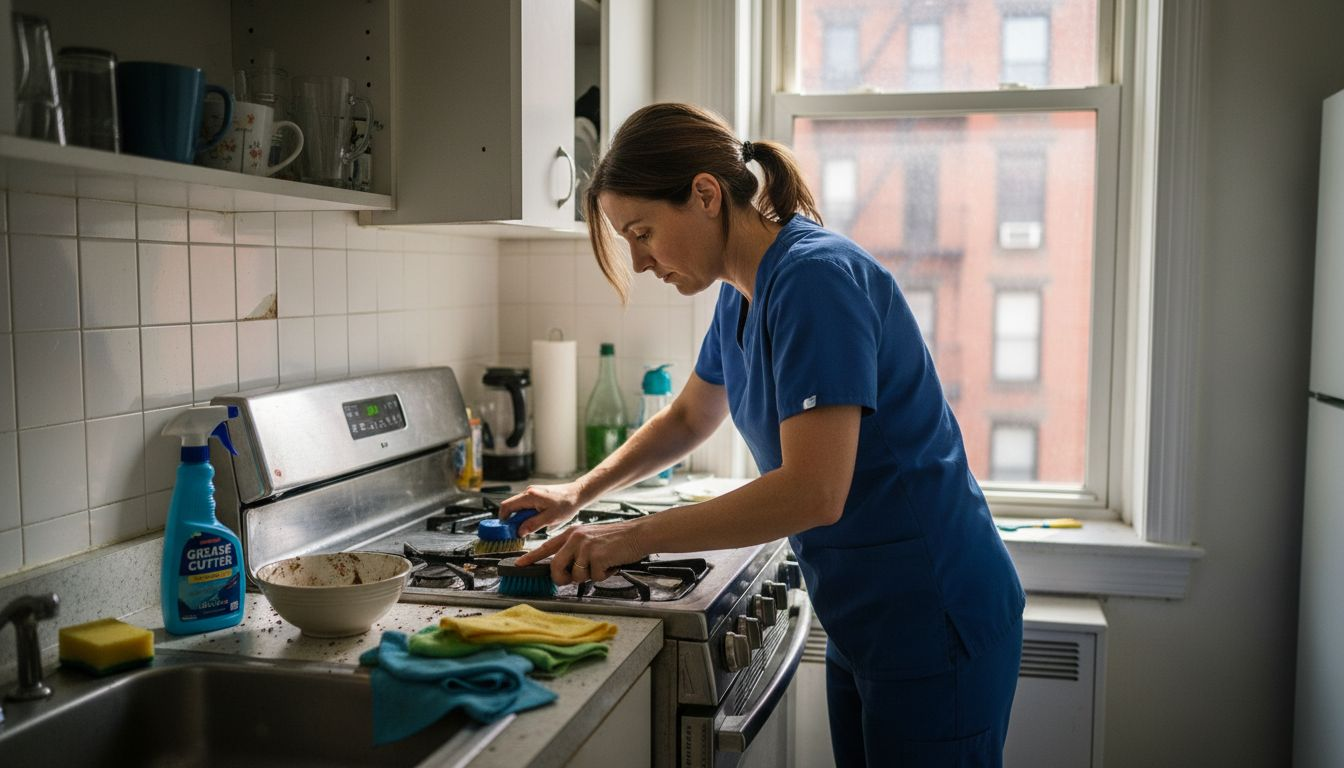
Pro tip: Invest in microfiber cloths and color-code them for different areas to prevent cross-contamination and maximize cleaning efficiency.
Step 4: Sanitize Kitchens, Bathrooms, and Appliances
Maintaining a hygienic rental property requires meticulous sanitization of critical areas that harbor the most bacteria and potential health risks. Your goal is to transform these spaces into spotless, germ-free environments that meet the highest cleanliness standards.
Begin by creating an effective kitchen sanitizing strategy. This comprehensive approach involves thorough cleaning and strategic disinfection of all surfaces:
- Kitchen surfaces: Countertops, cutting boards, sink areas
- Appliance exteriors: Refrigerator handles, oven doors, microwave surfaces
- Bathroom fixtures: Toilet seats, sink areas, shower handles
- High-touch zones: Light switches, doorknobs, cabinet handles
Follow these precise sanitization steps:
- Remove all loose debris and visible dirt
- Clean surfaces with hot, soapy water
- Rinse thoroughly with clean water
- Apply EPA-registered disinfectant
- Allow proper contact time for maximum germ elimination
- Wipe dry with clean microfiber cloth
Professional cleaning requires more than surface cleaning – it demands strategic sanitization that eliminates potential health risks.
Pay extra attention to appliance manufacturers’ specific cleaning recommendations. Different surfaces and materials require tailored cleaning approaches to maintain both hygiene and equipment integrity.
Pro tip: Invest in color-coded microfiber cloths to prevent cross-contamination between different areas and surfaces during your sanitization process.
Step 5: Inspect and Address Final Touches
The final stage of rental property turnover is a critical quality assurance process that ensures every detail meets professional standards. Your objective is to conduct a comprehensive inspection that validates the cleaning and prepares the property for new tenants.
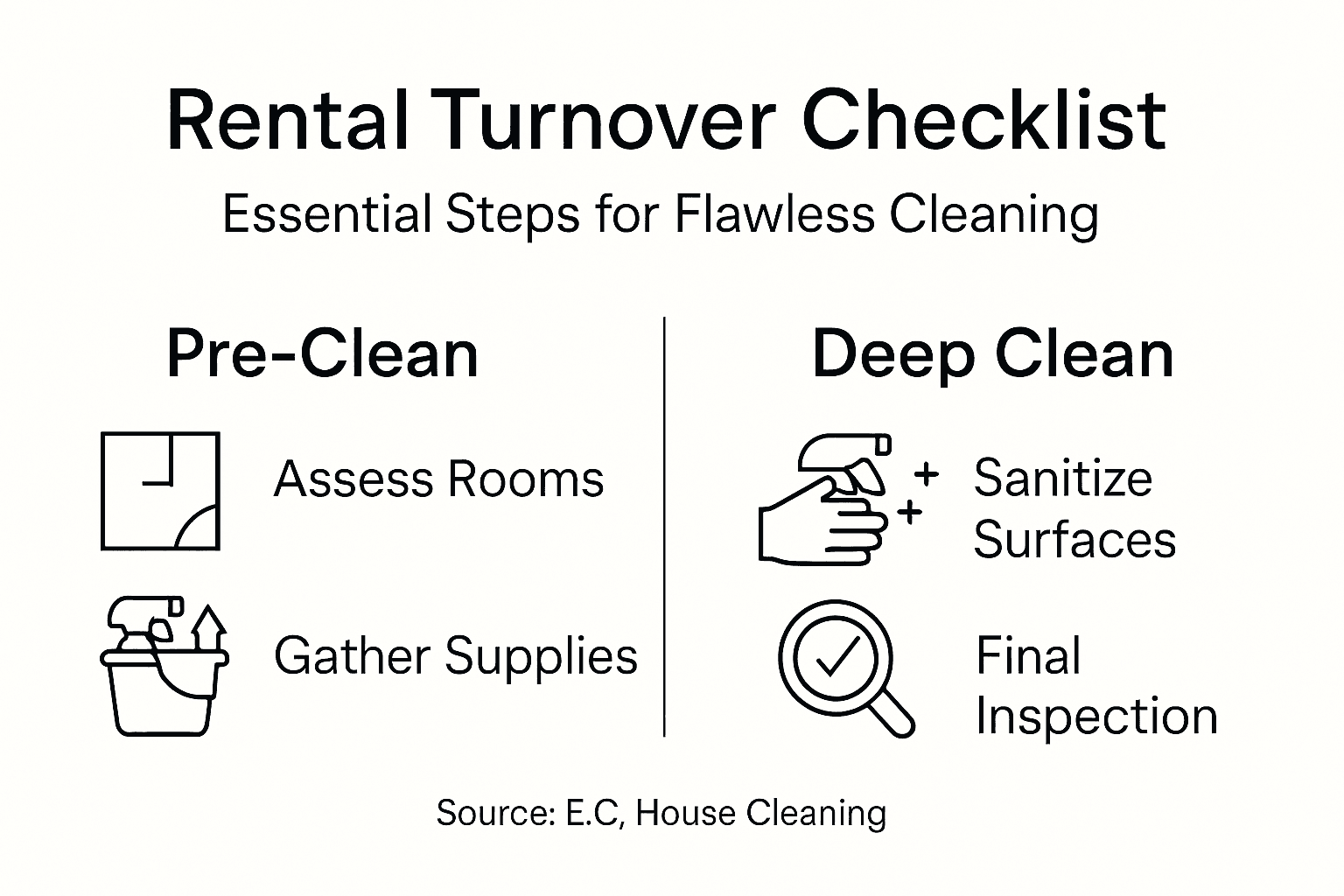
Begin by conducting a thorough property inspection. This systematic review will help you identify and rectify any remaining imperfections:
- Structural elements: Walls, floors, ceilings
- Functional fixtures: Electrical outlets, light switches
- Appliance performance: Refrigerator, stove, dishwasher
- Safety components: Smoke detectors, carbon monoxide alarms
- Cosmetic details: Paint touch-ups, minor repairs
Complete these final inspection steps:
- Walk through each room methodically
- Check every surface for missed spots
- Test all electrical and plumbing fixtures
- Verify window and door functionality
- Confirm overall cleanliness and presentation
A meticulous final inspection separates professional property management from amateur approaches.
Pay special attention to details that might escape a quick glance. Look for subtle signs of wear, small repairs needed, or areas that require additional cleaning attention.
This table summarizes final inspection priorities and their importance:
| Inspection Area | What to Verify | Why It Matters |
|---|---|---|
| Structural Elements | Look for damage, wear | Prevents future complaints |
| Appliance Performance | Test for correct operation | Ensures tenant satisfaction |
| Safety Components | Check alarms and detectors | Meets legal requirements |
| Cosmetic Details | Address paint and repairs | Improves property appeal |
Pro tip: Use natural lighting and take digital photographs during your final inspection to capture details that might be missed under artificial light.
Simplify Your Rental Property Turnovers with Expert Cleaning Support
Cleaning rental properties for flawless turnovers requires careful attention to detail and a strategic approach. From assessing the property condition to deep cleaning and sanitizing critical areas like kitchens and bathrooms, each step demands time, effort, and expertise. If managing these tasks feels overwhelming or you want to ensure no detail is missed, professional help can make all the difference. Whether you’re focused on thorough trash removal or detailed final inspections, getting trusted assistance guarantees a pristine space ready for new tenants.
Discover how E.C. House Cleaning’s experienced team can handle every phase of your property turnover. Our eco-friendly deep cleaning services deliver reliable, high-quality results that protect your investment and impress tenants. Learn more about effective dust management and extra cleansing steps by exploring our How to Clean Dust after Renovation tips. For specialized needs like ceiling care, check out How to Clean Ceiling Tiles?. Ready to experience hassle-free turnovers? Visit us at E.C. House Cleaning and schedule your personalized consultation today.
Frequently Asked Questions
What should I include in my cleaning supply toolkit for rental properties?
To clean rental properties effectively, your toolkit should include multi-surface cleaning solutions, disinfectant sprays, microfiber cloths, scrub brushes, protective gloves, trash bags, a vacuum cleaner or broom, and a mop and bucket. Gather these supplies before starting the cleaning process to ensure efficiency.
How do I conduct a property condition assessment before cleaning?
Begin your assessment by conducting a thorough walk-through survey of each room and surface, looking for stains, marks, and damage. Create a detailed inventory of the property’s cleaning needs, which will guide your cleaning process and help avoid missed spots.
What are the steps for removing trash and leftover items safely?
Sort items into categories such as trash, recyclables, tenant belongings, and abandoned property. Document everything with photographs, check your local regulations, and send written notifications to previous tenants before disposing of abandoned items to ensure legal compliance.
How can I ensure a deep clean of kitchens and bathrooms in rental properties?
Focus on high-touch surfaces and fixtures, such as countertops, sinks, and bathroom handles. Remove visible dirt first, then clean and disinfect each surface thoroughly, allowing appropriate contact time for disinfectants to eliminate germs effectively.
What should I check during the final property inspection?
During the final inspection, check structural elements, functional fixtures, appliance performance, safety components, and cosmetic details for cleanliness and repair needs. A thorough inspection helps ensure that the property meets professional standards before new tenants move in.
How do I document the rental property condition before cleaning?
Take digital photographs of each room and surface before you begin cleaning. This documentation can help protect you against potential tenant disputes regarding property conditions after cleaning is completed.