Homeowners hiring uninsured cleaners face up to 60% higher risk of bearing full financial liability for damages or injuries. This startling statistic reveals why insurance matters when choosing cleaning services. In Massachusetts, where legal mandates exist for cleaning companies, understanding insurance protects your property and budget. This guide clarifies what insured cleaning means, why it matters, and how to verify coverage before hiring.
Table of Contents
- Introduction To Insured Cleaning Services
- Risks And Liabilities Without Insurance
- Legal And Financial Implications In Massachusetts
- How To Verify And Evaluate Insurance Status
- Impact Of Insurance On Service Quality And Reliability
- Cost Considerations And Tradeoffs
- Real-World Examples And Case Studies
- Conclusion And Practical Recommendations
- Protect Your Property With Insured Cleaning Services
- Frequently Asked Questions About Insured Cleaning Services
Key takeaways
| Point | Details |
|---|---|
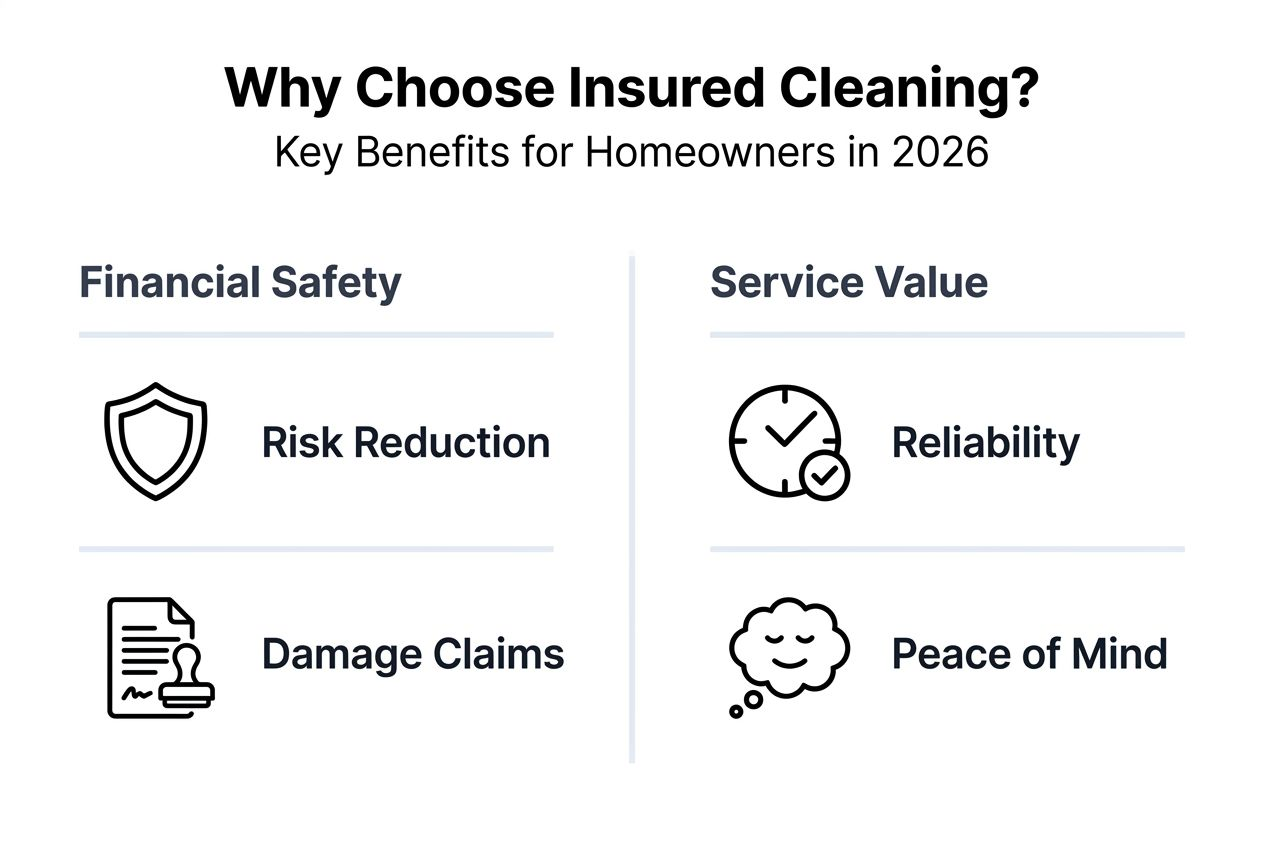
| Insurance reduces financial risk | Protects homeowners from out-of-pocket costs for damages, injuries, and legal claims during cleaning services. |
| Massachusetts mandates coverage | State law requires workers’ compensation and general liability insurance for cleaning companies with employees. |
| Verification is straightforward | Request certificates of insurance and check coverage types, limits, and expiration dates before hiring. |
| Insurance improves service quality | Insured companies report 25% fewer customer complaints and maintain higher professional standards. |
| Higher costs justify protection | Typical 10-15% premium for insured services prevents massive liability expenses and provides peace of mind. |
Introduction to insured cleaning services
Insured cleaning services provide professional cleaning with comprehensive insurance coverage protecting both the service provider and the client. This protection distinguishes legitimate businesses from informal cleaners operating without safeguards. Understanding insurance types helps you make informed hiring decisions.
Two primary insurance types matter for cleaning services:
- General liability insurance covers property damage and bodily injury to third parties during cleaning operations
- Workers’ compensation protects property managers from liability related to worker injuries during cleaning, mandating coverage in Massachusetts for businesses with employees
- Professional liability insurance protects against claims of negligence or substandard work
Massachusetts law requires cleaning companies with employees to carry workers’ compensation insurance. This mandate protects homeowners from liability if a cleaner gets injured on their property. General liability coverage, while not always legally required, provides crucial protection against accidental damage to your property.
When you hire insured cleaners, you gain more than just spotless rooms. You secure financial protection, legal compliance, and quality assurance. Companies with proper insurance demonstrate commitment to professional standards and risk management. They invest in training, use quality essential cleaning supplies, and follow cleaning standards in Massachusetts that minimize accidents.
The insurance requirement also affects additional cleaning services in Massachusetts like move-out cleaning or post-construction cleanup. These higher-risk tasks increase potential for damage, making insurance even more critical.
Risks and liabilities without insurance
Hiring uninsured cleaners creates significant financial exposure. You become responsible for costs that insurance would normally cover. The consequences extend beyond immediate repair expenses.
Homeowners hiring uninsured cleaners face 60% higher risk of bearing full financial liability for damages or injuries incurred during cleaning services. This statistic reflects real scenarios where property owners paid thousands for accidents they didn’t cause.
Common risks include:
- Property damage from broken fixtures, scratched floors, or damaged appliances requiring expensive repairs
- Personal injury claims if an uninsured cleaner gets hurt on your property and sues for medical costs
- Theft or loss of valuables with no recourse for compensation
- Legal fees defending against claims that proper insurance would have covered
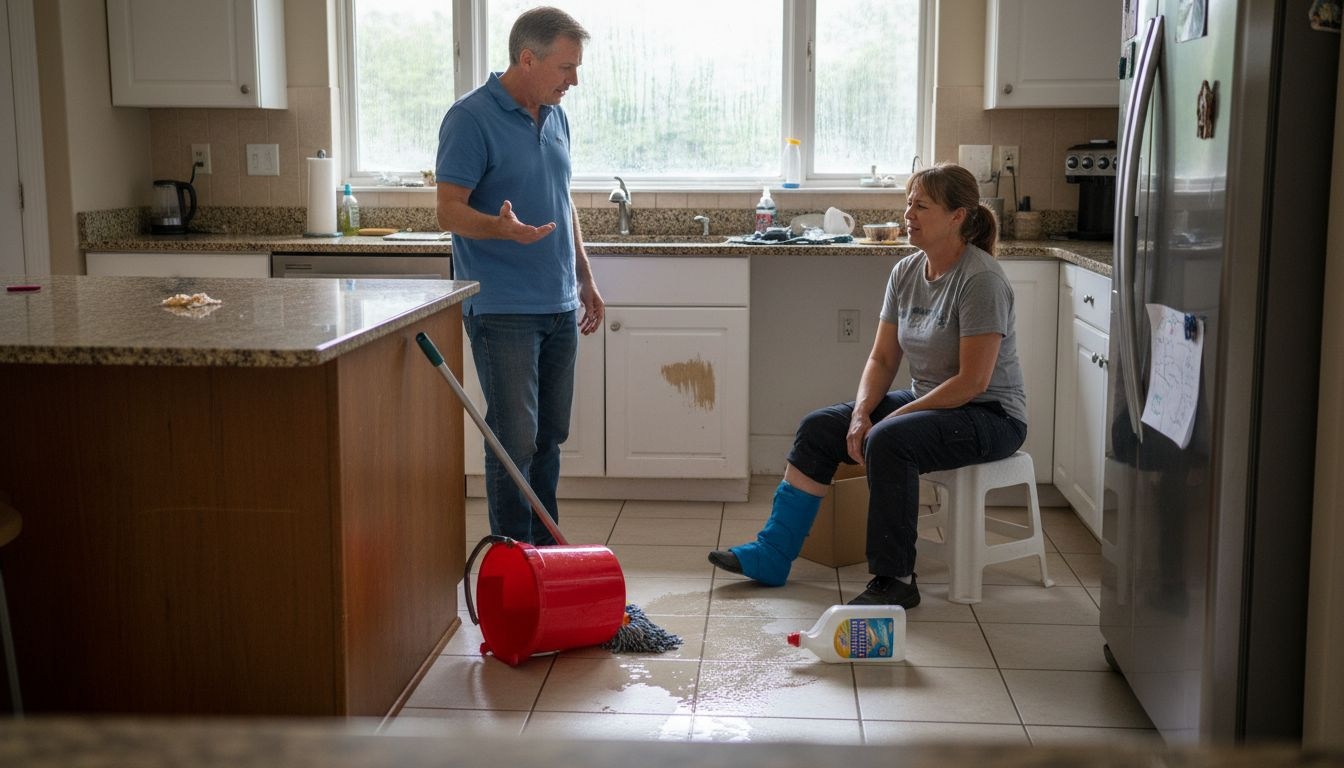
Consider this scenario: An uninsured cleaner slips on wet tile, breaks their arm, and files a lawsuit. Without workers’ compensation insurance, you face medical bills, lost wages, and legal costs potentially exceeding $50,000. The same accident with an insured service costs you nothing.
“Property owners bear ultimate responsibility when uninsured contractors work on their premises. One accident can erase years of savings.”
The legal principle of premises liability means property owners can be held responsible for injuries occurring on their property, regardless of who caused them. This makes hiring uninsured cleaners a gamble with your financial security. Finding reliable cleaning service with proper insurance eliminates this risk entirely.
Disputes over damage quality become more complex without insurance. Uninsured cleaners may lack resources to fix mistakes or compensate for losses, leaving you with bills and frustration.
Legal and financial implications in Massachusetts
Massachusetts enforces strict insurance requirements for cleaning businesses. These laws protect homeowners while ensuring fair treatment of workers. Understanding these mandates helps you identify legitimate service providers.
Massachusetts mandates workers’ compensation and general liability for cleaning companies with employees, with legal consequences for non-compliance. Companies operating without required coverage face fines, business closure, and criminal penalties. As a client, you risk legal complications by knowingly hiring uninsured services.
Key Massachusetts requirements:
- Workers’ compensation insurance mandatory for all businesses with one or more employees
- Proof of coverage required before starting work on commercial properties
- Penalties up to $1,500 per day for operating without required workers’ compensation
- Potential personal liability for homeowners if injured workers pursue claims
These regulations exist because worker injuries in cleaning services occur frequently. Slips, falls, chemical exposure, and repetitive strain injuries affect cleaning staff regularly. Workers’ compensation ensures injured employees receive medical care and wage replacement without suing property owners.
General liability insurance, while not always legally mandated, provides essential protection against property damage claims. Professional house cleaning Massachusetts services carry this coverage to protect clients from financial loss due to accidental damage.
The financial implications extend beyond immediate costs. Property managers who hire uninsured cleaners for rental units may violate lease agreements or HOA regulations requiring insured contractors. This creates additional liability exposure and potential contract breaches.
Massachusetts courts consistently rule in favor of injured workers when employers lack proper insurance. Property owners who hire uninsured independent contractors may find themselves reclassified as employers, suddenly responsible for all workers’ compensation obligations.
How to verify and evaluate insurance status
Verifying insurance protects you before problems arise. The process takes minutes but prevents years of headaches. Smart homeowners make verification standard practice.
Follow these steps:
- Request a certificate of insurance (COI) directly from the cleaning company before signing any contract
- Verify the certificate shows current coverage with expiration dates at least 30 days beyond your service date
- Confirm coverage types include both general liability and workers’ compensation if the company has employees
- Check coverage limits meet minimum standards: $1 million per occurrence for general liability, statutory limits for workers’ compensation
- Contact the insurance company listed on the certificate to confirm active coverage
- Ask for additional insured status if you manage commercial property requiring extra protection
A legitimate certificate of insurance includes the insurance company name, policy numbers, coverage types, limits, and effective dates. It should list the cleaning company as the insured party. Be wary of generic certificates or ones showing coverage expired months ago.
Pro Tip: Take photos of certificates and store them with your service contracts. If claims arise months later, you’ll have proof of coverage at the time of service.
Questions to ask cleaning companies:
- How long have you maintained continuous insurance coverage?
- Will you provide updated certificates automatically when policies renew?
- What happens if damage occurs and falls within your deductible?
- Do you carry bonding for employee theft protection?
Verify insurance credentials before allowing anyone into your home. Reputable companies provide certificates immediately without hesitation. Those who delay, make excuses, or refuse likely operate without proper coverage.
Some companies claim to carry insurance but provide fake certificates. Calling the insurance provider directly confirms authenticity. Most insurance companies have verification departments that quickly confirm coverage over the phone.
Impact of insurance on service quality and reliability
Insurance requirements drive higher professional standards throughout the cleaning industry. Companies that invest in proper coverage also invest in training, equipment, and quality control. The correlation between insurance and service quality is measurable.
Cleaning firms with insurance reported 25% fewer complaints linked to damages compared to uninsured peers. This statistic reflects how insurance requirements create accountability that improves performance.
Insurance affects quality through several mechanisms:
- Insurance companies require safety training and proper procedures before issuing policies
- Claims history directly impacts premium costs, incentivizing careful work
- Companies with insurance maintain detailed records and quality control systems
- Professional liability coverage encourages adherence to industry best practices
Insured cleaning services typically provide better cleaning quality and reliability because they operate as established businesses with reputations to protect. They hire W-2 employees rather than casual labor, conduct background checks, and provide ongoing training.
The psychological impact matters too. Cleaners working for insured companies understand their employer takes professional standards seriously. This awareness translates to more careful work, better attention to detail, and greater respect for client property.
Customer trust increases dramatically when services carry proper insurance. Homeowners feel comfortable leaving keys, allowing access when away, and trusting cleaners with valuable items. This trust enables better long-term relationships and consistent service quality.
Research from insurance and cleaning quality studies shows insured companies invest more in employee development, offer better wages, and experience lower turnover. Stable, well-trained teams deliver superior results compared to constantly changing crews of uninsured workers.
Insurance also enables companies to specialize in higher-risk services. Deep cleaning, post-construction cleanup, and specialty services require insurance coverage for equipment and potential damage risks.
Cost considerations and tradeoffs
Insured cleaning services cost more than uninsured alternatives. This premium typically ranges from 10-15% above informal cleaner rates. Understanding these costs helps you make informed financial decisions.
| Factor | Insured Services | Uninsured Services |
|---|---|---|
| Hourly Rate | $35-50 | $25-35 |
| Damage Protection | Full coverage | Your responsibility |
| Legal Liability | Company covered | Your risk |
| Service Reliability | High | Variable |
| Professional Standards | Enforced | Inconsistent |
| Peace of Mind | Complete | Limited |
The higher cost reflects real business expenses. Insurance premiums for cleaning companies range from $500 to $3,000 annually depending on coverage levels and claims history. Companies also invest in bonding, business licenses, proper tax compliance, and professional training.
However, the financial benefits outweigh the premium. Consider potential savings:
- Avoiding $10,000+ in property damage repair costs from a single accident
- Preventing $50,000+ in medical and legal expenses from worker injury claims
- Eliminating stress and time spent resolving disputes over damages
- Protecting home insurance rates from claims you might otherwise file
Pro Tip: Calculate your insurance premium as disaster prevention insurance. The 10-15% extra cost protects against catastrophic expenses that could exceed your annual cleaning budget by 10x or more.
Understanding residential cleaner costs helps you budget appropriately. While insured services cost more upfront, they deliver better value through reliability, quality, and protection. The return on investment becomes clear when you avoid even one claim.
Some homeowners argue they’ll take the risk to save money. This strategy works until it doesn’t. One serious incident erases years of savings. Professional property managers never take this gamble because they understand the math.
The cost difference also reflects legitimate business operations versus under-the-table arrangements. Insured companies pay proper taxes, provide worker benefits, and maintain professional standards. These factors contribute to sustainable, reliable service you can count on long-term.
For detailed pricing transparency, review resources on understanding cleaning service pricing to see how insurance and other factors affect costs.
Real-world examples and case studies
Documented cases demonstrate how insurance protects homeowners from financial disaster. These examples prove insurance value extends beyond theoretical risk management.
In documented cases, 100% of property damage claims managed by insured cleaning companies resulted in zero out-of-pocket costs to property owners. This perfect track record shows insurance works exactly as intended.
Consider these scenarios:
- A cleaner knocked over a valuable lamp while dusting, causing $2,400 in damage. The company’s general liability insurance covered the full replacement cost within two weeks.
- During floor cleaning, a worker slipped and broke equipment that scratched hardwood floors, requiring $5,000 in refinishing. Insurance paid the claim without involving the homeowner.
- A cleaning team member injured their back moving furniture, facing $18,000 in medical bills. Workers’ compensation covered all expenses, protecting the property owner from any liability.
- Chemical mixing error damaged granite countertops requiring $8,000 replacement. Professional liability insurance covered costs after determining negligent training caused the error.
These cases share common elements: immediate claim filing, professional investigation, and prompt resolution without homeowner involvement. Insured companies handle the entire process, allowing clients to focus on their lives rather than legal battles.
Homeowner testimonials consistently emphasize peace of mind as the greatest benefit. Knowing insurance protects them allows complete trust in the cleaning relationship. This confidence enables better communication, longer service relationships, and higher satisfaction.
One property manager reported hiring an uninsured cleaner who damaged a rental unit’s plumbing, causing $12,000 in water damage. Without insurance, the cleaner disappeared, leaving the property manager to pay repairs and lose rental income during fixes. After that experience, the manager only hired insured services despite higher costs.
Cleaning service success stories frequently highlight how insurance resolved problems quickly, maintaining positive relationships even when accidents occurred.
Conclusion and practical recommendations
Insured cleaning services provide essential protection that justifies their higher cost. The combination of legal compliance, financial security, and quality assurance makes insurance a critical factor in hiring decisions. Smart homeowners prioritize insurance verification as standard practice.
Follow this checklist when hiring:
- Request certificates of insurance before signing any contract or allowing property access
- Verify coverage includes both general liability and workers’ compensation with adequate limits
- Confirm coverage remains current throughout your service period
- Choose companies with multi-year insurance history showing established operations
- Compare insured services rather than mixing insured and uninsured options
- Document all insurance information in your service records
- Ask about claims procedures before problems arise
Balancing cost with protection requires understanding the true value proposition. The 10-15% premium for insured services buys catastrophic risk elimination. This investment protects your property, your finances, and your peace of mind.
Remember that Massachusetts law requires insurance for legitimate cleaning businesses. Companies operating without coverage violate state regulations and expose you to unnecessary risk. Hiring insured cleaners tips emphasize verification as the foundation of smart hiring.
Insurance transforms cleaning from a transaction into a professional service relationship. It demonstrates commitment to quality, accountability, and customer protection that separates true professionals from informal workers.
Protect your property with insured cleaning services
Now that you understand why insurance matters, take the next step toward protected, professional cleaning. E.C. House Cleaning maintains comprehensive insurance coverage including general liability and workers’ compensation, ensuring complete protection for your Massachusetts property.
Our residential cleaning services Massachusetts follow all state regulations and professional standards discussed in this guide. With over 20 years of experience and continuous insurance coverage, we deliver quality cleaning with absolute peace of mind. Our insured team handles everything from routine maintenance to specialized projects, as detailed in our residential cleaner tasks overview. Contact us today to schedule your free consultation and receive proof of insurance with your customized quote. Experience professional house cleaning Massachusetts residents trust for protected, reliable service.
Frequently asked questions about insured cleaning services
How can I confirm a cleaning company is truly insured?
Request a certificate of insurance directly from the company and call the insurance provider listed to verify active coverage. Legitimate insurers confirm policies immediately over the phone. Always verify before allowing property access, not after problems arise.
What happens if an uninsured cleaner damages my property?
You must pursue the cleaner directly for compensation, often through small claims court, with no guarantee of recovery. Many uninsured cleaners lack resources to pay for damages, leaving you responsible for repair costs. Your homeowner’s insurance may cover some damage but will increase your premiums.
Does insurance cover injuries to cleaning staff in my home?
Yes, workers’ compensation insurance covers medical expenses and lost wages for injured cleaning staff. This protection prevents injured workers from suing you personally for medical costs. Without workers’ compensation, you face potential liability for all injury-related expenses under Massachusetts premises liability laws.
Is paying more for insured cleaning services worth it?
Absolutely. The 10-15% cost premium protects against catastrophic expenses that could exceed $50,000 in medical or damage claims. One incident pays for years of insurance premiums. Reliable cleaning services in Massachusetts with insurance provide better quality and accountability than uninsured alternatives.
Are certificates of insurance valid proof every time?
Certificates prove coverage existed when issued, but policies can be canceled or expire. Always verify the certificate shows future coverage dates and call the insurer to confirm active status. Request updated certificates when policies renew to maintain continuous protection documentation.