Most American offices rely on cleaning professionals to maintain healthy, productive environments, yet nearly half of employers underestimate their impact. Office hygiene is not only about appearances—it directly affects employee well-being, business success, and public health. Understanding the essential skills and responsibilities of modern cleaning experts will help you see why their expertise matters far more than common misconceptions suggest.
Table of Contents
- Defining Office Cleaning Professionals And Misconceptions
- Types Of Cleaning Services Offered For Offices
- Professional Standards And Key Qualifications
- How Professional Cleaning Impacts Workplace Health
- Cost, Contracting, And Choosing A Trusted Service
Key Takeaways
| Point | Details |
|---|---|
| Role of Office Cleaning Professionals | Office cleaning professionals are essential for maintaining workplace hygiene and support organizational success through specialized knowledge and advanced techniques. |
| Types of Cleaning Services | Commercial cleaning services offer tailored strategies that encompass thorough cleaning of various office areas, ensuring minimal disruption and enhanced hygiene. |
| Professional Standards and Qualifications | Cleaning professionals must adhere to rigorous safety standards, showcasing advanced technical skills and certifications to ensure effective service delivery. |
| Impact on Workplace Health | Effective cleaning strategies significantly reduce disease transmission, improve air quality, and ultimately enhance employee wellness and productivity. |
Defining Office Cleaning Professionals and Misconceptions
Office cleaning professionals represent a critical workforce responsible for maintaining workplace hygiene and creating healthy work environments. Far from being simply janitors or maintenance staff, these skilled workers are essential operational experts who play a strategic role in organizational success. They are trained specialists who understand complex cleaning protocols, utilize advanced equipment, and implement systematic approaches to workplace sanitation.
Contrary to common misconceptions, these professionals are not low-skilled laborers but highly competent individuals with specialized knowledge. Cleaning and hygiene operatives are often referred to as the “invisible army” – working diligently behind the scenes to ensure safe, productive workplace environments. Their responsibilities extend far beyond basic cleaning, encompassing intricate tasks that require technical understanding of sanitation standards, chemical treatments, and environmental health management.
The scope of an office cleaning professional’s work is remarkably comprehensive. Their duties include:
- Sanitizing workstations and common areas
- Managing waste disposal systems
- Maintaining indoor air quality
- Preventing disease transmission
- Implementing eco-friendly cleaning practices
Modern office cleaning professionals are essentially workplace health and safety specialists who contribute significantly to organizational productivity and employee well-being. By maintaining pristine environments, they directly impact workplace morale, reduce sick days, and create professional atmospheres that support business success.
Types of Cleaning Services Offered for Offices
Office cleaning services represent a sophisticated array of specialized solutions designed to maintain professional work environments. Commercial cleaning services go far beyond simple surface cleaning, encompassing comprehensive approaches that address workplace hygiene, productivity, and employee health. Modern office cleaning professionals understand that each workspace requires a nuanced, tailored strategy that considers unique organizational needs and industry-specific requirements.
Office cleaning services typically cover a wide range of critical areas within professional settings. Their comprehensive approach includes thorough cleaning of:
- Workstations and individual employee areas
- Conference and meeting rooms
- Reception and common areas
- Kitchenettes and break rooms
- Restrooms and sanitation facilities
- High-touch surfaces like doorknobs, elevator buttons, and shared equipment
Professional cleaning services are strategically designed to minimize workplace disruption while maximizing cleanliness and hygiene standards. Cleaning teams often work during off-hours or implement flexible scheduling to ensure minimal interference with daily business operations. This approach allows organizations to maintain pristine work environments without compromising productivity or creating unnecessary workplace interruptions.
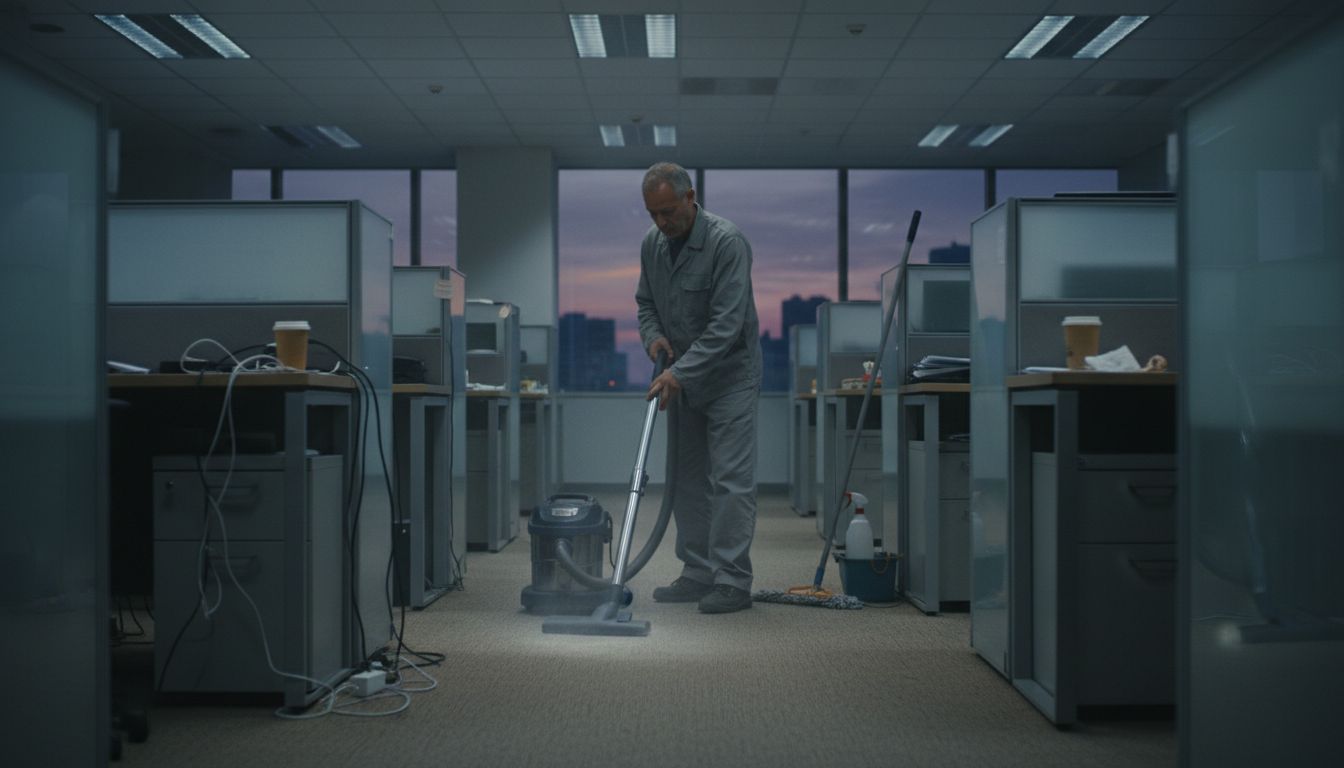
The most advanced office cleaning services now incorporate sophisticated techniques that go beyond traditional cleaning methods. These include environmentally friendly cleaning solutions, advanced sanitization technologies, and data-driven approaches to workplace hygiene. By integrating specialized equipment, professional-grade disinfectants, and systematic cleaning protocols, modern cleaning services provide comprehensive solutions that protect employee health, enhance workplace aesthetics, and contribute to overall organizational efficiency.
Professional Standards and Key Qualifications
Professional cleaning services have evolved into sophisticated operations with rigorous safety and compliance standards that go far beyond traditional cleaning practices. These standards are designed to protect both cleaning professionals and the environments they maintain, ensuring comprehensive workplace safety and exceptional service delivery. Modern cleaning professionals must demonstrate a complex combination of technical skills, safety knowledge, and professional certifications.
Professional cleaning qualifications typically encompass several critical areas of expertise:
- Advanced cleaning technology proficiency
- Chemical handling and safety protocols
- Environmental sustainability practices
- Specialized equipment operation
- Health and safety compliance training
- Documentation and quality assurance skills
The regulatory landscape for cleaning professionals has become increasingly complex, requiring ongoing education and certification. Cleaning teams must undergo comprehensive training programs that cover technical skills, safety procedures, and industry-specific protocols. Organizations now expect cleaning professionals to understand complex sanitization techniques, use advanced technological tools, and maintain detailed performance records that demonstrate their professional competence.
Qualification standards have transformed cleaning from a basic service to a professional discipline requiring specialized knowledge. Modern cleaning professionals are essentially workplace health and safety specialists who must continuously adapt to evolving industry standards, technological innovations, and regulatory requirements. Their expertise extends beyond simple cleaning tasks, encompassing risk management, environmental stewardship, and critical infrastructure maintenance that directly impacts organizational health and productivity.

How Professional Cleaning Impacts Workplace Health
Professional cleaning services have become critical guardians of workplace health, implementing sophisticated strategies that go far beyond traditional cleaning methods. Health and safety guidelines now require comprehensive approaches that minimize disease transmission, reduce workplace contamination, and create environments that actively support employee wellness. These advanced cleaning protocols represent a scientific approach to maintaining workplace hygiene, utilizing specialized techniques that address both visible and invisible health risks.
Key workplace health impacts include:
- Reduced transmission of infectious diseases
- Decreased allergen and dust accumulation
- Improved air quality
- Minimized surface contamination
- Enhanced overall employee wellness
- Lowered potential for workplace sick days
Quality office cleaning services implement targeted strategies that transform workspaces into healthier environments. Professional cleaners use color-coded cleaning materials to prevent cross-contamination, apply eco-friendly disinfection techniques, and systematically sanitize high-touch surfaces that typically harbor harmful microorganisms. Their methodical approach ensures that every workplace area receives specialized attention, creating a comprehensive defense against potential health hazards.
The profound impact of professional cleaning extends beyond immediate sanitation. By maintaining consistently clean environments, these services contribute to psychological well-being, reduce employee stress, and create workspaces that signal organizational commitment to health and safety. Modern cleaning professionals are essentially health guardians who use advanced technologies, scientific cleaning protocols, and strategic interventions to transform workplace environments into optimized, wellness-focused spaces.
Cost, Contracting, and Choosing a Trusted Service
Commercial cleaning services represent a strategic investment in workplace productivity and health, with pricing structures that vary based on office size, cleaning frequency, and specific service requirements. Understanding the nuanced cost factors and contract considerations is crucial for businesses seeking reliable and efficient cleaning solutions that deliver consistent value and quality.
Key considerations when evaluating commercial cleaning services include:
- Transparent pricing models
- Flexible service agreements
- Comprehensive cleaning protocols
- Professional staff credentials
- Equipment and supply quality
- Response time and customer support
Professional cleaning service providers address organizational cleaning challenges through structured service-level agreements that ensure consistent performance and reliability. Unlike in-house cleaning staff who may experience task fatigue or inconsistent results, commercial services deploy trained professionals on rotational shifts, guaranteeing steady maintenance of workplace hygiene standards and minimizing potential disruptions.
Beyond cost and operational efficiency, businesses should prioritize environmental responsibility and ethical practices when selecting a cleaning service. Look for companies that use unscented cleaning products, provide transparent Material Safety Data Sheets, and demonstrate commitments to justice, equity, diversity, and sustainability. These factors not only reflect a cleaning service’s professional standards but also align with modern corporate social responsibility expectations.
Elevate Your Office Cleanliness with Trusted Professionals
Maintaining high workplace standards is essential for employee health and overall productivity. This article underscores the vital role of office cleaning professionals who use advanced techniques and eco-friendly practices to create safe and inviting workspaces. If you face challenges in keeping your office environment pristine or want to ensure your team thrives in a healthier setting, partnering with experienced cleaners is the solution.
Discover how House Cleaning | E.C. House Cleaning offers tailored, professional cleaning services with over 20 years of trusted experience in Massachusetts. Our family-owned team is committed to integrity and quality, using environmentally responsible methods that align perfectly with modern workplace health goals.
Take the first step toward transforming your office space today. Visit E.C. House Cleaning to schedule your free consultation, receive a personalized quote, and learn how our expert cleaning solutions can raise your workplace standards. Don’t wait to create a healthier, cleaner environment—contact us now and experience the difference professionalism makes.
Frequently Asked Questions
What are the key responsibilities of office cleaning professionals?
Office cleaning professionals are responsible for a range of tasks, including sanitizing workstations and common areas, managing waste disposal systems, maintaining indoor air quality, preventing disease transmission, and implementing eco-friendly cleaning practices.
How do professional cleaning services impact workplace health?
Professional cleaning services contribute to workplace health by reducing the transmission of infectious diseases, decreasing allergen and dust accumulation, improving air quality, minimizing surface contamination, and overall enhancing employee wellness, which can lead to fewer sick days.
What qualifications should I look for in a commercial cleaning service?
When choosing a commercial cleaning service, look for qualifications such as advanced cleaning technology proficiency, chemical handling safety protocols, environmental sustainability practices, and training in health and safety compliance.
How can I evaluate the cost of office cleaning services?
Evaluating the cost of office cleaning services involves considering pricing models, service frequency, and the comprehensive cleaning protocols offered. Additionally, assess the credentials of the professional staff and the quality of equipment and supplies used.