Over 60 percent of American households report concerns about chemical residues from everyday cleaners. Choosing the right products matters for both personal health and the environment, as traditional options often introduce toxins into living spaces. This guide breaks down the essentials of natural home cleaning products, showing how American families can enjoy spotless homes without the risks tied to harsh synthetic ingredients.
Table of Contents
- Defining Natural Home Cleaning Products
- Types of Natural Ingredients Used
- How Natural Cleaners Work Effectively
- Evaluating Health and Safety Concerns
- Comparing Natural Vs. Traditional Cleaners
- Real Cost And Accessibility Considerations
Key Takeaways
| Point | Details |
|---|---|
| Natural Products Promote Wellness | Emphasizing plant-based and biodegradable ingredients minimizes health risks and environmental impact while maintaining cleaning effectiveness. |
| Understanding Ingredient Safety | Consumers should seek products with third-party certifications and avoid harmful compounds to ensure safety and efficacy. |
| Cost-Effectiveness of Natural Cleaners | Homemade solutions can significantly reduce expenses and provide control over ingredients, appealing to budget-conscious homeowners. |
| Natural Cleaners vs. Traditional Products | Natural alternatives offer comparable performance to traditional cleaners without toxic residues, supporting a healthier living environment. |
Defining Natural Home Cleaning Products
Natural home cleaning products represent a transformative approach to maintaining healthy living spaces without compromising environmental or personal wellness. These innovative solutions move beyond traditional chemical-laden cleaners, focusing instead on ingredients with reduced environmental impact that protect both human health and ecological systems.
At their core, natural cleaning products are formulated using plant-based, biodegradable ingredients that minimize toxic exposure while delivering effective cleaning performance. The U.S. Environmental Protection Agency defines these products as cleaning solutions that carry specific safety certifications, such as the Safer Choice label, which indicates rigorous screening for potential health and environmental risks.
Key characteristics of natural home cleaning products include:
- Derived from renewable, organic sources
- Free from harsh synthetic chemicals
- Biodegradable and environmentally responsible
- Typically packaged in recyclable or sustainable materials
- Produced through manufacturing processes that reduce carbon footprint
Understanding these alternative cleaning solutions empowers homeowners to make informed choices that protect their families and living environments. By selecting natural cleaning products, consumers actively participate in a broader movement toward sustainable, health-conscious home maintenance strategies.
Types of Natural Ingredients Used
Natural home cleaning ingredients represent a powerful arsenal of environmentally friendly and health-conscious solutions for maintaining spotless living spaces. Common natural ingredients offer remarkable cleaning capabilities without introducing harmful chemicals into your home environment.

Multipurpose Natural Cleaning Agents include several standout ingredients that provide exceptional cleaning performance. Baking soda emerges as a versatile powerhouse, functioning simultaneously as a deodorizer, gentle abrasive, and pH neutralizer. White vinegar cuts through grease and eliminates odors, while lemon juice delivers natural antibacterial properties that sanitize surfaces effectively.
These natural ingredients offer distinct advantages in home cleaning:
- Baking soda: Neutralizes odors and provides gentle scrubbing action
- White vinegar: Dissolves mineral deposits and eliminates bacteria
- Lemon juice: Cuts through grease and provides natural disinfection
- Castile soap: Biodegradable and effective for multiple cleaning tasks
- Essential oils: Add natural fragrance and potential antimicrobial benefits
By understanding and utilizing organic cleaning solutions, homeowners can create a safer, more sustainable approach to household maintenance. These ingredients not only clean effectively but also protect personal health and environmental wellness, transforming everyday cleaning into a responsible, eco-conscious practice.
How Natural Cleaners Work Effectively
The science behind natural cleaners reveals a sophisticated approach to surface cleaning that goes far beyond traditional chemical solutions. Essential oils and organic compounds provide powerful cleaning mechanisms that effectively break down dirt and eliminate microorganisms without introducing harmful synthetic chemicals.
Surface Interaction Mechanisms demonstrate the remarkable efficiency of natural cleaning ingredients. Research shows that sulfonated fatty acid methyl esters create specialized admicelle layers on surfaces, enabling superior detachment of oily substances. These innovative molecular structures work by disrupting the chemical bonds between dirt particles and surface materials, allowing for comprehensive and gentle cleaning.
Key mechanisms of natural cleaner effectiveness include:
- Molecular disruption of dirt and grime
- Antimicrobial properties from plant-based ingredients
- Biodegradable surfactant action
- pH-neutral cleaning processes
- Reduced environmental impact
Clean and green cleaning solutions transform home maintenance by providing scientifically advanced alternatives to harsh chemical products. By understanding the intricate molecular interactions of natural ingredients, homeowners can achieve superior cleaning results while protecting their health and environmental ecosystems.
Evaluating Health and Safety Concerns
Navigating the landscape of natural cleaning products requires a careful and informed approach to understanding potential health implications. The Environmental Protection Agency emphasizes the critical importance of thoroughly evaluating product ingredients to ensure they meet rigorous safety standards for human and environmental wellness.
Ingredient Screening represents the most crucial step in selecting safe natural cleaning solutions. Consumers should vigilantly avoid products containing harmful compounds such as ammonia, chlorine, and volatile organic compounds (VOCs), which can introduce significant health risks into home environments. Third-party certifications, particularly the Safer Choice label, provide reliable indicators of a product’s safety and environmental responsibility.
Key safety evaluation criteria include:
- Presence of third-party safety certifications
- Absence of known toxic chemicals
- Transparency in ingredient disclosure
- Plant-based and non-synthetic ingredient composition
- Minimal environmental impact
Organic bathroom cleaners offer an excellent pathway to creating a safer home environment. By prioritizing comprehensive ingredient analysis and selecting products with verifiable safety credentials, homeowners can protect their families’ health while maintaining high cleaning standards.
Comparing Natural vs. Traditional Cleaners
The battle between natural and traditional cleaning products represents a significant shift in household maintenance strategies, with substantial differences in environmental impact, health considerations, and overall performance. Chemical composition forms the most critical point of divergence, as traditional cleaners rely heavily on synthetic compounds that can potentially harm human health and ecological systems.
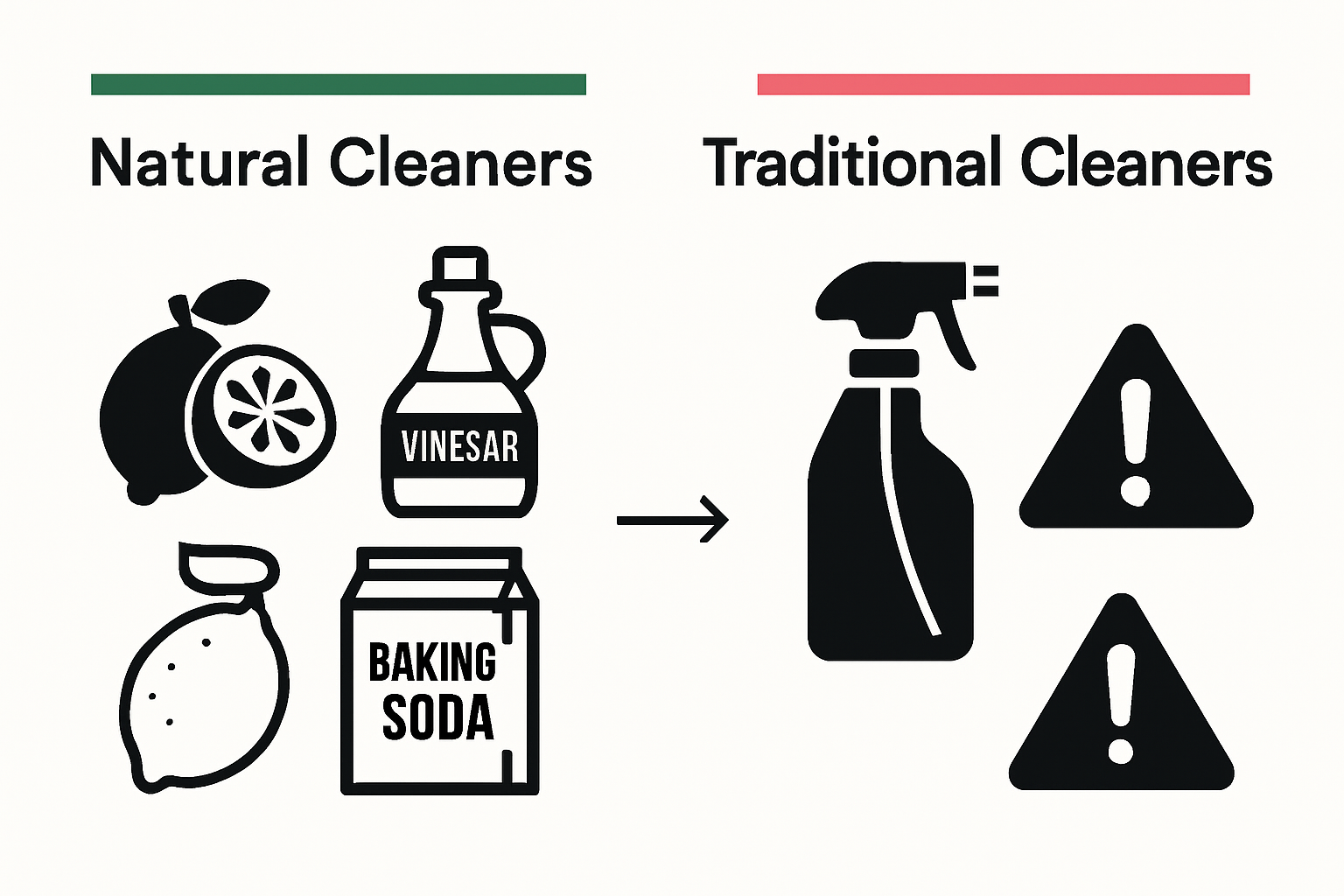
Performance Characteristics reveal nuanced differences between these cleaning approaches. Traditional cleaners often promise immediate, aggressive dirt removal through powerful synthetic chemicals, while natural alternatives focus on sustainable, gentler cleaning mechanisms. Natural products leverage plant-based ingredients that break down dirt effectively without introducing toxic residues into living environments.
Key comparative elements include:
- Chemical toxicity levels
- Environmental sustainability
- Long-term health implications
- Biodegradability of ingredients
- Surface interaction and cleaning efficiency
Clean and green cleaning solutions demonstrate that effectiveness need not be sacrificed when choosing environmentally responsible products. Modern natural cleaners have evolved to match and often exceed the performance of traditional chemical-based alternatives, offering homeowners a safer, more conscientious approach to maintaining their living spaces.
Real Cost and Accessibility Considerations
Navigating the economic landscape of natural cleaning products requires a nuanced understanding of both upfront and long-term financial implications. Homemade natural cleaning solutions offer remarkable cost-effectiveness by leveraging everyday household ingredients that are both affordable and versatile.
Economic Strategies for implementing natural cleaning approaches extend beyond simple product purchasing. Consumers can significantly reduce expenses by creating their own cleaning solutions using basic ingredients like white vinegar, baking soda, and essential oils. These DIY alternatives not only minimize household cleaning expenses but also provide greater control over ingredient quality and environmental impact.
Key cost and accessibility considerations include:
- Initial investment in basic ingredients
- Potential long-term health care savings
- Reduced environmental remediation costs
- Flexibility in product creation
- Minimal waste generation
Clean and green cleaning solutions demonstrate that economical choices need not compromise cleaning effectiveness. By understanding the true value of natural cleaning products—which extends far beyond mere price point—homeowners can make informed decisions that benefit both their wallets and overall wellness.
Discover Safer, Natural Cleaning Solutions for Your Home Today
Choosing natural home cleaning products means embracing safety, sustainability, and health for every member of your household. This article highlights the challenge many face with harsh chemical cleaners and the benefits of natural ingredients that protect your loved ones and the environment. If you want to avoid toxic compounds while maintaining a spotless home, understanding and using safer alternatives is essential.
At E.C. House Cleaning, we share your commitment to eco-friendly practices and effective cleaning. Explore our curated selection of Organic Bathroom Cleaner options and learn easy tips from our Dollar Tree Homemade Cleaning Solutions to create a healthier, cleaner living space.
Take the first step toward a safer home environment by choosing professional cleaning services that prioritize natural, non-toxic products. Visit E.C. House Cleaning now to schedule your free consultation and experience how our family-owned, Massachusetts-based team delivers trusted, eco-conscious cleaning tailored to your needs. Your home deserves both cleanliness and care today.
Frequently Asked Questions
What are natural home cleaning products?
Natural home cleaning products are formulated using plant-based, biodegradable ingredients that minimize toxic exposure while effectively cleaning. They are free from harsh synthetic chemicals and are designed to protect both human health and the environment.
How do natural cleaning products work effectively?
Natural cleaning products utilize ingredients like baking soda, white vinegar, and essential oils, which interact with dirt and grime on a molecular level. They disrupt chemical bonds between the dirt and surfaces, allowing for effective cleaning without harsh chemicals.
What are the benefits of using natural cleaning products over traditional cleaners?
Natural cleaning products pose lower health risks due to their non-toxic ingredients and are generally biodegradable, making them better for the environment. They often provide effective cleaning while avoiding harmful chemicals found in traditional cleaners.
How can I ensure that the natural cleaning products I choose are safe?
To ensure safety, look for third-party certifications like the Safer Choice label, avoid products with harmful compounds (like ammonia and chlorine), and check for transparency in ingredient disclosure. Choose products made from plant-based and non-synthetic ingredients.