
Most American homeowners in Massachusetts underestimate how detailed property inspections can affect their security deposit return during move out. In fact, more than half of tenants lose at least part of their deposit due to overlooked cleaning tasks. With busy schedules and tight budgets, finding eco-friendly move out cleaning services matters more than ever. This guide reveals practical strategies to achieve a spotless home, protect your deposit, and prioritize environmentally safe solutions without extra stress.
Table of Contents
- Move Out Cleaning Defined And Debunked
- Essential Room-By-Room Cleaning Tasks
- Deep Cleaning Of Appliances And Fixtures
- Eco-Friendly Practices And Safe Products
- Lease Requirements And Security Deposit Impact
- Common Mistakes And How To Avoid Them
Key Takeaways
| Point | Details |
|---|---|
| Move Out Cleaning is Comprehensive | It involves deep cleaning to restore properties to pristine condition, essential for securing full security deposit returns. |
| Document Cleaning Efforts | Taking before and after photographs helps prevent disputes regarding property condition with landlords. |
| Focus on Specific Areas | Pay attention to often overlooked areas, such as appliance interiors, baseboards, and corners, to meet landlord expectations. |
| Utilize Eco-Friendly Products | Choosing natural cleaning solutions not only protects health but also supports environmental sustainability during the cleaning process. |
Move out cleaning defined and debunked
Move out cleaning represents a specialized deep cleaning process designed to thoroughly prepare a residential property for its next occupant. Unlike standard cleaning services, this comprehensive approach involves meticulously restoring a living space to pristine condition, addressing every detail landlords and property managers expect during tenant transition. Massachusetts renters must understand that thorough property restoration goes beyond basic surface cleaning.
The process typically encompasses multiple critical cleaning stages: deep sanitization of kitchen and bathroom surfaces, thorough floor cleaning including baseboards and corners, comprehensive window and glass treatments, appliance deep cleaning, wall washing for scuff and mark removal, and detailed carpet or floor restoration. Professional move out cleaning services in Massachusetts recognize that landlords conduct rigorous property inspections, making every cleaning detail crucial for security deposit recovery.
Contrary to common misconceptions, move out cleaning is not a simple surface-level tidying but a strategic process addressing potential lease agreement violations. Tenant legal obligations mandate maintaining the property’s original condition, which means eliminating all signs of occupancy. Professional cleaners understand the nuanced expectations, addressing everything from minor carpet stains to kitchen grease accumulation, ensuring the property meets stringent rental standards.
Pro tip: Document your cleaning process by taking before and after photographs to protect yourself against potential disputes with your landlord about the property’s condition.
Here’s how move out cleaning compares to standard cleaning services:
| Aspect | Move Out Cleaning | Standard Cleaning |
|---|---|---|
| Scope | Full property restoration | Basic surface cleaning |
| Detail level | Deep, comprehensive | Routine, limited |
| Security deposit impact | Critical for maximizing return | Minimal influence |
| Required documentation | Often needed for legal protection | Rarely required |
Essential room-by-room cleaning tasks
Move out cleaning demands a systematic approach that addresses every room’s unique cleaning requirements. Comprehensive cleaning checklists recommend a strategic room-by-room method to ensure no area is overlooked during the property restoration process. Each living space presents distinct challenges that require targeted cleaning techniques to meet landlord expectations and secure full security deposit return.
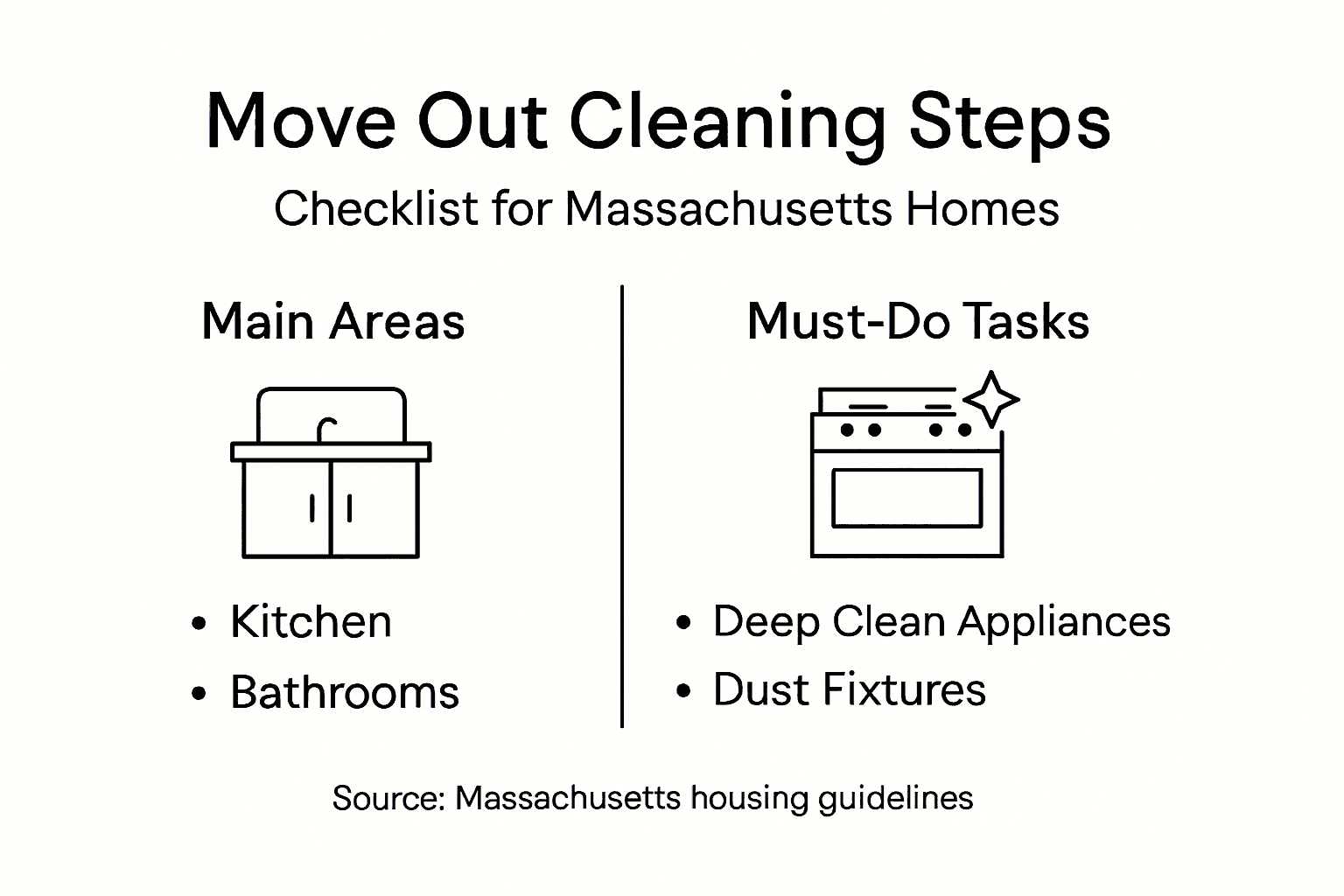
In the kitchen, critical tasks include deep cleaning appliances inside and out, scrubbing countertops, sanitizing sink and fixtures, removing grease from surfaces, cleaning cabinet interiors and exteriors, and addressing hard-to-reach areas behind and underneath appliances. Bathroom cleaning requires thorough toilet, shower, and sink sanitization, grout cleaning, mirror and fixture polishing, and floor-to-ceiling surface treatment. Bedrooms and living areas demand comprehensive approaches like wall washing, baseboard cleaning, window treatments, light fixture dusting, and carpet or floor deep cleaning.
Specific attention must be paid to often-neglected areas that can trigger landlord concerns. Massachusetts tenant documentation requirements emphasize the importance of addressing details like removing nail holes, cleaning light switch plates, wiping down door frames, and ensuring all surfaces are free from marks, stains, and personal residue. Professional cleaning services understand these nuanced expectations, targeting every potential inspection point to guarantee a seamless property transition.
Pro tip: Create a room-by-room cleaning checklist with checkboxes to systematically track your progress and ensure no area is accidentally overlooked during move out cleaning.
Deep cleaning of appliances and fixtures
Move out cleaning demands a meticulous approach to appliance and fixture restoration that goes far beyond standard surface cleaning. Comprehensive cleaning protocols require thorough decontamination of every kitchen and bathroom fixture to meet landlord expectations and prevent potential security deposit deductions. Each appliance represents a critical inspection point that can significantly impact a tenant’s final property assessment.
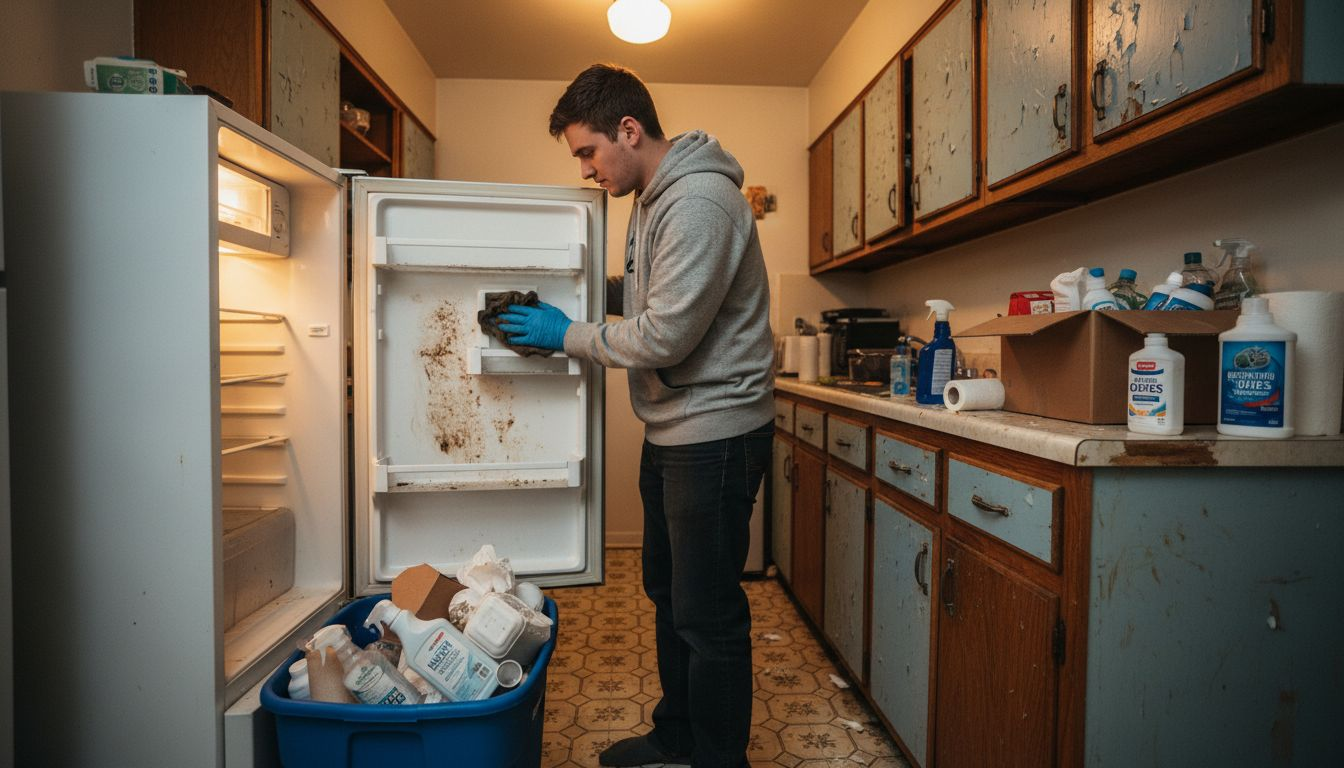
Kitchen appliances require specialized deep cleaning techniques targeting both visible and hidden surfaces. Refrigerators demand complete interior and exterior sanitization, including removing shelves, cleaning drip pans, wiping door seals, and eliminating any lingering odors. Ovens need comprehensive treatment involving degreasing interior walls, cleaning racks, addressing stovetop burners, and removing accumulated grime from hard-to-reach areas. Dishwashers require thorough filter cleaning, interior wall scrubbing, and removing any food particle buildup that might compromise their functionality.
Bathroom fixtures present equally demanding cleaning challenges that extend beyond aesthetic concerns. Toilets, sinks, and shower areas require detailed sanitization addressing mineral deposits, soap scum, and potential mildew growth. Massachusetts tenant maintenance standards emphasize the importance of leaving fixtures in pristine condition, which means addressing every crevice, handle, and surface with precision. Professional cleaners understand that landlords conduct rigorous inspections, evaluating not just surface cleanliness but the overall maintenance of critical home infrastructure.
Pro tip: Use a combination of white vinegar and baking soda for tough appliance stains, creating a natural cleaning solution that effectively removes grime without harsh chemicals.
Eco-friendly practices and safe products
Move out cleaning in Massachusetts demands an environmentally conscious approach that protects both human health and ecological systems. Benefits of eco-friendly cleaning products extend far beyond simple surface cleaning, encompassing broader impacts on personal and environmental wellness. Sustainable cleaning practices reduce chemical exposure, minimize toxic residues, and support responsible resource management during property transitions.
Natural cleaning solutions leverage powerful ingredients like white vinegar, baking soda, and essential oils to achieve deep cleaning without harsh synthetic chemicals. These alternatives effectively sanitize surfaces, eliminate odors, and break down grime while maintaining indoor air quality and reducing potential respiratory irritants. Microfiber cloths, reusable cleaning tools, and concentrated cleaning solutions further minimize waste and environmental impact, demonstrating that thorough cleaning can be both effective and ecologically responsible.
Professional move out cleaning services increasingly prioritize green cleaning methodologies that align with modern environmental standards. This approach involves selecting biodegradable products, utilizing energy-efficient equipment, minimizing plastic waste, and implementing cleaning techniques that reduce water and chemical consumption. By choosing environmentally responsible cleaning practices, Massachusetts homeowners can ensure a spotless property while maintaining a commitment to sustainability and personal health.
Pro tip: Create a homemade all-purpose cleaner using equal parts white vinegar and water, adding a few drops of tea tree or lemon essential oil for natural disinfection and pleasant fragrance.
Lease requirements and security deposit impact
Massachusetts lease agreements establish precise cleaning standards that directly influence security deposit returns. Tenant moving out obligations require renters to restore properties to their original condition, with comprehensive cleaning serving as a critical component of lease compliance. Landlords meticulously evaluate cleanliness, using it as a primary criteria for determining full security deposit reimbursement.
The legal framework surrounding move out cleaning in Massachusetts is complex and nuanced. Tenants must understand that cleaning goes beyond superficial tidying and encompasses detailed restoration of every living space. This includes addressing wear and tear, removing all personal belongings, repairing minor damages, and ensuring surfaces are thoroughly sanitized. Professional cleaning services can provide documentation that demonstrates compliance with lease requirements, offering tenants a strategic approach to protecting their financial investment.
Financial implications of inadequate cleaning can be substantial. Landlords may legally deduct cleaning costs from security deposits when properties do not meet predetermined standards. Tenant rights documentation emphasizes the importance of documenting property condition through formal statements and photographs. Renters who invest in professional move out cleaning services typically recover higher percentages of their original security deposits, making it a financially prudent strategy for managing end-of-lease transitions.
Pro tip: Request a detailed cleaning checklist from your landlord before moving out and photograph each room after cleaning to create a comprehensive documentation trail.
Key factors influencing security deposit return in Massachusetts:
| Factor | Positive Impact | Negative Impact |
|---|---|---|
| Thorough cleaning | Increases full deposit return | Leads to deductions |
| Property documentation | Helps prevent disputes | Reduces evidence strength |
| Repair of damages | Shows responsible tenancy | May incur extra charges |
| Professional services | Can provide compliance records | No expert validation |
Common mistakes and how to avoid them
Move out cleaning in Massachusetts requires strategic attention to detail and proactive planning. Tenant moving out errors can significantly impact security deposit return and create unnecessary legal complications. The most frequent mistakes include inadequate cleaning, poor documentation, and misunderstanding lease-specific requirements that can result in substantial financial penalties.
Critical errors often involve overlooking specific areas that landlords meticulously inspect. Comprehensive cleaning checklists reveal common problem areas like interior appliance surfaces, baseboards, window tracks, light fixtures, and hidden corners that tenants frequently neglect. Rushing through cleaning without systematic methodical approaches leads to missed spots, potentially triggering deposit deductions. Professional cleaning services can provide structured approaches that comprehensively address these nuanced cleaning requirements, ensuring no detail is overlooked.
Documentation represents another critical aspect of avoiding move out complications. Tenants must maintain detailed records including initial property condition statements, photographic evidence, cleaning receipts, and communication logs with landlords. These preventative steps create transparent accountability, reducing potential disputes and demonstrating responsible tenancy. Understanding lease-specific cleaning expectations, scheduling professional cleaning services, and maintaining meticulous documentation can transform the move out process from a potential source of stress into a smooth, financially beneficial transition.
Pro tip: Create a digital folder with all move out documentation, including cleaning receipts, photographs, and communication records, to protect yourself against potential future disputes.
Experience Stress-Free Move Out Cleaning with Expert Help in Massachusetts
Moving out requires deep and detailed cleaning that meets strict landlord standards to secure your full security deposit. If the idea of tackling every appliance, fixture, and overlooked corner feels overwhelming, you are not alone. The process demands thorough property restoration and documentation to avoid costly deductions. E.C. House Cleaning understands these challenges and offers specialized move out cleaning services that focus on precision, eco-friendly products, and proven results.
Don‘t leave your security deposit to chance. Take the stress out of your move by booking professional cleaning that guarantees compliance with Massachusetts lease requirements. Visit House Cleaning | E.C. House Cleaning to explore our tailored services and learn how to pack cleaning supplies efficiently at How to Pack Cleaning Supplies for Moving? | E.C. House Cleaning. Secure your peace of mind now by scheduling a free consultation at https://echousecleaning.com. Your next step toward a spotless, landlord-approved home is just a click away.
Frequently Asked Questions
What is the difference between move out cleaning and standard cleaning?
Move out cleaning involves a comprehensive, deep cleaning of a property, addressing every detail to meet landlords’ expectations, whereas standard cleaning typically focuses on basic surface cleaning.
What specific tasks are involved in move out cleaning?
Move out cleaning includes deep sanitization of kitchens and bathrooms, thorough cleaning of appliances, detailed floor cleaning, wall washing, window treatments, and addressing often-neglected areas like baseboards and light fixtures.
How can I ensure I get my full security deposit back after moving out?
To maximize your security deposit return, you should conduct thorough move out cleaning, document the property’s condition with photographs, and address any minor damages or wear before moving out.
Are eco-friendly cleaning products effective for move out cleaning?
Yes, eco-friendly cleaning products can effectively sanitize surfaces and eliminate grime without harsh chemicals. They help maintain indoor air quality while ensuring thorough cleaning during your move out process.