Office kitchen cleaning tips 2026: 80% less contamination
Maintaining a clean office kitchen in Massachusetts can feel overwhelming when you want hygiene without harsh chemicals. Many office managers struggle to balance effective cleaning with eco-friendly practices that protect staff health. This guide delivers practical, green cleaning strategies proven to reduce contamination by over 80% while meeting Massachusetts standards. You’ll discover the exact tools, step-by-step procedures, safety tips, and measurable benchmarks to transform your workplace kitchen into a spotless, sustainable space.
Table of Contents
- What You Need Before You Start: Tools And Eco-Friendly Products
- Step-By-Step Eco-Friendly Office Kitchen Cleaning Procedures
- Safety Guidelines And Correct Use Of Cleaning Agents
- Common Mistakes And Troubleshooting
- Expected Results: How To Measure Cleaning Success
- Keep Your Office Kitchen Spotless With Professional Eco-Friendly Cleaning
- Frequently Asked Questions About Office Kitchen Cleaning
Key takeaways
| Point | Details |
|---|---|
| Color-coded microfiber cloths | Prevent cross-contamination and reduce contamination risks by 80%. |
| Daily high-touch surface cleaning | Lowers microbial contamination by over 85% when done twice daily. |
| Safe dilution practices | Prevent chemical waste and surface damage while optimizing effectiveness. |
| Disinfect cleaning tools regularly | Boiling or microwaving sponges kills 99% of bacteria. |
| 15-30 minute daily routine | Maintains a healthy, sustainable office kitchen efficiently. |
What you need before you start: tools and eco-friendly products
Before diving into cleaning, gather the right supplies to ensure effective, green kitchen maintenance. The Massachusetts approach to workplace hygiene emphasizes sustainable practices that deliver results without compromising health or environmental standards.
Start with color-coded microfiber cloths assigned to specific zones. This simple system prevents bacteria from spreading between surfaces. You’ll need separate colors for countertops, appliances, and high-touch areas like handles and doorknobs.
Select green-certified cleaning products approved by reputable agencies or Massachusetts standards. Look for essential eco-friendly cleaning supplies that carry certifications like EPA Safer Choice or Green Seal. These products clean effectively without releasing harmful fumes or leaving toxic residues.
Essential tools checklist:
- Color-coded microfiber cloths (minimum 4 colors)
- Microfiber mop with washable heads
- Spray bottles for diluted cleaning solutions
- Personal protective equipment (gloves, apron)
- Natural cleaning agents (white vinegar, baking soda, lemon juice)
- Green-certified all-purpose cleaner
- Eco-friendly disinfectant for selective use
- Kitchen sponges for scrubbing
- Microwave-safe container for sponge disinfection
| Product Type | Primary Use | Eco Benefit |
|---|---|---|
| Microfiber cloths | All surface cleaning | Reusable, reduces paper waste by 100% |
| White vinegar solution | Grease removal, glass cleaning | Biodegradable, non-toxic |
| Baking soda paste | Stubborn stains, deodorizing | Chemical-free abrasive |
| Green disinfectant | High-risk surface sanitization | Low VOC, safer for staff |
Pro Tip: Purchase at least three sets of microfiber cloths so you always have clean ones ready while others are being laundered. This rotation system ensures you never compromise hygiene while waiting for laundry.
Proper dilution matters more than you might think. Always follow manufacturer instructions precisely to avoid wasting product and damaging surfaces. Over-concentrated solutions leave residues that attract dirt, while under-diluted mixtures fail to clean effectively.
Step-by-step eco-friendly office kitchen cleaning procedures
With your tools assembled, follow this proven sequence to achieve professional-level cleanliness using sustainable methods. This routine takes 15-30 minutes and delivers measurable hygiene improvements when performed daily.
1. Start with high-touch surfaces
Begin your cleaning cycle by addressing doorknobs, refrigerator handles, microwave buttons, and faucet controls. These surfaces harbor the most bacteria and require attention first. Use your designated high-touch microfiber cloth dampened with green all-purpose cleaner. Wipe thoroughly, applying gentle pressure to lift contaminants.
2. Clean countertops and food prep areas
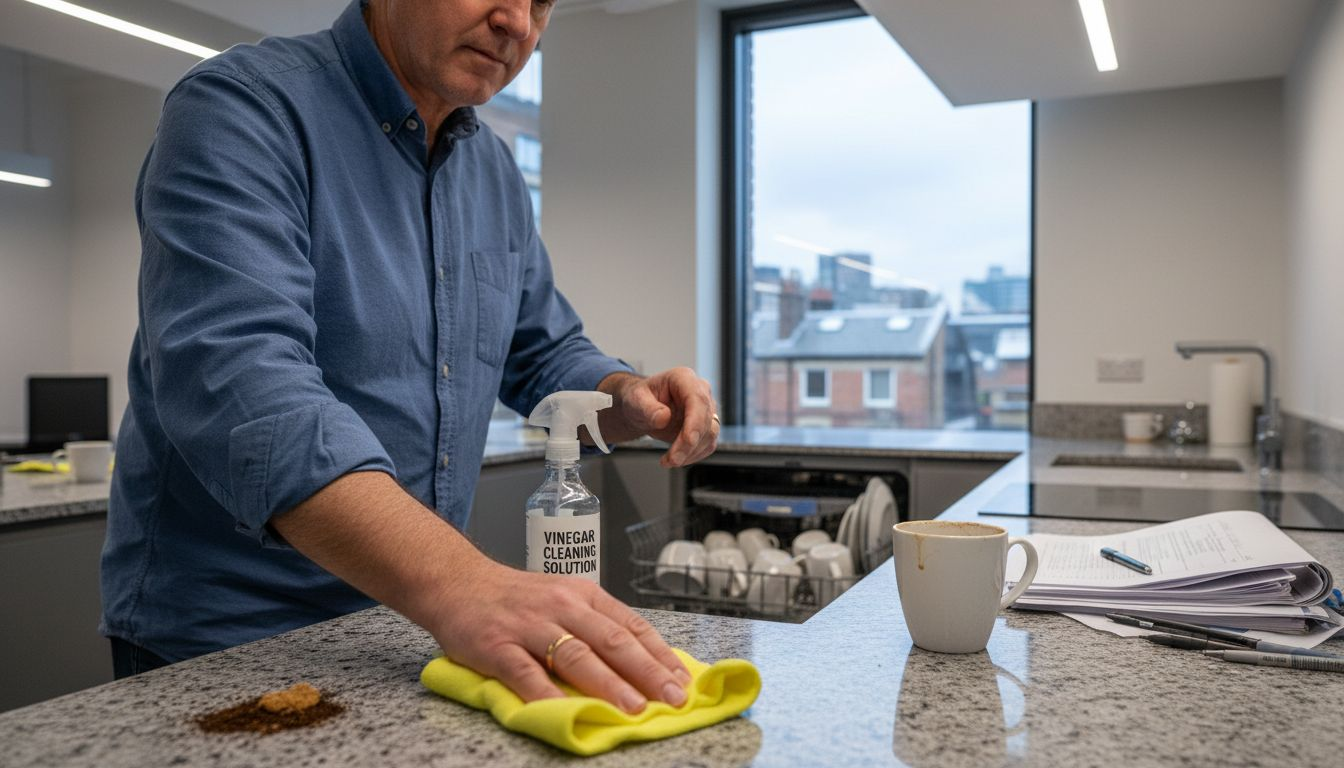
Spray countertops with a mixture of equal parts water and white vinegar. Let it sit for 30 seconds before wiping with a fresh microfiber cloth. For stubborn stains, create a paste from baking soda and water, apply it directly to the stain, wait one minute, then scrub gently. Natural cleaning solutions like vinegar and baking soda safely remove grease while sanitizing surfaces.
3. Address appliances inside and out
Wipe down the microwave interior with vinegar solution, paying special attention to splatters. Clean the refrigerator exterior and handles with your appliance-designated cloth. Check the coffee maker for buildup and run a vinegar cycle monthly to remove mineral deposits.
4. Sanitize the sink area
Scrub the sink basin with baking soda to remove stains and odors. Rinse thoroughly with hot water. Clean the faucet and surrounding areas with vinegar solution. This removes water spots and kills bacteria without harsh chemicals.
5. Maintain floors effectively
Daily microfiber mopping achieves remarkable results. Vacuum or sweep first to remove loose debris, then mop with a diluted green floor cleaner. The microfiber head traps particles that traditional mops miss, contributing to the 90% reduction in bacterial presence documented in Massachusetts office studies.
6. Apply disinfectant selectively
Reserve eco-friendly disinfectants for high-risk situations only, such as after someone has been ill or when visible contamination occurs. Apply to surfaces, allow the specified contact time (usually 3-5 minutes), then wipe clean. This targeted approach maintains safety while minimizing chemical exposure.
| Method | Pros | Cons | Effectiveness Rating |
|---|---|---|---|
| Traditional chemical cleaners | Fast-acting, widely available | Toxic fumes, surface damage risk, health concerns | 7/10 |
| Eco-friendly green products | Safe for staff, biodegradable, low VOC | May require longer contact time | 8/10 |
| Natural DIY solutions | Cost-effective, zero toxicity, food-safe | Requires preparation, limited disinfection | 7/10 |
| Combined approach (green + natural) | Maximum safety, excellent results, sustainable | Requires training and discipline | 9/10 |
Pro Tip: Keep a quick reference card posted in your kitchen showing which cloth color goes with which surface type. This visual reminder prevents mistakes during busy workdays and maintains your contamination prevention system.
Follow these eco-friendly kitchen cleaning steps consistently to establish a reliable routine. The sequence matters because cleaning high-touch areas first prevents spreading bacteria to freshly cleaned surfaces later in your process.
Safety guidelines and correct use of cleaning agents
Safe handling of cleaning agents protects both your staff and your workplace surfaces. Even eco-friendly products require proper use to deliver optimal results without unintended consequences.
Always dilute concentrated cleaners according to manufacturer specifications. Improper dilution causes up to 25% waste and increases the risk of surface damage. Measure precisely using marked spray bottles or measuring cups. Label every diluted solution clearly with the product name and dilution date.
Limit disinfectant application to necessary situations only. Overuse creates chemical residue buildup and exposes staff to unnecessary fumes. Reducing disinfectant use by 40% correlates with improved worker safety and 30% fewer respiratory complaints. Prioritize mechanical cleaning with microfiber and natural solutions for daily maintenance.
Critical safety practices:
- Wear nitrile gloves when handling any cleaning solution, even natural ones
- Ensure adequate ventilation by opening windows or running exhaust fans
- Never mix different cleaning products, particularly vinegar with hydrogen peroxide
- Store all cleaning supplies in labeled containers away from food storage areas
- Read product safety data sheets before using any new green cleaning product
- Keep a first aid kit accessible in case of accidental exposure
Disinfect kitchen sponges daily to prevent them from becoming bacteria factories. Wet the sponge thoroughly, place it in a microwave-safe dish, and microwave on high for one minute. Alternatively, boil sponges in water for five minutes. Replace sponges weekly regardless of disinfection efforts.
Maintain your microfiber cleaning tools properly to preserve their effectiveness. Launder cloths and mop heads after each use in hot water without fabric softener, which clogs the fibers. Air dry or tumble dry on low heat. This care routine extends tool life while ensuring they continue trapping bacteria effectively.
“Proper cleaning tool maintenance is as important as the cleaning itself. Contaminated tools spread bacteria instead of removing it, undermining your entire hygiene program.”
Check out eco-friendly cleaning product safety tips to deepen your understanding of green cleaning chemistry. Knowledge of how these products work helps you use them more effectively while avoiding common misapplications.
Store cleaning agents in cool, dry locations away from direct sunlight. Even natural products degrade when exposed to heat and light. Proper storage preserves potency and extends shelf life, maximizing your investment in quality green cleaning supplies.
Common mistakes and troubleshooting
Even well-intentioned office managers make preventable errors that compromise kitchen hygiene. Recognizing these mistakes helps you maintain consistent cleanliness and protect your investment in eco-friendly practices.
Never use the same cloth or sponge for multiple surface types. This cross-contamination defeats your cleaning efforts by transferring bacteria from one area to another. Implement your color-coded system religiously. If someone uses the wrong color, re-clean that surface immediately with the correct cloth.
Avoid overusing disinfectants, which damages surfaces and creates health risks. Some managers think more disinfectant means better cleaning, but this approach backfires. The chemicals accumulate, leaving sticky residues that attract dirt and irritate respiratory systems. Trust your mechanical cleaning process and reserve disinfectants for genuine high-risk situations.
Common error troubleshooting:
- Streaky countertops: You’re using too much product or dirty cloths. Reduce cleaner concentration and ensure cloths are freshly laundered.
- Persistent odors: Bacteria are growing in your sink drain or sponges. Microwave sponges for one minute daily and flush drains with boiling water weekly.
- Sticky surfaces: Product residue from over-application. Rinse surfaces with plain water and a clean cloth after cleaning.
- Ineffective cleaning: Cloths may be contaminated or worn out. Replace microfiber cloths every three months or when they show wear.
- Frequent staff complaints: Check your ventilation and reduce disinfectant use. Switch to natural cleaners for daily tasks.
Document your cleaning schedule and post it visibly in the kitchen. Regular documented cleaning schedules increase compliance by 50% and boost hygiene scores by 30%. Include checkboxes for morning and afternoon high-touch cleaning cycles. This accountability system ensures tasks get completed even during busy periods.
Pro Tip: Take before and after photos monthly to track your kitchen’s condition over time. Visual documentation helps identify problem areas that need extra attention and provides proof of your hygiene program’s effectiveness for health inspections.
Disinfect cleaning tools as often as you use them. Dirty mop heads and sponges spread more bacteria than they remove. If you notice your cleaning isn’t delivering the expected results, contaminated tools are often the culprit. Review your tool maintenance routine and increase washing frequency if needed.
Avoid these common kitchen cleaning mistakes by staying educated about proper techniques. Small adjustments to your routine often produce dramatic improvements in cleanliness and sustainability.
Expected results: how to measure cleaning success
Measuring your cleaning program’s effectiveness ensures your efforts produce real hygiene improvements. Concrete benchmarks help you optimize your routine and demonstrate value to building occupants and management.
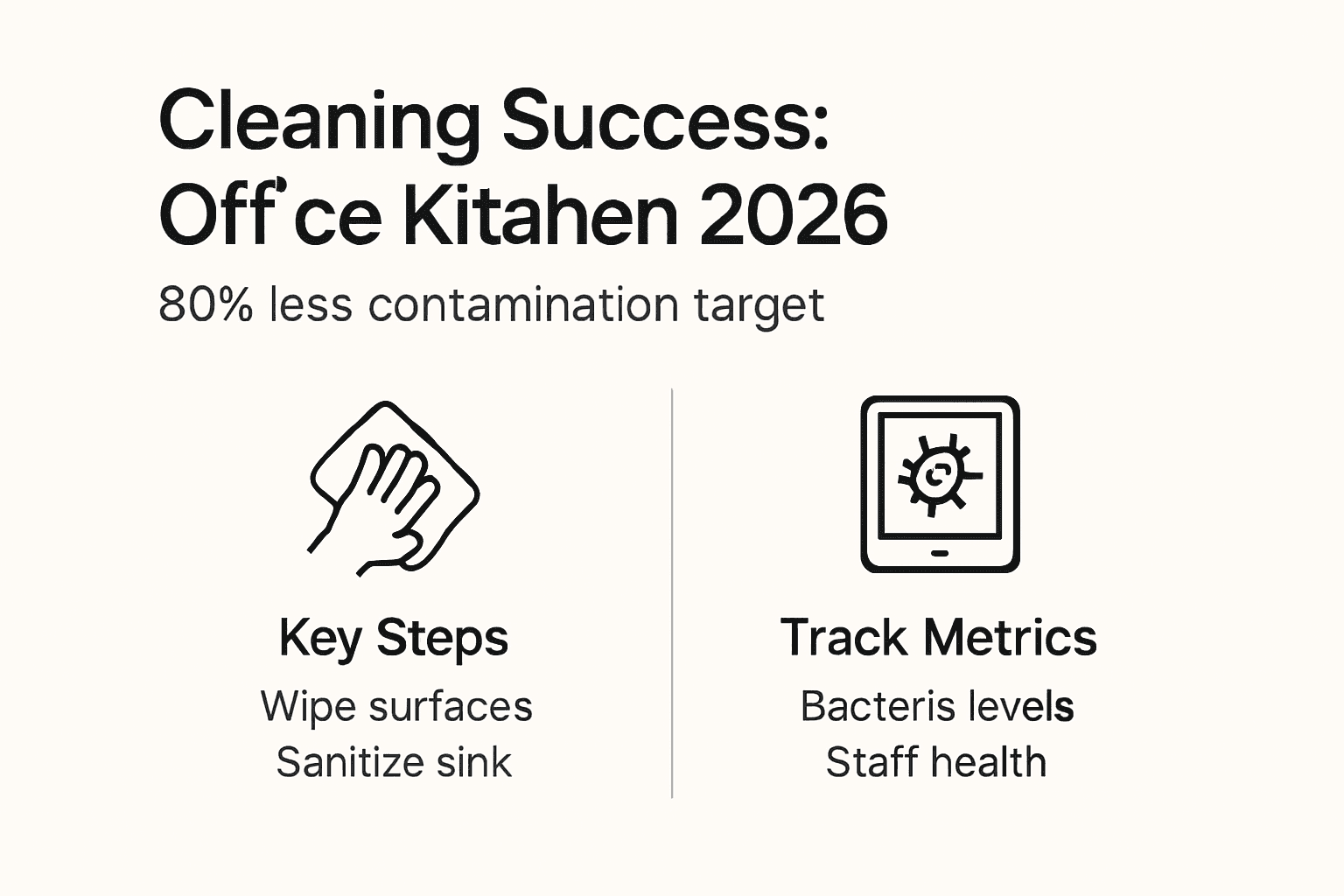
Aim for an 80% reduction in microbial contamination as your primary hygiene target. While you can’t see bacteria, you can track indirect indicators. Monitor how often staff report illness, particularly stomach issues and respiratory infections. Effective cleaning reduces microbial contamination by over 80% when performed according to Massachusetts office guidance standards.
Your daily cleaning cycles should require 15-30 minutes for standard office kitchens. If you’re consistently exceeding this timeframe, you may be using inefficient techniques or trying to address deferred maintenance. Conversely, if you finish much faster, you might be rushing through important steps. Time yourself periodically to ensure you’re maintaining the right pace.
Measurable success indicators:
- High-touch surfaces show visible cleanliness without streaks or residue
- Kitchen passes the “white glove test” on countertops and appliances
- No persistent odors between cleaning cycles
- Staff respiratory complaints decrease by 30% or more
- Cleaning supply costs remain stable or decrease due to efficient use
- Documented cleaning schedule shows 95%+ completion rate
| Metric | Baseline (Traditional) | Target (Eco-Friendly) | Measurement Method |
|---|---|---|---|
| Microbial contamination | 100% (reference) | 20% or less | ATP testing or visual inspection |
| Daily cleaning time | 35-45 minutes | 15-30 minutes | Timed observations |
| Respiratory complaints | 100% (reference) | 70% or less | Staff health logs |
| Chemical waste | 100% (reference) | 40% or less | Product usage tracking |
| Surface condition | Variable | Consistently excellent | Weekly condition audits |
Track staff health as an indirect but powerful measure. Reduced chemical use correlates with 30% fewer respiratory complaints among cleaning staff and general building occupants. Survey your team quarterly about headaches, eye irritation, and breathing difficulties. Improvements in these areas confirm your green cleaning approach benefits everyone.
Implement a weekly cleanliness audit using a simple checklist. Rate each surface on a scale of 1-5 for visible cleanliness. Record these scores to identify trends and problem areas. This data-driven approach helps you refine your technique and prove your program’s value.
Pro Tip: Schedule a professional deep cleaning quarterly to address areas your daily routine can’t fully maintain. This partnership between your efforts and occasional professional service keeps your kitchen in top condition year-round.
Review these benchmarks for measuring cleaning success and adjust your program based on results. Continuous improvement ensures your eco-friendly approach remains effective as your office evolves.
Keep your office kitchen spotless with professional eco-friendly cleaning
While daily maintenance keeps your kitchen functional, professional services elevate hygiene to exceptional standards without adding to your workload. Massachusetts businesses increasingly partner with specialized cleaners to maintain consistent, eco-friendly workplace environments.
Professional cleaning teams bring expertise in green cleaning protocols that go beyond basic maintenance. They use commercial-grade eco-friendly products and advanced techniques that achieve deeper sanitation while protecting indoor air quality. This combination delivers superior results compared to DIY efforts alone.
E.C. House Cleaning specializes in professional eco-friendly office cleaning services tailored for Massachusetts workplaces. With over 20 years of experience, they understand the unique challenges small business owners face balancing hygiene with sustainability. Their customizable programs fit your schedule and budget while ensuring compliance with Massachusetts green cleaning standards.
Outsourcing routine deep cleaning saves time for your core business activities. Your staff can focus on their primary responsibilities instead of wrestling with stubborn stains or hard-to-reach areas. Professional cleaners handle the intensive work while you maintain daily touchups, creating a sustainable division of labor.
Consider small business cleaning solutions that complement your internal efforts. This partnership approach combines your daily maintenance with professional weekly or monthly deep cleaning, ensuring nothing falls through the cracks. The result is a consistently spotless kitchen that impresses clients and supports staff wellbeing.
Frequently asked questions about office kitchen cleaning
How often should I clean high-touch surfaces in the office kitchen?
Clean high-touch surfaces at least twice daily for optimal hygiene, typically mid-morning and mid-afternoon. This frequency prevents germ buildup and cross-contamination throughout the workday. Focus on doorknobs, refrigerator handles, microwave buttons, and faucet controls during each cycle.
What are the safest natural cleaning agents to use in office kitchens?
White vinegar, baking soda, and lemon juice rank as the safest and most effective options. Natural cleaners remove 95% of common stains and reduce bacteria by approximately 70% without toxic fumes. Mix equal parts water and vinegar for general cleaning, or create baking soda paste for stubborn stains.
Can reducing disinfectant use really improve staff health?
Absolutely. Facilities reducing disinfectant use by 40% report 30% fewer complaints related to respiratory irritation among cleaning staff and building occupants. Prioritizing mechanical cleaning with microfiber and natural solutions protects health while maintaining excellent hygiene standards.
How can I ensure my cleaning routine complies with Massachusetts regulations?
Follow Massachusetts office cleaning guidance by using EPA-approved green products, maintaining documented cleaning schedules, and focusing on high-touch surface sanitization twice daily. Visit the official office kitchen hygiene benchmarks page for detailed compliance requirements. Regular training keeps your team updated on current standards.
What tools are essential for effective and green office kitchen cleaning?
Color-coded microfiber cloths top the essential list, followed by microfiber mops, spray bottles for diluted solutions, and personal protective equipment. Natural cleaning agents like vinegar and baking soda, plus selective eco-friendly disinfectants, complete your toolkit. Check eco-friendly office cleaning FAQs for detailed product recommendations and usage tips.