Moving into a new home in Massachusetts should feel exciting, not overwhelming. Yet many homeowners and property managers struggle to ensure thorough, safe cleaning that prevents health risks and creates a welcoming environment. Disinfecting high-touch surfaces can reduce pathogen presence by up to 99.9% when done correctly. This guide walks you through essential tools, step-by-step cleaning sequences, safety protocols, eco-friendly options, common mistakes to avoid, and realistic timeframes to master efficient move-in cleaning.
Table of Contents
- Introduction To Move-In Cleaning Essentials
- Prerequisites: What You Need Before Starting
- Step-By-Step Move-In Cleaning Process
- Common Mistakes And Troubleshooting Tips
- Expected Outcomes And Timeframes
- Conclusion And Final Recommendations
- Discover Expert Residential Cleaning Services In Massachusetts
Key takeaways
| Point | Details |
|---|---|
| Prioritize high-touch surfaces | Disinfecting doorknobs, switches, and counters first reduces health risks dramatically. |
| Gather essential tools | Microfiber cloths, HEPA vacuums, and EPA-approved disinfectants are non-negotiable for thorough cleaning. |
| Never mix chemicals | Combining bleach with ammonia or other products creates toxic gases causing thousands of emergencies annually. |
| Follow a logical sequence | Starting with disinfection, then vacuuming, then mopping saves time and improves results. |
| Consider eco-friendly options | Certified green products effectively sanitize while protecting Massachusetts indoor air quality. |
Introduction to move-in cleaning essentials
Move-in cleaning creates a healthy, welcoming foundation for new occupants. Without proper sanitation, previous residents leave behind dirt, allergens, and pathogens that compromise indoor air quality and comfort. For Massachusetts homeowners and property managers, this step becomes even more critical.
Massachusetts’ humid climate and seasonal allergen prevalence require special attention to dust, mold, and moisture control. High humidity and allergen levels in Massachusetts housing demand thorough cleaning to minimize respiratory risks and allergic reactions. The state’s older housing stock often harbors hidden dirt behind appliances and inside cabinets.
Comprehensive move-in cleaning covers multiple priorities:
- Sanitizing all high-touch surfaces like doorknobs, light switches, cabinet handles, and countertops
- Deep cleaning carpets, upholstery, and hard floors to remove embedded allergens
- Scrubbing bathrooms and kitchens to eliminate bacteria and odors
- Vacuuming and wiping behind appliances where grease and dust accumulate
- Disinfecting inside cabinets, closets, and storage areas
This preparation ensures tenants or new homeowners step into a space that looks clean and actually is clean at the microbial level. Investing time in proper move-in cleaning pays dividends in health, comfort, and tenant satisfaction. Gathering the right essential cleaning supplies before you start makes the entire process smoother and more effective.
Prerequisites: what you need before starting
Successful move-in cleaning depends on having the right tools, safety gear, and knowledge before you begin. Rushing in unprepared wastes time and reduces effectiveness. Here’s what every Massachusetts homeowner or property manager needs.
Essential tools and supplies include:
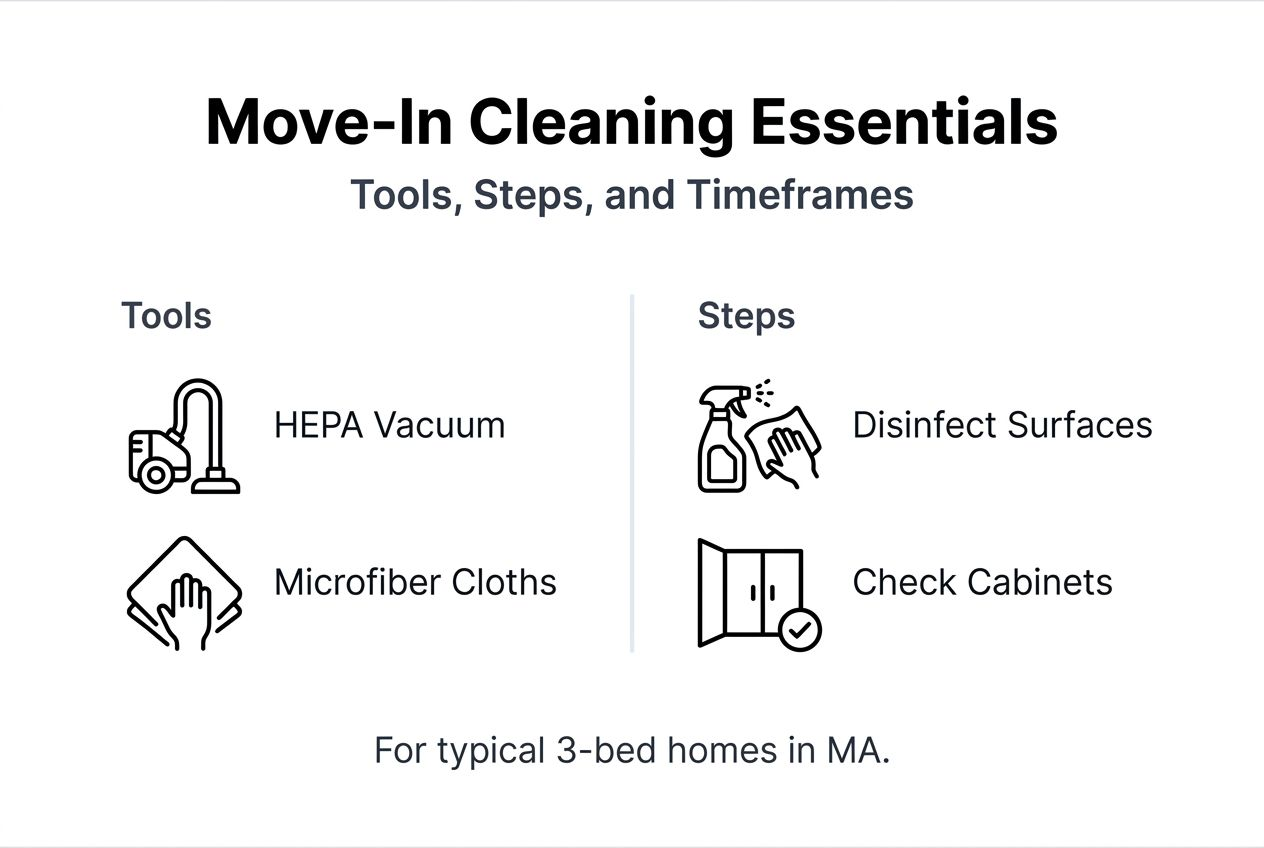
- Microfiber cloths in multiple colors to prevent cross-contamination between areas
- HEPA-filter vacuum cleaner to capture fine allergen particles effectively
- Mop with washable, replaceable heads for hygienic floor cleaning
- Two buckets (one for cleaning solution, one for rinsing)
- EPA-registered disinfectants proven effective against common pathogens
- All-purpose cleaner, glass cleaner, and bathroom-specific products
- Scrub brushes in various sizes for grout, tile, and tough stains
Microfiber cloths reduce cleaning time by approximately 25% compared to traditional cotton rags while improving dirt removal. This efficiency matters when you’re tackling an entire property on a tight timeline.
Safety gear protects you during the cleaning process:
- Disposable nitrile gloves to prevent skin contact with chemicals and contaminants
- N95 mask if you’re sensitive to dust, mold, or strong cleaning product fumes
- Safety glasses when working with spray cleaners or overhead surfaces
- Adequate ventilation knowledge to prevent indoor air quality problems
| Tool Category | Recommended Items | Why It Matters |
|---|---|---|
| Cleaning Cloths | Microfiber in 3+ colors | Prevents cross-contamination, improves efficiency by 25% |
| Vacuum | HEPA-filter model | Captures 99.97% of particles 0.3 microns or larger |
| Disinfectants | EPA-registered products | Proven pathogen elimination up to 99.9% |
| Floor Care | Microfiber mop + washable heads | Hygienic, reusable, effective on multiple floor types |
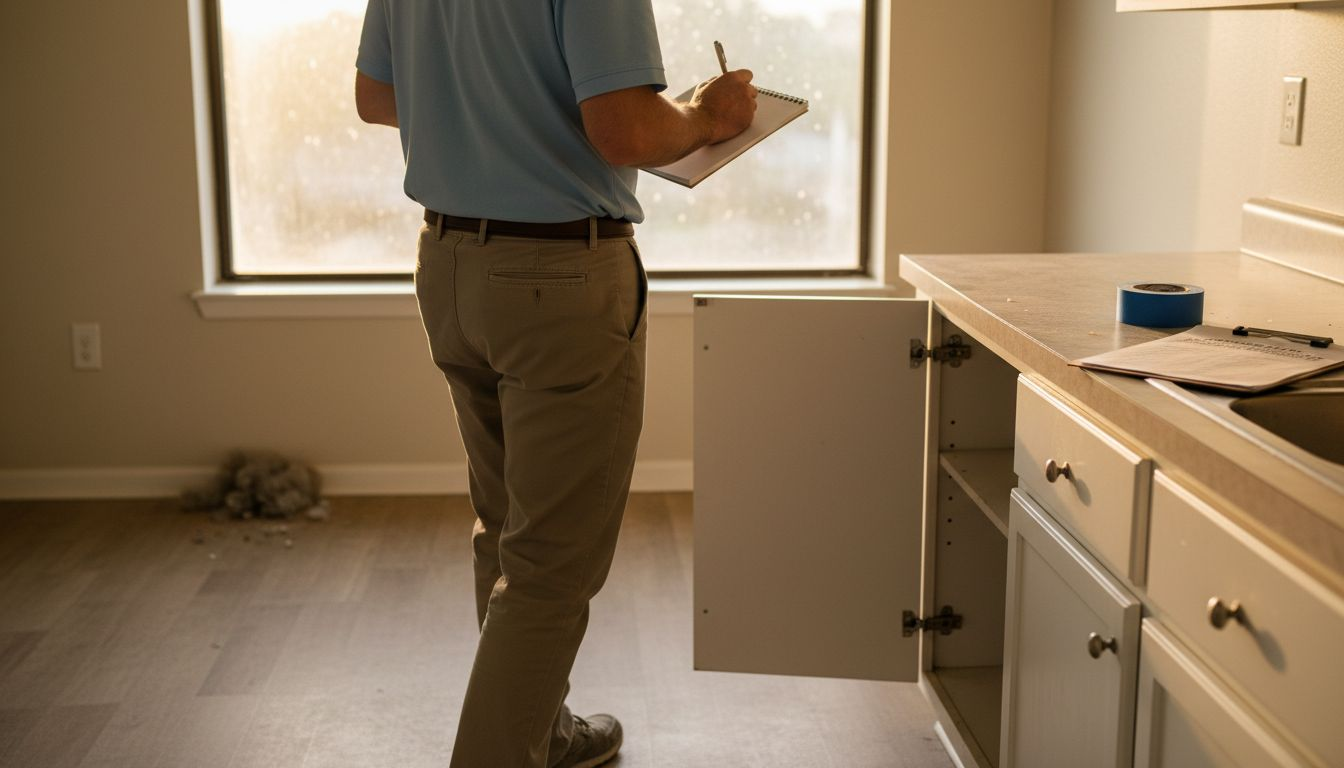
Before cleaning begins, conduct a pre-cleaning inspection. Walk through the property noting any existing damage, pest evidence, or areas requiring special attention. Document these findings with photos to protect yourself from future disputes. Check that all utilities work properly since you’ll need running water and electricity.
Pro Tip: Create a complete cleaning supplies checklist and shop once to avoid multiple store trips. Consider eco-friendly cleaning products if occupants have chemical sensitivities or environmental concerns.
Chemical safety literacy matters as much as having the right products. Read all product labels completely before use. Never assume you know how to use a cleaner safely. Understanding proper dilution ratios, contact times, and incompatible product combinations prevents injuries and ensures effectiveness.
Step-by-step move-in cleaning process
Following a logical sequence maximizes efficiency and ensures nothing gets missed. This prioritized approach addresses health concerns first, then tackles visible cleanliness, finishing with final touches.
Start by disinfecting all high-touch surfaces throughout the property. Focus on doorknobs, light switches, cabinet handles, stair railings, and countertops. Disinfecting high-touch surfaces can reduce household illness risk by nearly 100% when done with EPA-approved products. Apply disinfectant and allow proper contact time per label instructions before wiping.
Move to carpets and upholstery next. Vacuum thoroughly using your HEPA-filter machine, working in overlapping passes to capture embedded allergens. For heavily soiled carpets, consider steam cleaning or hot water extraction to remove deep-down dirt and kill dust mites. This step matters greatly in Massachusetts homes where seasonal allergens accumulate.
Clean kitchen appliances inside and out. Pull the refrigerator, stove, and dishwasher away from walls to vacuum and mop behind them. Wipe down appliance exteriors, then clean interiors with appropriate products. Don’t forget the microwave, oven interior, and under the sink cabinet where moisture problems often hide.
Scrub bathrooms completely, starting from the top and working down. Clean light fixtures and exhaust fans first, then mirrors and counters, followed by toilets, tubs, and showers. Finish by mopping the floor. Pay special attention to grout lines where mold and mildew thrive in humid Massachusetts conditions.
Wipe down all cabinets and closets inside and out. Remove shelf liners if present and clean underneath. This step eliminates odors and prevents pests from establishing themselves in hidden spaces. Check for signs of water damage or pest droppings during this process.
Clean all windows, sills, and tracks. Dirty windows diminish natural light and create a negative first impression. Use a glass cleaner and microfiber cloth for streak-free results. Vacuum window tracks where dust and dead insects accumulate.
Mop all hard floors last using a microfiber mop and EPA-approved floor cleaner. Work from the farthest corner toward the exit to avoid walking on freshly cleaned areas. Change your mop water frequently to prevent spreading dirt around.
| Cleaning Stage | Priority Level | Typical Time (3-bedroom) |
|---|---|---|
| High-touch disinfection | Critical | 30-45 minutes |
| Carpet/upholstery vacuuming | High | 45-60 minutes |
| Kitchen deep clean | High | 60-75 minutes |
| Bathroom scrubbing | High | 45-60 minutes |
| Cabinet/closet wiping | Medium | 30-45 minutes |
| Window cleaning | Medium | 30-40 minutes |
| Floor mopping | Final step | 30-45 minutes |
Maintain excellent ventilation throughout the entire process. Open windows when weather permits, run exhaust fans, and use box fans to improve air circulation. This protects you from cleaning product fumes and helps surfaces dry faster. Following this step-by-step cleaning guide ensures consistent results.
Pro Tip: Consider hiring professional move-in cleaning services if your timeline is tight or the property requires extensive work. Professionals bring specialized equipment and expertise that deliver superior results. Learning from move-out cleaning insights can also improve your move-in approach.
Common mistakes and troubleshooting tips
Even experienced cleaners make errors that compromise results or create safety hazards. Avoiding these common pitfalls ensures your move-in cleaning succeeds.
Never mix bleach with ammonia, vinegar, or other cleaning chemicals. Improper mixing of cleaning chemicals causes over 6,500 emergency visits in the U.S. annually due to toxic gas production. These reactions create chlorine gas or chloramine vapors that damage lungs and can prove fatal in enclosed spaces. Use one product at a time and rinse surfaces between different cleaners.
Insufficient ventilation ranks as another frequent mistake. Working in enclosed spaces with strong cleaning products builds up harmful fumes that cause headaches, dizziness, and respiratory irritation. Always open windows, run exhaust fans, and take breaks in fresh air. If you feel lightheaded or develop a headache, exit immediately and ventilate the space better.
Skipping areas behind appliances and inside cabinets leaves dirt, allergens, and pest attractants that undermine your entire effort. These hidden spaces often harbor the worst contamination. Schedule extra time for these zones or you’ll regret it when odors emerge or pests appear later.
Using dirty cleaning tools spreads contamination rather than removing it. Wash microfiber cloths after each use, rinse mop heads thoroughly, and empty vacuum canisters or replace bags regularly. Cross-contaminating surfaces defeats the purpose of cleaning. Color-code your cloths (blue for glass, green for kitchen, red for bathroom) to maintain hygiene.
Failing to wear gloves during extended cleaning sessions exposes your skin to harsh chemicals and biological contaminants. Even “natural” cleaners can cause skin irritation with prolonged contact. Disposable gloves cost little and prevent problems.
“The biggest cleaning mistake I see is rushing through the process without proper preparation. Taking 15 minutes to organize your supplies and plan your route saves an hour of backtracking and missed spots.” – Professional cleaning industry expert
Not reading product labels causes misuse that wastes money and reduces effectiveness. Different surfaces require different products and techniques. What works on tile may damage hardwood. Following manufacturer instructions ensures both safety and results. Review cleaning safety tips before starting your project.
If you encounter stubborn stains or odors that won’t respond to normal cleaning, don’t keep applying stronger chemicals randomly. Research the specific stain type and appropriate removal method. Sometimes professional help becomes necessary for issues like smoke damage, pet urine in subfloors, or mold growth.
Expected outcomes and timeframes
Setting realistic expectations helps you plan effectively and decide whether DIY or professional cleaning makes sense for your situation. Understanding typical timeframes, costs, and quality benchmarks guides better decisions.
For a standard 3-bedroom, 2-bathroom Massachusetts home, DIY move-in cleaning typically requires 3 to 5 hours when working alone. Add a helper and you can reduce this to 2 to 3.5 hours. Larger properties or homes with significant neglect demand proportionally more time. Factor in breaks because cleaning is physically demanding work.
Professional services complete the same job faster through experience, specialized equipment, and team efficiency. Professional move-in cleaning saves about 60% cleaning time compared to DIY methods. A professional team might finish in 1.5 to 2 hours what takes you 4 hours alone. This time savings becomes crucial when coordinating move-in dates, utility connections, and other logistics.
Cost considerations differ between approaches:
| Approach | Typical Cost (3-bed home) | Time Required | Quality Level |
|---|---|---|---|
| DIY | $50-$100 (supplies only) | 3-5 hours | Good (with proper technique) |
| Professional | $200-$400 | 1.5-2 hours | Excellent (guaranteed results) |
DIY cleaning requires purchasing supplies upfront, but you keep leftover products for ongoing maintenance. Professional services cost more per session but eliminate equipment investment, physical labor, and time commitment. The choice depends on your budget, schedule flexibility, and cleaning confidence. Comparing professional vs. DIY cleaning helps clarify which option suits your needs.
Expect these quality outcomes from thorough move-in cleaning:
- Visibly clean surfaces free from dust, stains, and residue
- Fresh smell without chemical odors or musty scents
- Sanitary high-touch areas tested for pathogen reduction
- Allergen levels decreased significantly in carpets and upholstery
- Improved indoor air quality from removed dust and contaminants
Property managers report that proper move-in cleaning reduces tenant complaints by approximately 40% and improves lease renewal rates. Tenants who move into genuinely clean spaces feel valued and take better care of the property. This investment pays returns through reduced turnover costs and maintenance issues.
For move-in inspections, professional cleaning provides documentation and guarantees that protect you if cleanliness disputes arise. Many services include before and after photos as proof of work completed. This evidence proves valuable for security deposit negotiations or tenant expectations management.
Conclusion and final recommendations
Mastering move-in cleaning essentials ensures Massachusetts homeowners and property managers create healthy, welcoming spaces efficiently. Prioritize disinfecting high-touch surfaces first to eliminate health risks immediately. Use quality tools like microfiber cloths and HEPA vacuums that improve results while reducing effort.
Never compromise on safety. Avoid mixing chemicals, maintain ventilation, and wear protective gear throughout the process. Following the step-by-step sequence prevents missed areas and maximizes efficiency. Remember that thorough cleaning behind appliances and inside cabinets matters as much as visible surfaces.
Consider professional services when time constraints, property size, or cleaning challenges exceed your capacity. Professional cleaning services deliver guaranteed results with less stress and time investment. Whether you clean yourself or hire help, adopting eco-friendly products protects both occupant health and environmental quality.
The effort you invest in proper move-in cleaning pays dividends through healthier indoor environments, satisfied tenants, and reduced long-term maintenance issues. Start with the right preparation, follow proven methods, and don’t hesitate to seek professional assistance when needed.
Discover expert residential cleaning services in Massachusetts
When move-in cleaning feels overwhelming or your schedule doesn’t allow for thorough DIY work, professional help delivers peace of mind. E.C. House Cleaning brings over 20 years of experience serving Massachusetts homeowners and property managers with reliable, efficient residential cleaning services Massachusetts residents trust.
Our move in move out cleaning specialists use advanced equipment, EPA-approved disinfectants, and eco-friendly products that protect your property and occupants. We customize service packages to match your exact needs, whether you manage multiple rental properties or prepare your new home. Understanding what does a residential cleaner do helps you appreciate the thoroughness professionals bring to every job. Schedule your free consultation today and experience the difference professional cleaning makes.
FAQ
What are the must-have tools for move-in cleaning in Massachusetts?
Essential tools include microfiber cloths in multiple colors, a HEPA-filter vacuum cleaner, EPA-registered disinfectants, a mop with washable heads, buckets, and quality all-purpose cleaners. Safety gear like disposable gloves and masks protects you during the work. Massachusetts’ humid climate and allergen challenges make HEPA filtration especially important for capturing fine particles that trigger respiratory issues. Having a complete cleaning supplies checklist ensures you don’t waste time with store trips mid-project.
How can I ensure safety when using cleaning chemicals during move-in?
Never mix different cleaning chemicals, especially bleach with ammonia or vinegar, as mixing bleach with ammonia or other chemicals produces toxic gases causing thousands of emergency incidents. Always work in well-ventilated spaces by opening windows and running exhaust fans. Wear disposable gloves to protect your skin and read all product labels completely before use. Following proper cleaning safety guide protocols prevents injuries and ensures effective results.
What is the typical timeframe for completing a move-in cleaning?
DIY cleaning of a standard 3-bedroom Massachusetts home typically takes 3 to 5 hours working alone or 2 to 3.5 hours with help. Professional services reduce this time significantly, often completing the same work in 1.5 to 2 hours through team efficiency and specialized equipment. Property size, condition, and cleaning depth affect total time required. Understanding professional move-in cleaning timing helps you plan logistics around move-in dates and utility connections.
Are eco-friendly cleaning products effective for move-in cleaning?
Certified eco-friendly products safely and effectively disinfect surfaces while reducing allergens and protecting indoor air quality. Many green cleaners carry EPA Safer Choice certification proving their performance meets rigorous standards. Massachusetts homes benefit from environmentally conscious products that don’t compromise cleaning power or occupant health. Learning about eco-friendly cleaning effectiveness shows how green alternatives match or exceed traditional chemical cleaners while protecting sensitive individuals and pets.
Recommended
- Move Out Cleaning: What Massachusetts Homeowners Get | E.C. House Cleaning
- House Cleaning Before Move In: Complete Step-by-Step Guide | E.C. House Cleaning
- Essential Cleaning Supplies Checklist for Massachusetts in 2025 | E.C. House Cleaning
- Deep Cleaning Essentials 2025: Guide for Massachusetts Homes | E.C. House Cleaning