TL;DR:
- Professional cleaning helps properties sell faster and at higher prices in Massachusetts.
- Deep cleans follow a systematic top-to-bottom method, crucial for move-outs and renovations.
- DIY cleaning is cost-effective for light maintenance, but professionals offer thorough, insured results.
Most homeowners assume a quick vacuum and some surface wiping is enough before a showing. It is not. Professionally cleaned homes sell 73% faster and command prices 5 to 15% higher than comparable listings. In Massachusetts, where the real estate market moves fast and buyers are discerning, that gap matters. This guide walks you through why professional cleaning is a high-return investment, which methods work best, how to weigh DIY against hiring out, and how to handle the toughest real-world scenarios specific to Massachusetts properties.
Table of Contents
- Why cleaning matters in Massachusetts real estate
- Professional cleaning methods: Deep cleans, move-out, turnover, and eco-friendly approaches
- DIY vs professional cleaning: Comparing costs, effort, equipment, and results
- Edge cases and seasonal challenges: Heavy buildup, specialty cleaning, and Massachusetts winter factors
- What most home sellers and property managers miss about cleaning for real estate
- Next steps: Find expert cleaning services for Massachusetts real estate
- Frequently asked questions
Key Takeaways
| Point | Details |
|---|---|
| Professional cleaning boosts value | Deep cleaning can increase home sale prices and reduce days on market for Massachusetts properties. |
| DIY vs pro comparison | Professional cleaners save time and offer superior results, while DIY can work for minor tasks. |
| Edge cases require expertise | Neglected, post-renovation, and winter-challenged homes benefit from specialty cleaning and rapid teams. |
| Eco-friendly methods are standard | Many Massachusetts cleaning services use sustainable, resident-safe products for every real estate clean. |
| Documentation and timing matter | Proper planning and documented cleaning prevent disputes and ensure legal compliance in Massachusetts. |
Why cleaning matters in Massachusetts real estate
Clean properties do not just look better. They signal something deeper to buyers and tenants: that the home has been cared for, that the owner takes pride in the space, and that there are likely fewer hidden problems lurking behind the walls. That psychological signal is powerful, and real estate agents know it.
In fact, cleaning tops 88% of agent staging advice nationwide. It consistently ranks above furniture arrangement, paint touch-ups, and landscaping as the single most impactful preparation step before a showing. That is not a coincidence. Buyers walk into a spotless home and immediately lower their guard. Tenants do the same.
For Massachusetts property managers, there is also a legal dimension. MA sanitary code requires clean conditions in rental properties before occupancy. Failing to meet those standards can create liability, delay move-ins, and cost you more in the long run than a professional clean ever would.
Beyond compliance, documentation matters. Before any showing or tenant transition, photograph every room thoroughly. Before-and-after photos protect you from disputes over damage or cleanliness claims. Property managers handling flawless rental turnovers know that a clean paper trail is just as important as a clean floor.
Here is what professional cleaning communicates to your audience:
- Trust: A clean home implies a well-maintained home.
- Value: Buyers perceive cleanliness as a proxy for quality.
- Compliance: Rental properties meet legal standards from day one.
- Speed: Fewer objections during showings means faster decisions.
For sellers preparing for moving in cleaning transitions or listing a property, consider professional cleaning as part of your pre-market budget, not an afterthought. Review property staging tips alongside your cleaning plan to maximize visual impact during showings.
“A clean home is not just more attractive. It is more credible. Buyers trust what they can see, smell, and feel the moment they walk through the door.”
Professional cleaning methods: Deep cleans, move-out, turnover, and eco-friendly approaches
Professional cleaners do not just clean harder than you would at home. They clean smarter, using a systematic approach that eliminates the spots most people overlook.
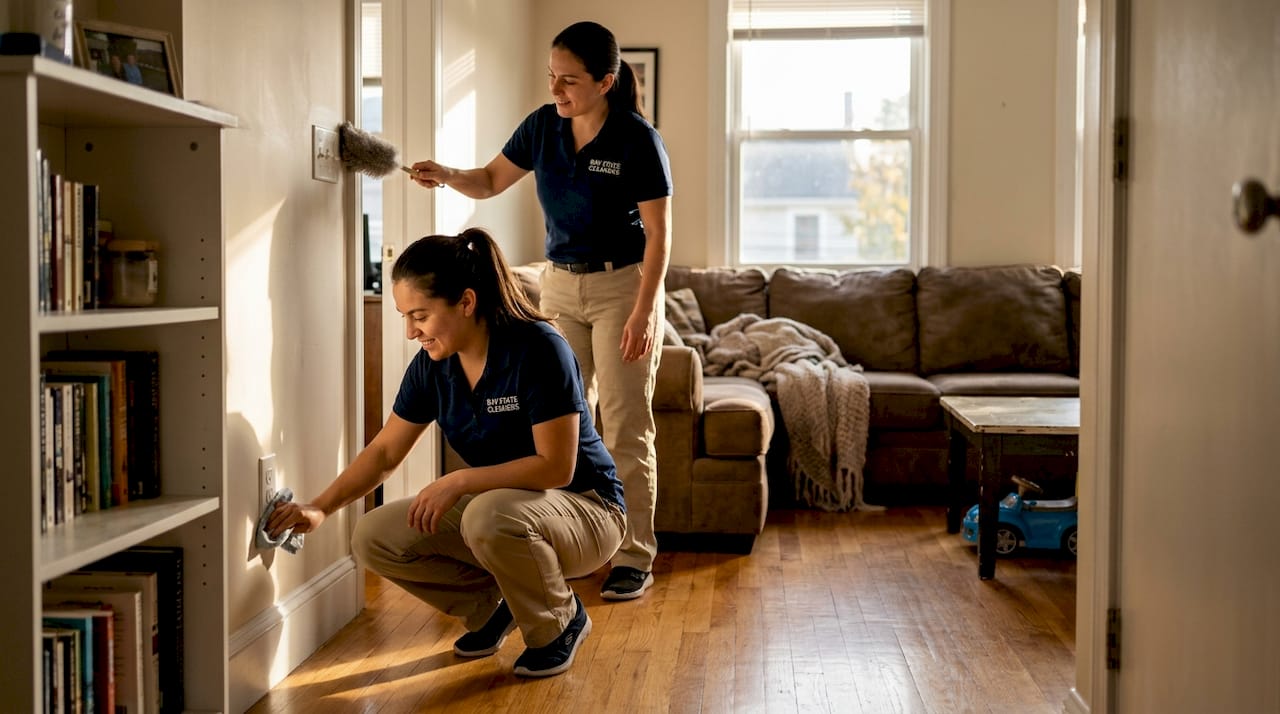
The standard real estate deep clean follows a top-to-bottom method. Cleaners start at ceiling fixtures and work downward, so dust and debris fall onto surfaces that have not been cleaned yet. This prevents recontamination, which is the single biggest mistake DIY cleaners make.
Here is a typical room-by-room protocol for a real estate deep clean:
- Living areas: Dust ceiling fans, light fixtures, and vents. Wipe baseboards, window sills, and door frames. Clean windows inside and out.
- Kitchen: Degrease oven interior and exterior, clean refrigerator coils and drawers, scrub sink and faucet, wipe cabinet faces and interiors.
- Bathrooms: Descale showerheads and faucets, scrub grout lines, disinfect toilet base and tank, polish mirrors and fixtures.
- Bedrooms: Wipe all surfaces, clean closet interiors, vacuum or steam clean carpets.
- Floors throughout: Vacuum with HEPA-filter equipment, mop hard floors with appropriate solutions, treat stains.
- High-touch surfaces last: Light switches, door handles, cabinet pulls, and remote controls get disinfected at the very end.
Pro Tip: Always disinfect high-touch areas last. If you clean them early, foot traffic and continued work will recontaminate them before the showing.
For move-out cleans, timing coordination is critical. Schedule cleaning after all repairs and paint jobs are finished. Painting before cleaning means dust and debris settle on wet surfaces. Cleaning before repairs means contractors track in dirt. Review the full open house cleaning checklist to sequence your preparation correctly.
On cost and time: professional deep cleans run $180 to $375 for standard homes, with a 2,000 square foot property taking 4 to 8 hours professionally versus 12 to 15 hours for a DIY effort. That time difference alone often justifies the cost for busy sellers and managers.
For eco-conscious property owners, eco-friendly cleaning products are widely available through licensed and insured teams. These products avoid harsh chemical residues that can affect air quality during showings, which matters especially if buyers have children or allergies. Explore sustainable cleaning products that deliver professional results without environmental trade-offs.
| Cleaning type | Best for | Typical timeline |
|---|---|---|
| Standard clean | Pre-showing touch-up | 2 to 3 hours |
| Deep clean | Move-out, listings | 4 to 8 hours |
| Turnover clean | Rental transitions | 3 to 6 hours |
| Post-construction | Renovation debris | 6 to 10 hours |
DIY vs professional cleaning: Comparing costs, effort, equipment, and results
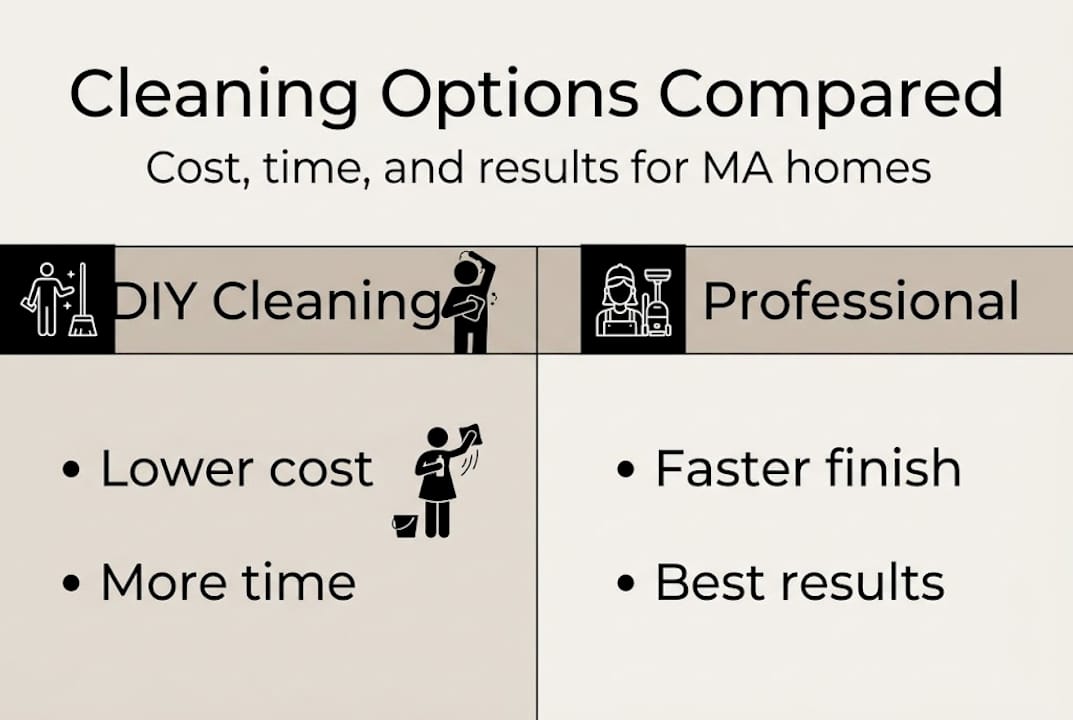
Let’s be honest. DIY cleaning can work for light maintenance between showings. But for a real estate-grade deep clean, the gap between what you can do and what professionals deliver is significant.
The equipment difference alone is striking. Professional teams use HEPA-filter vacuums and steam cleaners that remove 95% more allergens than standard consumer vacuums. That matters during showings when buyers with sensitivities walk through. It also matters for air quality documentation in rental properties.
Time is the other major factor. A 2,000 square foot home takes a solo DIY cleaner 12 to 15 hours. A professional team handles the same space in 4 to 8 hours. That is a full weekend of your time versus a half day for someone else.
Here is where each approach makes sense:
- DIY works well for: Weekly maintenance cleans, light touch-ups between showings, small studio apartments with minimal wear.
- Professional cleaning is better for: Move-out inspections, listings, post-renovation debris, multi-unit turnovers, any property with heavy use.
For property managers handling multiple units, the turnover cleaning debate often comes down to consistency. An in-house team may cost less per unit but varies in quality. Outsourcing to a professional service delivers a consistent checklist-driven result every time, which protects you from tenant complaints and security deposit disputes.
DIY risks for move-out deep cleaning include missed grout lines, overlooked appliance interiors, and skipped areas like behind the refrigerator or under the stove. These are exactly the spots inspectors and tenants check first.
| Factor | DIY | Professional |
|---|---|---|
| Cost | Low upfront | $180 to $375 |
| Time | 12 to 15 hours | 4 to 8 hours |
| Equipment | Basic | HEPA, steam cleaners |
| Consistency | Variable | Checklist-driven |
| Insurance | None | Fully insured |
For buyers preparing a new home, a move-in cleaning guide can help you decide what to tackle yourself and what to hand off before unpacking.
Edge cases and seasonal challenges: Heavy buildup, specialty cleaning, and Massachusetts winter factors
Not every property walks into a cleaning appointment in average condition. Some units have years of buildup. Others come off a renovation with drywall dust coating every surface. Massachusetts winters add another layer entirely.
Specialty cleaning scenarios require more than a standard checklist. Neglected units need targeted treatments including carpet shampooing, odor removal treatments, and post-renovation debris clearing. These are not add-ons. They are essential steps that prevent a property from failing inspection or turning off buyers the moment they open the door.
For rapid turnarounds, such as a tenant moving out Friday and a new one moving in Monday, you need a team that can mobilize quickly and work to a tight checklist. That is not a job for a solo cleaner with a mop. It requires a coordinated crew with a clear division of tasks.
Here are the most common edge cases Massachusetts property owners face:
- Post-renovation debris: Drywall dust, paint overspray, adhesive residue, and construction grit require specialty tools and techniques.
- Odor removal: Pet odors, smoke, and mildew require enzyme treatments and air purification, not just surface cleaning.
- Carpet shampooing: High-traffic carpets in rental units need hot water extraction, not just vacuuming.
- Multi-unit consistency: Use standardized checklists across all units so every tenant receives the same baseline condition.
- Robot vacuums for high-turnover floors: Automated floor maintenance between professional visits keeps hard floors presentable without daily manual effort.
Massachusetts winters bring a specific challenge: salt and mud tracked in from December through March. Entryways, hallways, and kitchen floors accumulate road salt residue that damages grout and hardwood finishes over time. Schedule a specialty cleaning service in early spring to address winter buildup before listing season peaks.
Pro Tip: Always coordinate cleaning after repairs and paint jobs. Any work done after the clean will reintroduce dust and debris, wasting your investment.
The deep clean advantage for Massachusetts sellers is especially clear in spring, when the market heats up and competition between listings is highest. A property that smells fresh, looks polished, and shows no seasonal wear stands out immediately.
What most home sellers and property managers miss about cleaning for real estate
Here is something most guides will not tell you: a home can look clean and still underperform at showings. Buyers and tenants pick up on subtle cues that most sellers never think about. A faint smell near the garbage disposal. A cloudy film on shower glass. Dust on the top of the refrigerator that only a tall person would notice.
These details are not minor. They create doubt. And doubt kills deals.
The other thing sellers consistently underestimate is documentation. Photograph before and after every clean to protect yourself from tenant disputes and security deposit conflicts. This is especially important in Massachusetts, where sanitary code standards create a legal baseline for rental conditions.
Timing matters more than most people realize too. Cleaning too early means the property accumulates dust and odors before the showing. Cleaning too late means you are rushing and missing details. The sweet spot is 24 to 48 hours before a showing or inspection, with a light touch-up the morning of.
Professionals bring something beyond tools and checklists: trained eyes. They notice what you have stopped seeing because you live with it every day. Use a detailed cleaning checklist as your baseline, but trust that a professional team will catch what the checklist misses.
Next steps: Find expert cleaning services for Massachusetts real estate
You now have a clear picture of what real estate cleaning involves, what it costs, and where the biggest opportunities are. The next step is putting it into action before your next showing or tenant transition.
E.C. House Cleaning has served Massachusetts homeowners and property managers for over 20 years. Whether you need a move-in cleaning guide to prepare a new space or are ready to book move-out cleaning services between tenants, we handle the details so you can focus on the transaction. Our insured, family-owned team uses eco-friendly products and proven checklists to deliver consistent results across every property type. Explore our full range of home cleaners in Massachusetts and request a free quote today.
Frequently asked questions
How much does professional real estate cleaning in Massachusetts cost?
Typical prices range from $180 to $375 for standard homes, which works out to roughly $0.10 to $0.30 per square foot depending on property size and condition.
What areas of a home are included in a real estate deep clean?
Professional deep cleans cover kitchens, bathrooms, floors, appliances, windows, and all high-touch surface areas including light switches, handles, and cabinet pulls.
Is eco-friendly cleaning available for real estate properties?
Yes. Many professional teams now use sustainable, eco-friendly products that are safe for residents and the environment without sacrificing cleaning power.
How does cleaning affect my home’s sale price or rental value?
Homes that receive professional cleaning sell up to 15% higher and spend significantly less time on market compared to properties that skip this step.
Can I do real estate cleaning myself or should I hire professionals?
DIY works for light maintenance, but professionals are faster and more thorough than solo efforts, and their work is fully insured, which protects you during tenant transitions and inspections.
Recommended
- Simple strategies to keep your Massachusetts home spotless | E.C. House Cleaning
- Massachusetts Cleaning Services – Professional Cleaning Service Boston
- Professional cleaning before moving in: 2026 Massachusetts guide | E.C. House Cleaning
- Move Out Cleaning: What Massachusetts Homeowners Get | E.C. House Cleaning