Finding cleaning products that actually work without harming your family or the environment can be a challenge in Massachusetts. Traditional cleaners often release volatile organic compounds linked to respiratory issues, while eco-friendly alternatives use simple household staples like white vinegar or baking soda to promise a safer space. Discover how eco-friendly cleaning methods enhance indoor air quality, protect health, and deliver reliable, affordable results for homes and businesses alike.
Table of Contents
- Eco-Friendly Cleaning Methods Defined
- Types Of Eco-Friendly Cleaning Solutions
- How Eco-Friendly Cleaning Actually Works
- Popular Products And Safe Ingredients
- Risks, Myths, And Common Mistakes
- Comparing Eco-Friendly And Conventional Methods
Key Takeaways
| Point | Details |
|---|---|
| Eco-Friendly Cleaning Prioritizes Health | Utilizes non-toxic, biodegradable products to minimize environmental impact and protect indoor air quality. |
| Natural Ingredients Offer Effective Solutions | Common household items like vinegar and baking soda serve as powerful cleaning agents without harmful chemicals. |
| Understanding Chemical Interactions Enhances Cleaning | Knowledge of natural cleaning chemistry helps create effective, environmentally responsible cleaning strategies. |
| Consumer Choices Impact the Environment | Transitioning to eco-friendly products collectively reduces pollution and promotes sustainable practices. |
Eco-Friendly Cleaning Methods Defined
Eco-friendly cleaning represents a holistic approach to maintaining living spaces that prioritizes human and environmental health. Green cleaning strategies fundamentally transform traditional cleaning practices by eliminating toxic chemicals and embracing sustainable methodologies.
At its core, eco-friendly cleaning involves using products and techniques that minimize environmental impact while protecting indoor air quality. These methods strategically replace harsh chemical cleaners with natural, biodegradable alternatives that effectively sanitize without introducing harmful toxins. Key characteristics include:
- Utilizing non-toxic, plant-based ingredients
- Reducing chemical waste and environmental pollution
- Protecting human health from respiratory and skin irritants
- Minimizing packaging waste through sustainable materials
- Supporting environmentally responsible manufacturing processes
Traditional cleaning products often contain volatile organic compounds (VOCs) that can trigger significant health risks. By contrast, green cleaning alternatives leverage simple household ingredients like white vinegar, baking soda, hydrogen peroxide, and lemon juice to achieve comprehensive cleaning results.
The environmental benefits extend far beyond individual households. When consumers collectively choose eco-friendly cleaning methods, they contribute to reduced chemical pollution, decreased water contamination, and lower carbon emissions associated with traditional cleaning product manufacturing.
Pro tip: Start transitioning to eco-friendly cleaning by replacing one conventional cleaning product with a natural alternative each month, gradually building a healthier home environment.
Types Of Eco-Friendly Cleaning Solutions
Eco-friendly cleaning solutions encompass a wide range of natural and sustainable alternatives that effectively clean without compromising human health or environmental integrity. Healthy cleaning guides emphasize the importance of selecting non-toxic ingredients that protect both personal and planetary well-being.
Natural cleaning solutions can be categorized into several primary types, each offering unique benefits for different cleaning scenarios:
- Kitchen Cleaners: Vinegar, baking soda, and lemon juice
- Bathroom Disinfectants: Hydrogen peroxide, white vinegar, and essential oils
- Floor Cleaning Solutions: Castile soap, white vinegar, and warm water mixtures
- Glass and Surface Cleaners: Club soda, white vinegar, and cornstarch
- Deodorizing Agents: Baking soda, essential oils, and corn meal
Homemade cleaning solutions provide remarkable versatility, allowing users to create custom blends that target specific cleaning challenges. Green cleaning alternatives typically include ten fundamental ingredients that can address most household cleaning needs without introducing harmful chemicals.
These natural solutions not only minimize environmental impact but also offer cost-effective alternatives to commercial cleaning products. By understanding the properties of basic ingredients like white vinegar, baking soda, and essential oils, homeowners can develop powerful cleaning strategies that are both safe and effective.
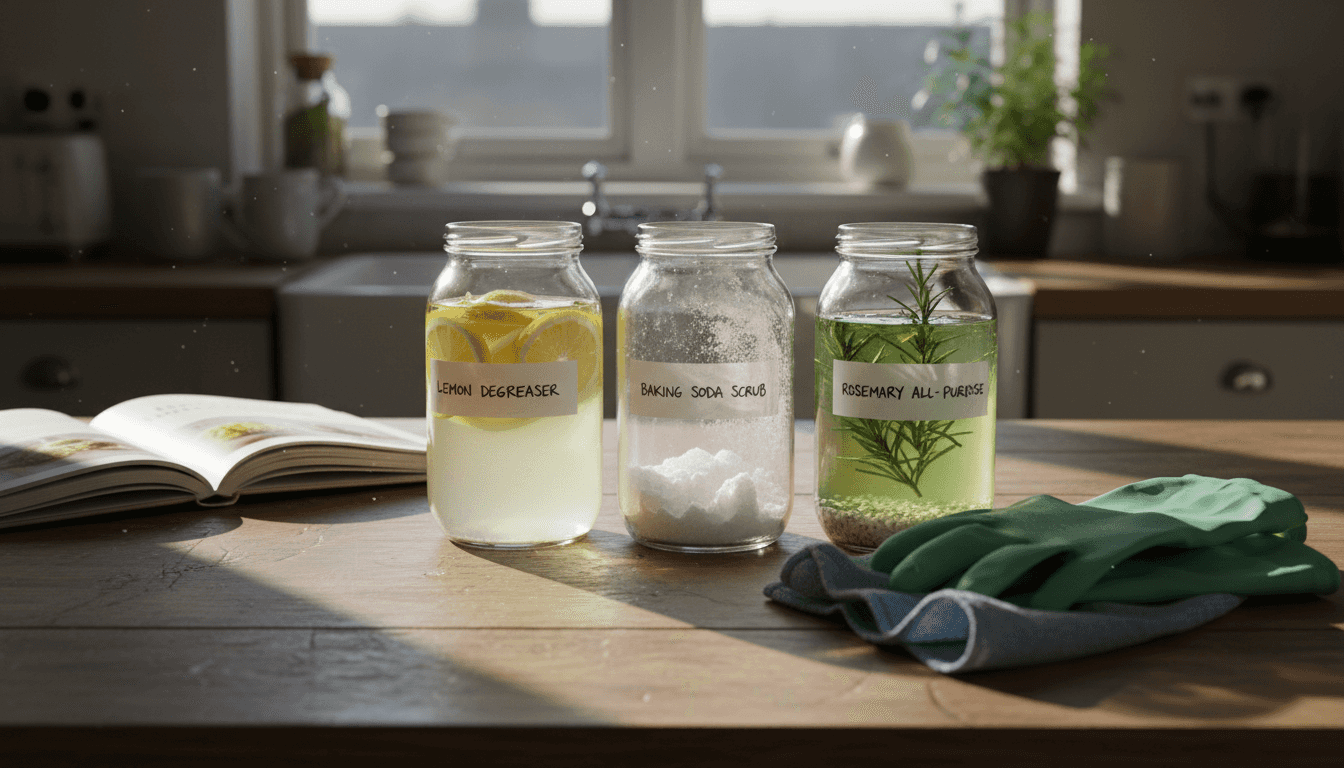
Here’s a quick overview of common eco-friendly ingredients and their primary cleaning functions:
| Ingredient | Main Function | Typical Use Case |
|---|---|---|
| White Vinegar | Natural disinfectant | Cutting grease, deodorizing |
| Baking Soda | Mild abrasive, deodorizer | Scrubbing surfaces |
| Hydrogen Peroxide | Stain remover, sanitizer | Whitening and disinfection |
| Lemon Juice | Degreaser, freshener | Removing stains, odors |
| Castile Soap | Plant-based surfactant | General cleaning solution |
| Essential Oils | Natural fragrance, antimicrobial | Adding scent, killing germs |
| Club Soda | Lifts dirt, mild abrasive | Glass and surface cleaning |
| Cornstarch | Polishes, absorbs oil | Glass cleaning, carpets |
| Borax | Mineral booster, deodorizer | Laundry, tough stains |
| Corn Meal | Absorbs oils, deodorizes | Carpet and upholstery |
Pro tip: Create a cleaning solution “recipe book” with tested natural mixtures for different surfaces, helping you quickly reference safe and effective homemade cleaning solutions.
How Eco-Friendly Cleaning Actually Works
Green cleaning strategies fundamentally transform traditional cleaning by utilizing scientific principles that effectively remove dirt and grime without harmful chemical interactions. The core mechanism involves natural ingredients that break down contaminants through safe, environmentally conscious chemical processes.
The science behind eco-friendly cleaning revolves around several key molecular interactions:
- Surfactant Action: Natural compounds that reduce water’s surface tension
- Micelle Formation: Trapping and lifting away dirt particles
- pH Balancing: Using acidic or alkaline solutions to neutralize grime
- Enzymatic Breakdown: Biological compounds that dissolve organic matter
- Mineral Chelation: Binding and removing hard water residues
Cleaning chemistry operates through sophisticated mechanisms that go beyond simple surface wiping. Cleaning science principles demonstrate how natural surfactants create microscopic structures called micelles that effectively capture and remove dirt, oil, and bacteria without introducing toxic chemicals into the environment.
These natural cleaning methods leverage the inherent properties of ingredients like vinegar, baking soda, and essential oils to create powerful cleaning solutions. By understanding molecular interactions, homeowners can develop targeted cleaning strategies that are both effective and environmentally responsible, eliminating the need for harsh synthetic chemicals.
Pro tip: Experiment with different natural ingredient combinations to create custom cleaning solutions that target specific surfaces and types of dirt.
Popular Products And Safe Ingredients
Ingredient transparency in cleaning products has become increasingly critical for consumers seeking safe, effective, and environmentally responsible solutions. Understanding the molecular composition of cleaning agents helps homeowners make informed choices that protect both personal health and ecological systems.
Safe eco-friendly ingredients typically fall into several key categories:
- Natural Surfactants: Derived from coconut or plant-based oils
- Enzymatic Cleaners: Biological compounds that break down organic matter
- Essential Oil Disinfectants: Natural antimicrobial agents
- Mineral-Based Builders: Sodium bicarbonate and borax
- Plant-Derived Solvents: Citrus and vegetable-based cleaning agents
Cleaning product ingredient science reveals complex interactions between different molecular components. Surfactants play a crucial role by reducing water’s surface tension, enabling more effective dirt and grime removal without introducing harmful synthetic chemicals.
Consumers should prioritize products with clear ingredient lists, avoiding potential toxins like phthalates, parabens, and synthetic fragrances. By selecting cleaning solutions with transparent, plant-based ingredients, households can maintain cleanliness while minimizing environmental and health risks associated with traditional chemical cleaners.
Pro tip: Check product labels for specific ingredient origins and look for certifications that validate environmental and health safety standards.
Risks, Myths, And Common Mistakes
Cleaning myths and misconceptions often lead homeowners to ineffective and potentially harmful cleaning practices. Understanding the truth behind these myths is crucial for maintaining a truly healthy home environment while avoiding unnecessary risks.
Common misconceptions about eco-friendly cleaning include:
- Myth: Vinegar is a universal cleaner for all surfaces
- Reality: Vinegar can damage certain materials like marble and hardwood
- Myth: More cleaning product means better cleaning
- Reality: Overuse can create chemical residues and potential health hazards
- Myth: Natural products are always safe
- Reality: Some natural ingredients can still cause allergic reactions
- Myth: Cleaning solutions work instantly
- Reality: Most cleaners require specific dwell time to be effective
- Myth: Air fresheners improve indoor air quality
- Reality: Many air fresheners actually introduce additional pollutants
Indoor air pollution risks extend far beyond what most homeowners realize. Volatile organic compounds (VOCs) in many cleaning products can trigger respiratory issues, allergic reactions, and long-term health complications, even when products are labeled as ‘natural’ or ‘green’.
Misusing cleaning products often stems from a lack of understanding about their specific chemical compositions and intended applications. Consumers should always read labels carefully, use products in well-ventilated areas, and avoid mixing different cleaning agents, which can create dangerous chemical reactions.
Pro tip: Always test new cleaning solutions on a small, inconspicuous area first and wear protective gloves to minimize potential skin irritation or adverse reactions.
Comparing Eco-Friendly And Conventional Methods
Organic versus conventional cleaning methods represent more than just a difference in product selection – they embody fundamentally distinct approaches to maintaining healthy living environments. The choice between these methodologies significantly impacts personal health, environmental sustainability, and long-term ecological preservation.
Key differences between eco-friendly and conventional cleaning methods include:
- Environmental Impact
- Eco-Friendly: Minimal carbon footprint
- Conventional: High greenhouse gas emissions
- Chemical Composition
- Eco-Friendly: Natural, biodegradable ingredients
- Conventional: Synthetic, potentially toxic compounds
- Health Risks
- Eco-Friendly: Reduced respiratory and skin irritation
- Conventional: Higher potential for allergic reactions
- Long-Term Sustainability
- Eco-Friendly: Supports soil and water ecosystem health
- Conventional: Potential for soil degradation and water contamination
- Cost Effectiveness
- Eco-Friendly: Initially higher cost, lower long-term health expenses
- Conventional: Lower upfront costs, potentially higher health-related expenses
Sustainable agriculture principles equally apply to cleaning practices, emphasizing the critical importance of minimizing synthetic inputs. Sustainable cleaning goes beyond immediate dirt removal, focusing on holistic approaches that protect both human health and environmental integrity.
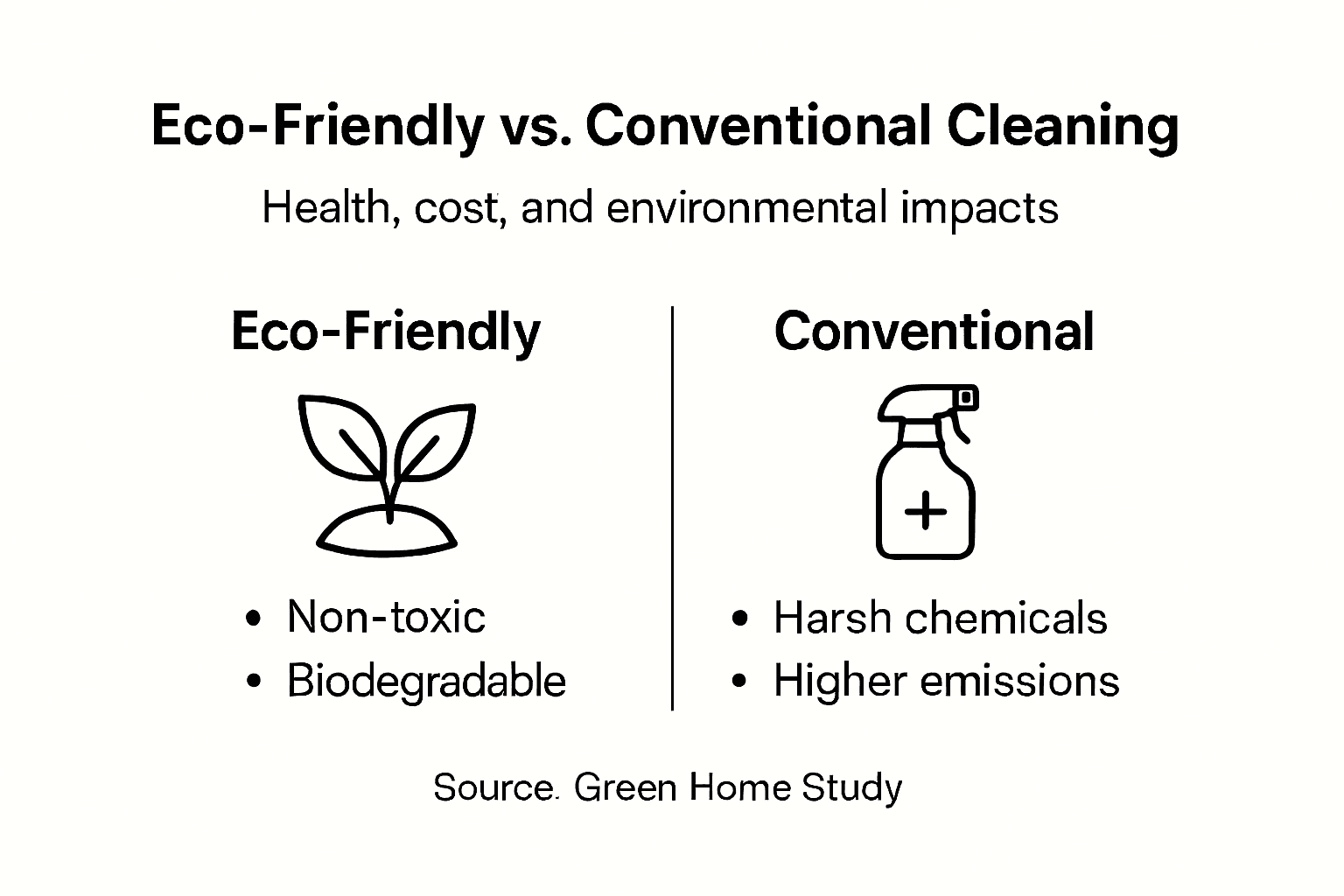
Conventional cleaning methods often prioritize immediate effectiveness over long-term consequences, utilizing powerful chemical agents that can disrupt delicate ecological balances. In contrast, eco-friendly approaches carefully select ingredients that clean effectively while maintaining environmental harmony, demonstrating that power and sustainability can coexist.
Compare the broader impact of eco-friendly versus conventional cleaning approaches:
| Impact Area | Eco-Friendly Cleaning | Conventional Cleaning |
|---|---|---|
| Carbon Emissions | Low, fewer synthetic processes | High due to chemical production |
| Indoor Air Quality | Improved, less toxic residue | Often worsened by VOCs |
| Packaging Waste | Often minimal or reusable | Frequently excessive, single-use |
| Long-Term Health Risks | Reduced by natural ingredients | Heightened by toxin exposure |
Pro tip: Gradually transition to eco-friendly cleaning by replacing one conventional product with a natural alternative each month, allowing for a systematic and budget-friendly approach to healthier cleaning.
Transform Your Home with Trusted Eco-Friendly Cleaning Solutions
Managing a healthier home means choosing cleaning methods that protect your family and the environment. This article highlights the challenge many homeowners face when wanting to switch to natural, non-toxic cleaning agents without sacrificing effectiveness or convenience. With concerns about indoor air quality and harmful chemical residues, it is crucial to find reliable eco-friendly solutions that deliver quality results without compromise. Understanding key concepts like green cleaning, natural surfactants, and sustainable practices empowers you to take control of your space in a safer way.
Take the next step in creating a healthier, cleaner home by exploring our expertly crafted 5 Unique Eco-Friendly Cleaning Solutions | E.C. House Cleaning that align with the principles discussed. Whether you need specialized organic products such as those featured in our Organic Bathroom Cleaner | E.C. House Cleaning category or comprehensive professional service, E.C. House Cleaning is here to guide you. Serving Massachusetts, we combine over 20 years of experience, family-owned dedication, and a commitment to using green cleaning methods that truly respect your health and the planet.
Don’t let harsh chemicals dictate your home’s environment. Experience the confidence of superior eco-friendly cleaning services from a trusted team. Visit https://echousecleaning.com now to schedule your consultation and take the first step toward a safer and greener home today.
Frequently Asked Questions
What are eco-friendly cleaning methods?
Eco-friendly cleaning methods utilize natural, biodegradable ingredients and techniques that minimize harm to human health and the environment. They replace harsh chemicals found in traditional cleaning products with safer alternatives like vinegar, baking soda, and essential oils.
How do eco-friendly cleaning solutions work?
Eco-friendly cleaning solutions work through natural chemical processes that effectively lift and remove dirt and grime. They often harness surfactant action, micelle formation, and pH balancing to clean surfaces without toxic chemicals, utilizing ingredients that break down contaminants safely.
Can homemade cleaning solutions be as effective as commercial products?
Yes, homemade cleaning solutions can be highly effective when formulated with proven natural ingredients like vinegar, baking soda, and essential oils. They can tackle various cleaning challenges while being safer for both human health and the environment.
Are eco-friendly cleaning products safe for all surfaces?
While many eco-friendly cleaning products are gentle and safe for most surfaces, some ingredients, like vinegar, may damage specific materials such as marble and hardwood. It is essential to check compatibility and test on an inconspicuous area before widespread use.