TL;DR:
- Experience in cleaning is vital because it influences human variability and the effectiveness of micro-environment cleaning. Well-structured feedback systems and career development pathways are essential for transforming years of service into consistent, high-quality results. Choosing a cleaning service with proven quality-control processes ensures genuine expertise and reliable outcomes.
You hand two cleaners the same mop, the same checklist, and the same hour. One leaves the floor spotless. The other misses grout lines, skips the baseboards, and calls it done. The role of experience in cleaning is exactly what explains that gap. It is not about the equipment or the procedure. It is about the human being holding the mop, the knowledge they carry, and the systems behind them that either sharpen or erode their effectiveness over time.
Table of Contents
- Key takeaways
- The role of experience in cleaning outcomes
- How experience shapes cleaning skill and expertise
- Training, retention, and the career path behind good cleaning
- What experienced cleaning actually looks like for you
- My take on what experience in cleaning actually means
- Why Echousecleaning prioritizes experience above all else
- FAQ
Key takeaways
| Point | Details |
|---|---|
| SOPs alone don’t guarantee results | Human factors like fatigue and distraction cause variability even when procedures are identical. |
| Experience builds targeted skill | Skilled cleaners focus on micro-areas like grout and plumbing surrounds that novices routinely miss. |
| Feedback loops matter more than hours | Quality control systems that connect performance to outcomes improve cleaning consistency far more than years on the job. |
| Career investment improves service quality | Companies that offer training and growth pathways retain experienced staff and deliver better, more consistent results. |
| Experience is measurable | When choosing a service, look for quality control processes, not just years in business. |
The role of experience in cleaning outcomes
Most people assume that if two cleaning crews follow the same standard operating procedure, they will produce the same result. That assumption is wrong, and the evidence from professional cleaning environments makes the gap hard to ignore.
Research from GMP cleanroom environments shows that cleaning outcomes vary significantly even when staff use identical SOPs, identical tools, and identical products. The reason is human variability. Fatigue changes how thoroughly someone wipes a surface. Loss of concentration causes them to skip corners. Unconscious behavioral adjustments, the small shortcuts people take without realizing it, compound across an entire job.
This is not a criticism of any individual cleaner. It is a fundamental truth about human performance in any skilled task. What it tells you is that a cleaning procedure is only a framework. The person executing it fills in all the gaps, and experience determines whether those gaps get filled correctly.
“Cleaning results can differ substantially between staff members performing identical tasks, with variability driven primarily by human behavioral factors rather than procedural differences.” — Hygieneforum.ch
The practical takeaway for anyone hiring a cleaning service is this: a company’s procedures tell you almost nothing about their actual quality. What matters is whether those procedures are backed by a system that catches and corrects human variability in real time.
Pro Tip: When evaluating a cleaning service, ask how they measure performance. A company that can describe their quality-control process, not just their checklist, is one that takes experience seriously.
One of the clearest ways to manage this variability is through feedback loops tied to performance. Many cleaning staff never receive immediate feedback on their work, which means inefficient or incomplete habits continue unchecked for months. Organizations that connect individual performance to measurable outcomes close that loop and develop cleaners who genuinely improve over time.
How experience shapes cleaning skill and expertise
There is a meaningful difference between someone who has cleaned for three years and someone who has developed genuine cleaning expertise over three years. The hours are the same. The growth is not.
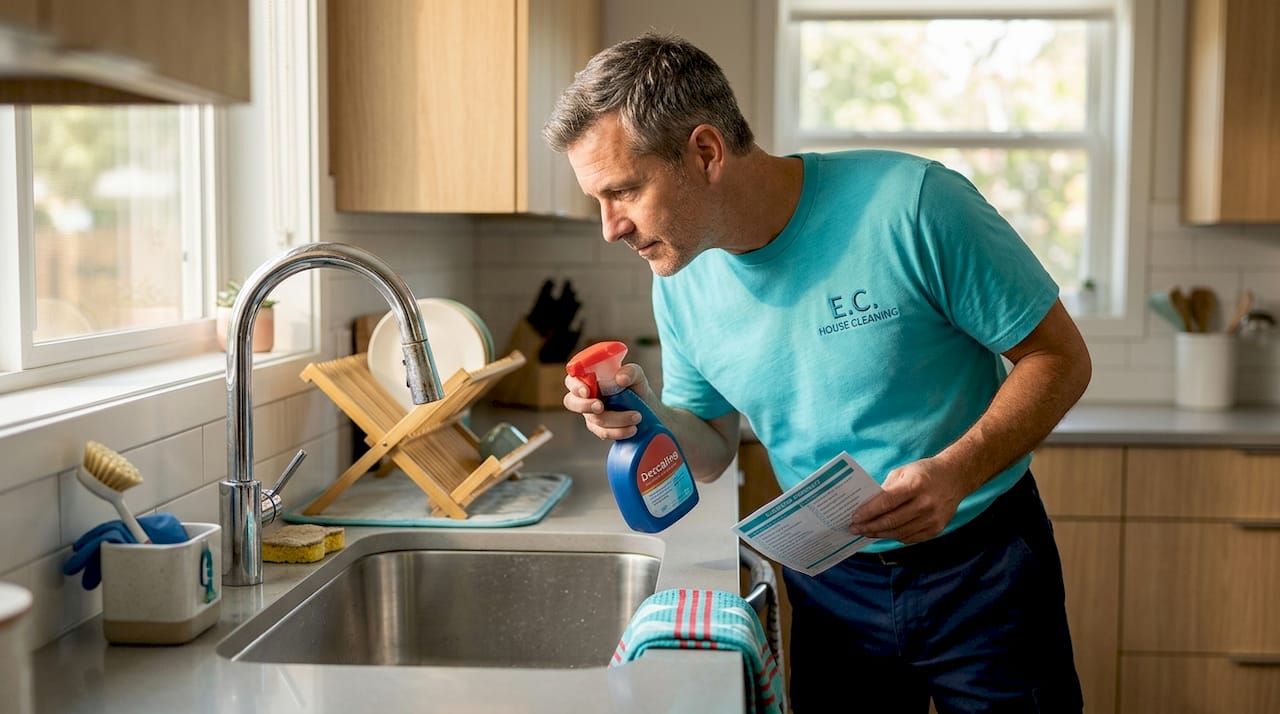
Real cleaning skills development happens when a cleaner encounters problems, solves them, and builds a mental library of techniques. That library is what separates basic cleaning from the kind of detailed work that experienced cleaners do in kitchens and bathrooms. Novices clean what they can see. Experienced professionals clean what they know accumulates dirt even when it is not visible yet.
Those micro-areas include:
- Grout lines between tiles, where soap scum and bacteria build up regardless of surface cleanliness
- Plumbing surrounds at the base of toilets and faucet fixtures where moisture collects
- Cabinet tops and light fixtures, which gather grease and dust that falls back onto clean surfaces
- Refrigerator seals and oven hood filters, which affect kitchen hygiene and air quality
- Door frames and switch plates, the most-touched surfaces in any home
An experienced cleaner does not just work harder through these areas. They plan for them. They know which products dissolve grease versus mineral deposits, which tools reach into narrow spaces, and how much dwell time a disinfectant actually needs to work. That knowledge comes from repetition, mistakes, feedback, and time.
Pro Tip: Experienced cleaners treat kitchens and bathrooms as collections of micro-environments, not single rooms. If your service provider has a specific approach for each of those sub-areas, that is a sign of real expertise.
How experience affects cleaning also shows up in problem-solving speed. When a cleaner encounters hard water deposits on a glass shower door, an inexperienced person reaches for a general cleaner and scrubs harder. A skilled cleaner reaches for the right product, applies it correctly, and gets the result in half the time without damaging the surface. That efficiency is not luck. It is applied experience.
Training, retention, and the career path behind good cleaning
The importance of experience in cleaning is not just about individual skill. It is about the organizations that build and keep that skill.
The janitorial and cleaning industry has a documented workforce challenge. High turnover means that experienced staff leave before their knowledge fully matures into consistent service quality. The solution, which some companies are now implementing, is reframing cleaning as a skilled, technical career rather than entry-level work.
Here is what that looks like in practice for organizations committed to developing experience:
- Define a clear career ladder. When cleaners can see a path from standard cleaning to specialized roles like post-construction, carpet care, or commercial sanitation, they stay longer and invest more in their own performance.
- Invest in specialized training beyond onboarding. Basic training teaches SOPs. Advanced training teaches judgment: when to use which technique, how to recognize problem surfaces, and how to adapt to different environments.
- Connect performance feedback to individual development. Rather than annual reviews, feedback linked to outcomes in real time gives cleaners the information they need to improve their own performance.
- Build a culture that values craft. Companies that communicate cleaning as a profession worth mastering attract workers who are genuinely invested and reduce the turnover that destroys accumulated team expertise.
Investing in employee growth reduces turnover and enhances the depth of expertise across an entire cleaning team. The client on the receiving end experiences that as consistency. The job looks the same excellent every visit, not just when the right person shows up.
What experienced cleaning actually looks like for you
When you hire a cleaning service, the impact of experience shows up in specific, measurable ways. It is not abstract. You can see it, and you can test for it before you commit to a service.
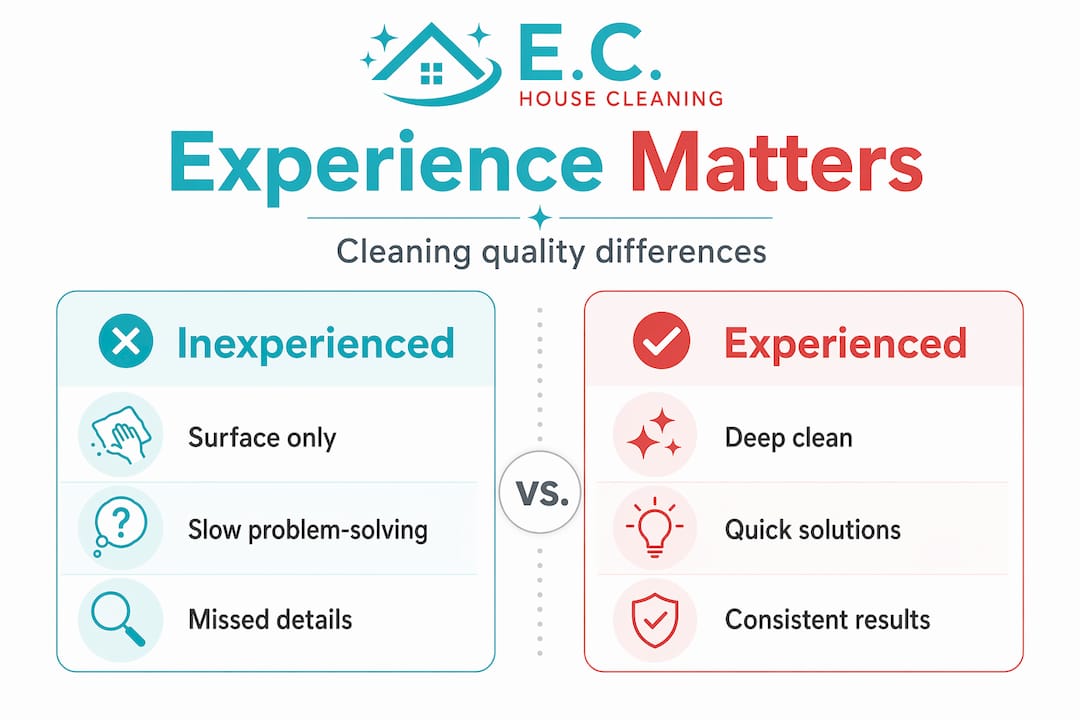
Here is a quick comparison of what you get at different experience levels:
| Task | Inexperienced cleaner | Experienced cleaner |
|---|---|---|
| Bathroom deep clean | Surfaces wiped, fixtures rinsed | Grout scrubbed, seals sanitized, mineral deposits removed |
| Kitchen cleaning | Counters wiped, floor mopped | Hood filter cleaned, cabinet tops degreased, appliance seals addressed |
| Carpet cleaning | Vacuum pass, surface spots treated | Deep allergen extraction with proper dwell time and technique |
| Problem-solving | Scrubs harder with the same product | Selects the right product, adjusts technique, avoids surface damage |
Professional carpet cleaning is one of the clearest examples of how experience affects cleaning outcomes. Experienced technicians performing hot water extraction can eliminate up to 98% of allergens and bacteria, extend carpet life, and improve indoor air quality. A less experienced technician using the same machine will achieve a fraction of those results because the technique, product selection, and timing all require judgment that comes from practice.
When you are choosing a cleaning service, watch for these signals of genuine experience:
- They ask detailed questions about your home before quoting
- They describe specific techniques for kitchens and bathrooms, not just “we clean everything”
- They can explain their quality-control process, not just their checklist
- They offer consistent, named staff rather than rotating crews
- Their reviews mention specific results, not just “they were friendly”
The best practices for experienced cleaners also show up in how they communicate. Experienced teams understand the nuances that separate a clean-looking space from a genuinely clean and healthy one, and they can explain that difference clearly.
My take on what experience in cleaning actually means
I have spent years looking at what separates genuinely excellent cleaning services from the ones that look the same on paper but deliver inconsistent results. Here is what I have learned: experience is not a number of years. It is a system.
I have seen companies with twenty years of operation that still produce variable results because they never built the feedback loops that turn individual effort into consistent team performance. And I have seen smaller, newer operations that deliver exceptional work because they take the role of training in cleaning seriously from day one.
What I find most interesting is that experience must be operationalized through real-time feedback and performance observation rather than assumed from a resume or years in business. The companies worth hiring are the ones that have built systems to measure and reinforce quality, not just the ones that have been around the longest.
My honest advice: when you evaluate a cleaning service, ask them what happens when a job does not meet their standard. The answer tells you everything about whether experience is actually built into their operation or just listed in their marketing copy.
— Andrew
Why Echousecleaning prioritizes experience above all else
At Echousecleaning, experience is not a background detail. It is the foundation of every service we provide to Massachusetts homeowners and businesses. With over 20 years of operation as a family-owned service, our team has developed the kind of deep, practical cleaning expertise that shows up in every room we clean. We invest in structured training, maintain quality-control processes that catch variability before it reaches you, and build teams that stay, which means the knowledge behind your cleaning gets stronger with every visit.
Whether you need standard home cleaning, a full residential deep clean, or a move-in detail that leaves nothing behind, you can explore our residential cleaning services and see exactly what experienced professional cleaning looks like in practice. We would love to show you the difference that real expertise makes.
FAQ
What is the role of experience in cleaning quality?
Experience shapes cleaning quality by enabling technicians to manage human variability, select the right techniques for each surface, and address problem areas that inexperienced cleaners miss. It also depends on whether the organization backs individual skill with quality-control feedback systems.
Why do cleaning results vary even with the same procedures?
Variability in cleaning outcomes comes from human factors including fatigue, distraction, and unconscious behavioral adjustments, even when the SOP and equipment are identical. Experience reduces that variability, but only when paired with real-time feedback.
How can I tell if a cleaning service has genuine experience?
Look for specific answers about their techniques, consistent staff assignments, a clear quality-control process, and reviews that describe results rather than just personality. Services that can explain how they clean, not just what they clean, are demonstrating genuine expertise.
Does experience matter for carpet and specialized cleaning?
Yes, significantly. Professional carpet cleaning by experienced technicians can remove up to 98% of allergens and bacteria using hot water extraction, compared to much lower results when technique and timing are not optimized through experience.
How does staff retention relate to cleaning service quality?
High turnover prevents experience from accumulating within a team. Companies that invest in career pathways and training retain knowledgeable staff longer, which directly translates into more consistent, higher-quality service for clients.
Recommended
- How cleaners ensure quality: standards for a healthier home | E.C. House Cleaning
- Quality Home and Office Cleaning: Elevating Standards in Massachusetts | E.C. House Cleaning
- Massachusetts Cleaning Services – Professional Cleaning Service Boston
- Cleaning for Real Estate: Boost Value and Appeal in MA | E.C. House Cleaning