
Moving out is stressful enough without worrying about losing your security deposit. Many Massachusetts tenants and homeowners lose hundreds of dollars because they miss critical cleaning details during inspections. Detailed room-by-room checklists improve inspection pass rates by 28%, giving you a clear path to recovering your full deposit. This comprehensive guide provides a free, actionable checklist tailored specifically for Massachusetts residents facing move-out cleaning challenges.
Table of Contents
- Introduction To Move-Out Cleaning In Massachusetts
- Prerequisites: What You Need Before Starting Move-Out Cleaning
- Step-By-Step Move-Out Cleaning Checklist Room By Room
- Common Cleaning Mistakes And How To Avoid Them
- Documentation And Final Inspection Tips
- Alternatives: Diy Vs Professional Move-Out Cleaning In Massachusetts
- Simplify Your Move-Out Cleaning With Professional Help
Key takeaways
| Point | Details |
|---|---|
| Inspection success | Comprehensive cleaning checklists improve pass rates by 28% and help secure full deposit returns. |
| Essential preparation | Gathering eco-friendly supplies and safety gear before starting prevents delays and ensures Massachusetts compliance. |
| Room-by-room focus | Kitchen and bathroom deep cleaning are critical areas where most inspection failures occur. |
| Documentation matters | Clear photos and written logs protect you from unfair deposit deductions and disputes. |
| Professional option | Hiring experts saves 4+ hours and costs $150-$350 but may prevent larger deposit losses. |
Introduction to move-out cleaning in Massachusetts
Massachusetts rental laws require tenants to return properties in clean, sanitary condition to qualify for full security deposit refunds. Landlords conduct detailed inspections focusing on kitchens, bathrooms, floors, and often-overlooked areas like baseboards and vents. Understanding these expectations helps you prepare effectively and avoid costly surprises.
Common inspection failures stem from incomplete cleaning in high-traffic zones. Property managers specifically check appliance interiors, grout lines, window tracks, and cabinet surfaces. Missing even small details can trigger partial deposit withholding, sometimes totaling hundreds of dollars.
Using a structured move out cleaning in Massachusetts approach dramatically improves your chances of passing inspection on the first attempt. Research shows that tenants following systematic cleaning protocols face fewer disputes and recover deposits faster. The same methodical strategies work whether you’re leaving an apartment, condo, or single-family home.
Key areas Massachusetts landlords prioritize include:
- Kitchen appliances cleaned inside and out, with special attention to ovens and refrigerators
- Bathroom fixtures free of soap scum, mildew, and hard water stains
- Floors vacuumed, mopped, and free of scuff marks or residue
- Windows, tracks, and sills wiped clean without streaks
- Walls and baseboards dusted and spot-cleaned where needed
Applying the strategies from a vacation rental cleaning checklist can elevate your standards beyond basic requirements. Professional-grade cleaning techniques ensure you leave nothing to chance, positioning you for inspection success and full deposit recovery.
Prerequisites: what you need before starting move-out cleaning
Gathering the right supplies before you begin saves time and prevents mid-task interruptions. You’ll need a powerful vacuum with attachments, a quality mop and bucket, microfiber cloths in various sizes, and an assortment of scrub brushes for different surfaces. Stock general-purpose cleaner, glass cleaner, bathroom disinfectant, and degreaser for kitchen areas.
Massachusetts increasingly values eco-friendly cleaning solutions that protect indoor air quality and the environment. Choose plant-based, biodegradable products free from harsh chemicals like ammonia or bleach when possible. These alternatives clean effectively while reducing health risks during extended cleaning sessions in enclosed spaces.
Safety preparation is non-negotiable for thorough move-out work. Wear durable rubber gloves to protect your hands from chemicals and hot water. Use a dust mask when cleaning dusty areas like vents or behind appliances. Open windows and run fans to maintain proper ventilation, especially when using stronger cleaning agents.
Create organized stations in different rooms to streamline your workflow:
- Supply caddy with cloths, sprays, and small tools for quick room transitions
- Trash bags and recycling bins positioned centrally for debris sorting
- Cleaning product backup stock to avoid running out mid-project
- Separate buckets for clean rinse water and dirty cleaning water
Check out this essential cleaning supplies checklist to ensure you have everything needed for professional-quality results. Proper preparation transforms an overwhelming task into a manageable, systematic process.
Pro Tip: Label your cleaning caddies by room type to grab exactly what you need when moving between spaces, cutting transition time by several minutes per room.
Step-by-step move-out cleaning checklist room by room
Start every room from top to bottom to prevent re-cleaning lower surfaces. Begin with ceiling fans, light fixtures, and upper corners where cobwebs accumulate. Wipe down walls using a barely damp cloth to remove scuffs and fingerprints without damaging paint. Clean baseboards thoroughly since inspectors specifically check these frequently overlooked areas.
Kitchen cleaning demands extra attention because grease and food residue hide in unexpected places:
- Remove all items from cabinets and wipe interior shelves and doors
- Clean refrigerator inside completely, including shelves, drawers, and door seals
- Scrub oven interior, racks, and stovetop burners until spotless
- Degrease range hood filters and wipe exterior surfaces
- Sanitize countertops, backsplash, and sink, removing all stains
- Clean dishwasher filter and run an empty cycle with vinegar
- Wipe cabinet exteriors and hardware until fingerprint-free
- Sweep and mop floor, paying attention to corners and under appliances
Bathrooms require meticulous sanitizing to pass inspection standards. Scrub the tub and shower with appropriate cleaners for your surface type, removing all soap scum and mildew. Clean toilet bowl, tank, base, and surrounding floor area. Polish mirrors and chrome fixtures until streak-free. Scrub tile grout with a specialized brush and whitening cleaner.
Living areas and bedrooms need systematic attention to detail. Vacuum carpets thoroughly, including edges and corners where dust collects. Clean air vents and return registers, removing dust buildup. Wipe window sills, tracks, and glass on both sides. Check closets for forgotten items and vacuum or sweep floors inside.
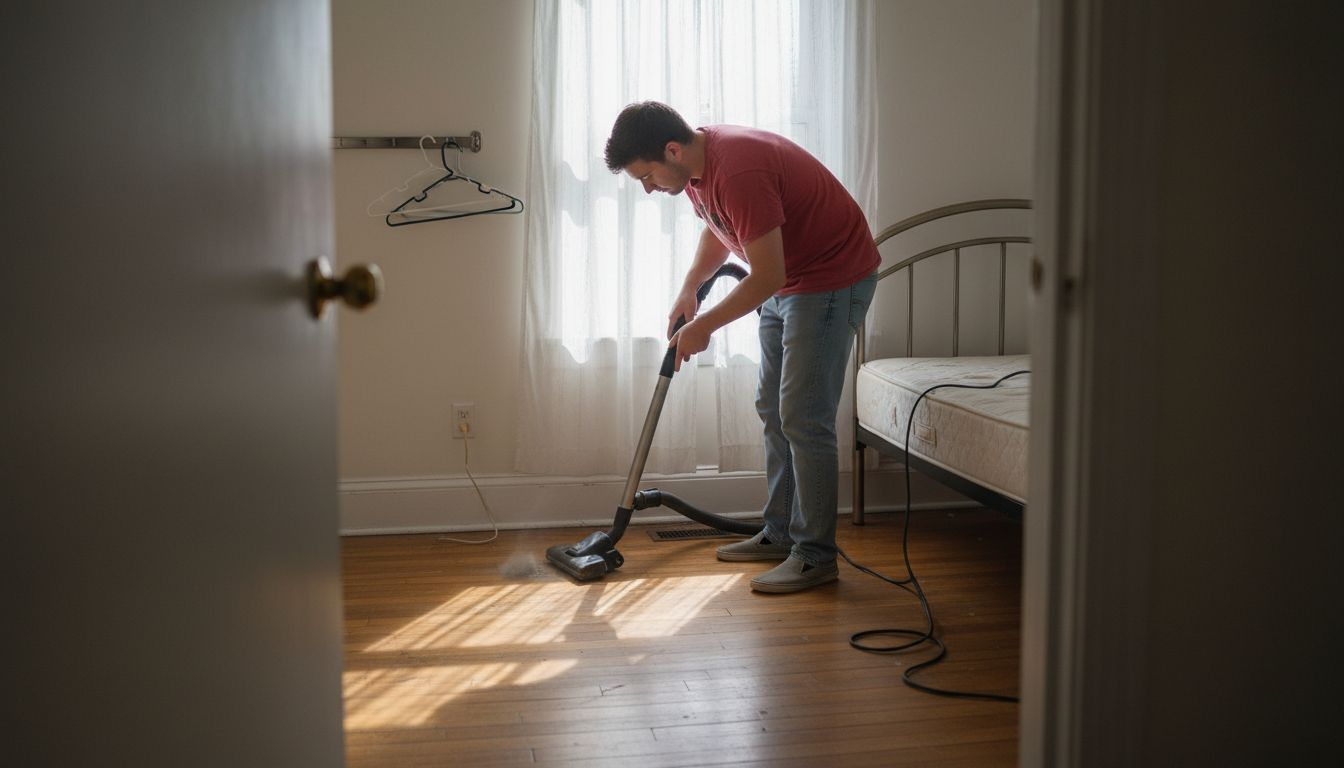
Finish with comprehensive floor care as your final step. Vacuum all carpeted areas twice in perpendicular directions to lift embedded dirt. Mop hard surface floors using appropriate cleaners, changing water frequently to avoid spreading grime. Allow floors to dry completely before the final walkthrough.
| Room | Priority Tasks | Time Estimate |
|---|---|---|
| Kitchen | Appliances, cabinets, counters, floor | 2-3 hours |
| Bathroom | Tub, toilet, sink, mirrors, tile | 1-2 hours |
| Living Room | Walls, baseboards, windows, carpet | 1-1.5 hours |
| Bedrooms | Closets, walls, floors, vents | 45 min each |
| Entry/Hallways | Doors, light switches, floors | 30-45 min |
Document your progress by photographing each completed room from multiple angles. These images provide crucial evidence if deposit disputes arise later. Following this structured approach mirrors techniques used in detailed room-by-room cleaning tasks that professionals rely on daily.
Pro Tip: Clean windows on cloudy days to prevent streaking from direct sunlight, and use newspaper instead of paper towels for a professional, lint-free finish.
Refer to strategies for organizing supplies when reviewing how to pack cleaning supplies for moving to maintain efficiency throughout the process. Following these move-out inspection tips systematically positions you for inspection success.
Common cleaning mistakes and how to avoid them
Baseboards and air vents represent the most frequently missed areas during move-out cleaning. Dust and grime accumulate in these spots over months, becoming highly visible during inspections. Property managers specifically check these details, and neglecting them can trigger deposit deductions even when other areas look spotless.
Appliance interiors cause surprisingly common failures. Many tenants wipe down external surfaces but forget to deep clean inside ovens, refrigerators, and dishwashers. Baked-on grease, food particles, and mineral deposits signal inadequate cleaning to inspectors. Remove all racks and drawers to access hidden corners where residue hides.
Documentation oversights weaken your position if disputes arise. Failing to photograph your work before the landlord inspection leaves you without proof of completed cleaning. Take clear, well-lit photos of every room from multiple angles, focusing on areas landlords typically scrutinize most carefully.
Chemical misuse creates health hazards and potential surface damage:
- Mixing incompatible cleaners like bleach and ammonia produces toxic fumes
- Using abrasive scrubbers on delicate surfaces causes permanent scratching
- Applying too much product leaves sticky residue requiring re-cleaning
- Skipping ventilation during heavy chemical use risks respiratory irritation
Pro Tip: Clean hidden areas like behind toilets and under sink cabinets last using microfiber cloths dampened with all-purpose cleaner to capture dust without spreading it to already-cleaned surfaces.
Consider partnering with move in move out cleaning specialists if you’re uncertain about tackling problem areas effectively. Professional expertise prevents costly mistakes and ensures comprehensive coverage.
Documentation and final inspection tips
Photographic evidence protects your interests when landlords conduct final walkthroughs. Capture wide shots showing entire rooms plus close-ups of critical areas like appliances, fixtures, and floors. Include timestamps if your camera supports them, creating a dated record of cleaning completion.
Maintain a written log tracking which tasks you completed in each room and when. This checklist serves as both a progress tracker during cleaning and documentation for potential disputes. Note any pre-existing damage you didn’t cause, photographing these issues clearly.
Proactive communication with your property manager or landlord demonstrates professionalism and builds goodwill:
- Email or text when you complete cleaning, inviting them to schedule the walkthrough
- Offer to address any concerns they identify during the initial inspection
- Provide your cleaning log and photo documentation for their records
- Confirm the deposit return timeline and process in writing
Retain all receipts for cleaning products and supplies you purchased specifically for move-out preparation. If you hired professional services, keep invoices showing the scope of work completed. These documents strengthen your case if you need to challenge unfair deposit withholding.
Request a joint walkthrough rather than allowing the landlord to inspect alone. Your presence enables you to hear concerns directly and potentially address minor issues immediately. This collaborative approach often prevents misunderstandings that escalate into formal disputes.
Review additional move out cleaning documentation tips to ensure you’ve covered all bases before surrendering your keys. Thorough documentation transforms cleaning from a stressful obligation into a manageable process with clear accountability.
Alternatives: DIY vs professional move-out cleaning in Massachusetts
DIY cleaning offers significant cost savings, requiring only supply purchases typically totaling $50 to $100. You control the timeline completely, working at your own pace without coordinating schedules. This approach works well if you have adequate time, physical ability, and attention to detail.
Professional services cost between $150 and $350 for typical Massachusetts apartments and homes, varying by square footage and cleaning intensity needed. Experts bring specialized equipment, commercial-grade products, and systematic techniques honed through thousands of cleanings. They complete work in 3 to 5 hours that might take you 8 to 12 hours as a solo DIYer.
Time savings represent the most compelling professional service advantage. Professional move-out cleaning saves 4+ hours compared to DIY efforts while often achieving higher inspection pass rates. This efficiency becomes critical when you’re juggling moving logistics, work commitments, and family responsibilities simultaneously.
Professional cleaners use eco-friendly products meeting Massachusetts environmental standards without requiring you to research and purchase specialty items. Their insurance coverage protects you if accidental damage occurs during cleaning. Most companies guarantee their work, returning to address any issues inspectors identify.
| Factor | DIY Cleaning | Professional Service |
|---|---|---|
| Cost | $50-$100 supplies | $150-$350 service fee |
| Time Required | 8-12 hours | 3-5 hours |
| Physical Effort | High, especially deep tasks | None, experts handle all |
| Inspection Pass Rate | Good with checklist | Excellent, often guaranteed |
| Flexibility | Complete schedule control | Requires appointment coordination |
| Equipment Quality | Consumer-grade tools | Professional equipment |
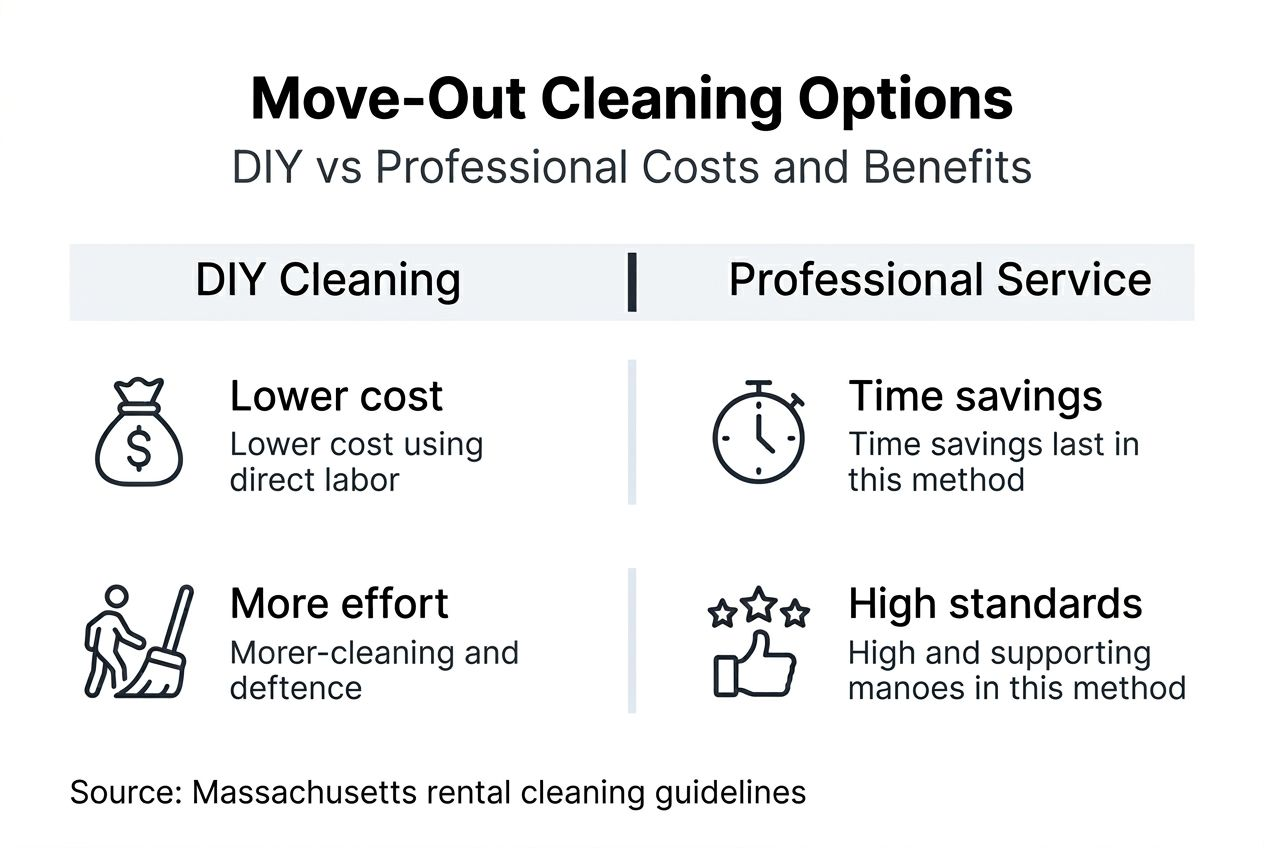
Choose DIY if your budget is extremely tight, you enjoy cleaning, and you have 1 to 2 full days available for thorough work. Select professional services when time is limited, the property requires extensive deep cleaning, or you want maximum confidence in passing inspection.
Explore professional move-out cleaning services to compare specific packages and pricing for your situation. Understanding rental cleaning service benefits helps you make an informed decision aligned with your priorities and constraints.
Consult this move-out cleaning cost guide for detailed pricing information specific to your area and property type. Weighing all factors ensures you choose the approach delivering the best value for your unique circumstances.
Simplify your move-out cleaning with professional help
Moving creates enough stress without adding hours of intensive cleaning to your to-do list. Professional cleaners ensure every detail meets Massachusetts inspection standards, using proven techniques that consistently deliver full deposit returns. Their systematic approach covers areas you might overlook, preventing costly deductions.
E.C. House Cleaning brings over 20 years of Massachusetts experience to every move out cleaning service, understanding exactly what local property managers expect. Our family-owned team uses eco-friendly products protecting your health while delivering spotless results. We handle the entire process efficiently, freeing you to focus on your actual move.
Our insured professionals work from comprehensive checklists ensuring nothing gets missed. Learn what a residential cleaner does to understand the thorough, detail-oriented approach we bring to every job. We provide free consultations and personalized quotes tailored to your specific property needs.
Explore our essential cleaning supplies checklist if you prefer the DIY route but want professional guidance. Either way, we’re here to help Massachusetts residents navigate move-out cleaning successfully and recover their full security deposits.
FAQ
What should I focus on when cleaning the kitchen during move-out?
Thoroughly clean countertops, inside and outside all appliances, cabinets, sink, and floor. Don’t forget to defrost and sanitize the refrigerator completely, and scrub oven interiors until all baked-on grease is removed.
How can I document my cleaning to avoid security deposit disputes?
Take clear before-and-after photos of all rooms and key areas you cleaned, including close-ups of appliances and fixtures. Keep a detailed checklist or log of completed tasks with dates, and retain all cleaning product receipts as supporting evidence.
Is professional move-out cleaning worth the cost in Massachusetts?
Professional cleaning saves significant time, reduces stress, and improves inspection pass likelihood substantially. Costs typically range from $150 to $350 but often prevent deposit disputes that could cost hundreds more in withheld funds.
Which areas do Massachusetts landlords inspect most carefully?
Landlords focus heavily on kitchens and bathrooms, checking appliance interiors, grout lines, and fixture cleanliness. They also examine baseboards, air vents, window tracks, and floors for dust, grime, and damage throughout the property.
How long does a thorough move-out cleaning typically take?
DIY cleaning usually requires 8 to 12 hours for an average apartment or small home when done properly. Professional services complete the same work in 3 to 5 hours using specialized equipment and systematic techniques.
Recommended
- Move Out Cleaning: What Massachusetts Homeowners Get | E.C. House Cleaning
- Vacation Rental Cleaning Checklist 2025 for Massachusetts Homes | E.C. House Cleaning
- Essential Cleaning Supplies Checklist for Massachusetts in 2025 | E.C. House Cleaning
- Deep Cleaning Essentials 2025: Guide for Massachusetts Homes | E.C. House Cleaning