Many Massachusetts families keep their homes looking tidy, but visible cleanliness and actual health safety are two very different things. Microscopic allergens like dust mites thrive in mattresses, carpets, and upholstery, completely invisible to the naked eye, yet powerful enough to trigger sneezing, rashes, and breathing problems in children. This guide walks you through what deep cleaning really means for families, which tasks matter most, how to adapt your routine for allergies or asthma, and when calling in a professional makes all the difference for your kids’ health.
Table of Contents
- Understanding deep cleaning: What families need to know
- Top deep cleaning tasks for Massachusetts families
- Allergy and asthma-friendly deep cleaning strategies
- Professional deep cleaning services: What Massachusetts families can expect
- Building your deep cleaning routine: Practical schedules and family involvement
- Expert solutions for a healthier Massachusetts home
- Frequently asked questions
Key Takeaways
| Point | Details |
|---|---|
| Rotate deep cleaning tasks | Systematic rotation ensures hidden spots are addressed, improving family health. |
| Focus on allergens | Targeting mattresses, window tracks, and baseboards reduces dust that affects children. |
| Consider professional help | Hiring expert cleaners can significantly lower allergens in homes, especially with asthma. |
| Involve kids safely | Age-appropriate tasks empower children to help while staying safe from irritants. |
| Schedule for consistency | Quarterly or monthly routines prevent buildup and keep Massachusetts homes healthy. |
Understanding deep cleaning: What families need to know
Deep cleaning is not just a more thorough version of your Saturday morning tidy-up. It is a systematic rotation of tasks that targets hidden areas where dust, bacteria, and allergens accumulate over time. Think behind the refrigerator, inside window tracks, under furniture, and along baseboards. These are the spots that standard weekly cleaning almost never reaches.
Regular cleaning handles surfaces you see every day: countertops, floors, and bathroom sinks. Deep cleaning goes further by addressing the layers underneath and behind those surfaces. The difference matters enormously for child health because children spend more time on floors, touch more surfaces, and breathe closer to the ground where allergens settle.
Here are the key hidden areas that a proper deep clean should always cover:
- Mattresses and box springs (dust mites accumulate rapidly here)
- Window tracks and sill edges
- Baseboards and crown molding
- Behind and underneath large appliances
- Inside cabinet interiors and drawer liners
- Ceiling fan blades and light fixtures
- Upholstered furniture seams and cushion gaps
“Deep cleaning is not a one-time event. It is a rotating system that keeps allergen levels manageable throughout the year, especially in homes with young children.”
Following a solid deep cleaning checklist helps families stay consistent without feeling overwhelmed. The CDC cleaning guidelines also recommend a layered approach: clean first, then disinfect only where necessary, rather than reaching for disinfectants on every surface every time.
Top deep cleaning tasks for Massachusetts families
Knowing what to clean is only half the battle. Knowing which tasks to prioritize makes the routine manageable and effective. For families with children, the following order of priority keeps the most health-relevant areas covered first.
- High-touch surfaces first. Doorknobs, light switches, cabinet handles, and bathroom fixtures collect germs from every hand in the house. The CDC recommends cleaning these surfaces before disinfecting, and notes that daily disinfecting is not always necessary when regular cleaning is consistent.
- Mattresses and bedding. Strip all bedding, wash in hot water, and vacuum the mattress surface. Children spend 10 or more hours in bed, making this one of the highest-impact tasks.
- Upholstered furniture. Sofas and armchairs trap pet dander, food particles, and skin cells. Vacuum thoroughly using an upholstery attachment.
- Window tracks and blinds. These collect dust silently and release it into the air every time a window opens.
- Behind and under appliances. The refrigerator, stove, and washing machine all accumulate grease, dust, and debris that can affect indoor air quality.
- Bathroom grout and tile. Mold and mildew grow in damp grout lines and can trigger respiratory symptoms in sensitive children.
- Air vents and returns. Dusty vents push allergens directly into the air your family breathes every day.
Pro Tip: Focus your first deep clean of the season on the bedroom. Children’s rooms harbor the highest concentration of dust mites and allergens relative to the time kids spend there. Pairing these tasks with essential cleaning tips and house cleaner pro tips gives you a reliable framework to follow each quarter.
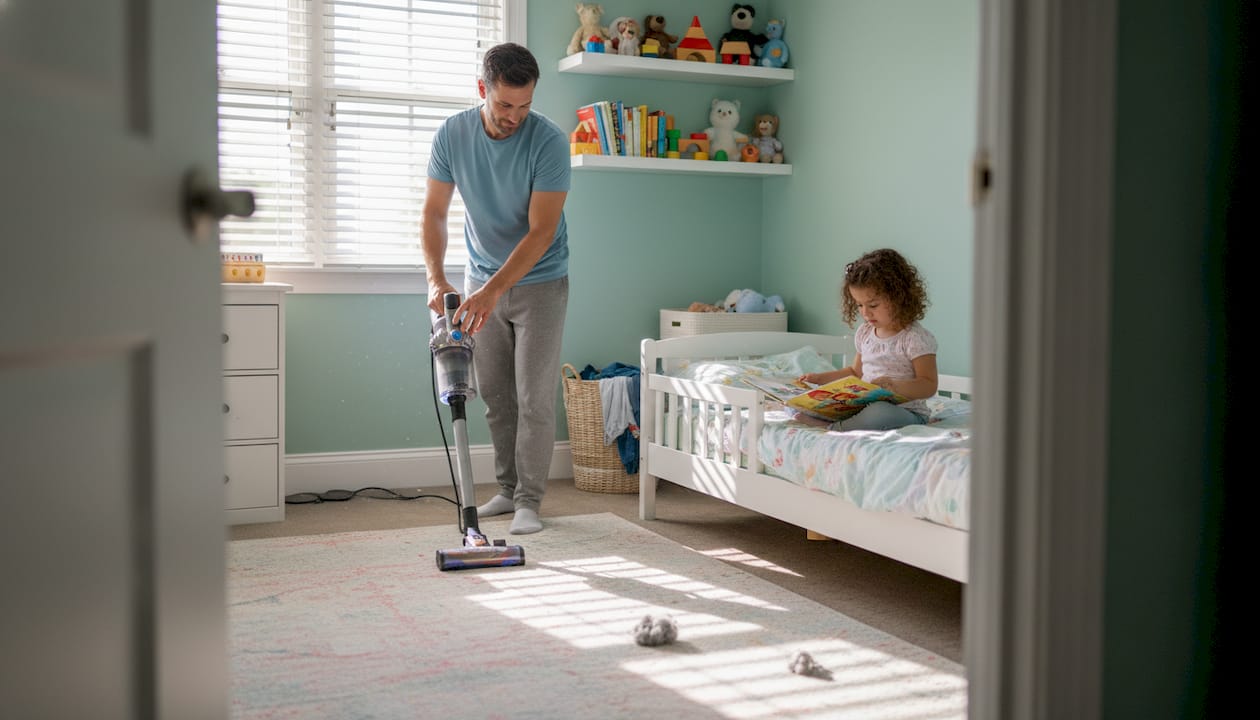
For families curious about dust allergy insights, research confirms that dust mite allergen levels in bedrooms are often far higher than parents expect, even in homes that appear clean.
Allergy and asthma-friendly deep cleaning strategies
Families managing asthma or allergies need to adjust their approach further. Standard cleaning products can actually make things worse. Fragranced sprays, bleach-based cleaners, and aerosol disinfectants release volatile organic compounds (VOCs, airborne chemicals that irritate airways) that can trigger asthma attacks in sensitive children.
Homes with asthma or allergies need more frequent deep cleans and careful avoidance of chemicals that could trigger symptoms. Monthly deep cleaning is often more appropriate than quarterly for these households. After a child’s illness, a full post-illness remediation of the bedroom and common areas is strongly recommended to prevent reinfection and reduce lingering viral particles.
Here is what an allergy-friendly deep cleaning routine looks like in practice:
- Use HEPA-filter vacuums (they trap particles instead of recirculating them)
- Choose unscented, plant-based, or certified asthma-friendly cleaning products
- Wash stuffed animals and soft toys monthly in hot water
- Replace standard pillow covers with allergen-barrier covers
- Keep windows closed on high pollen days in Massachusetts (typically April through June)
- Mop hard floors after vacuuming to capture settled dust
- Clean air purifier filters monthly if you use one
Pro Tip: Run your HEPA vacuum before mopping, and always mop in the direction away from the room’s air vent. This simple sequence captures the most allergens in one pass. For more targeted guidance, our cleaning for asthma resource and dust reduction strategies page offer room-by-room breakdowns.
Professional deep cleaning services: What Massachusetts families can expect
DIY deep cleaning is valuable, but there are real limits to what most families can accomplish without professional equipment and training. Here is a straightforward comparison:
| Factor | DIY deep cleaning | Professional service |
|---|---|---|
| Time required | 6 to 10 hours per session | 2 to 4 hours with a team |
| Equipment quality | Standard consumer tools | Commercial-grade vacuums and steamers |
| Allergen reduction | Moderate improvement | Significant, measurable reduction |
| Hidden area coverage | Often incomplete | Systematic and thorough |
| Cost | Low upfront, time-intensive | Moderate, saves time and effort |
| Frequency needed | Monthly to quarterly | Quarterly or biannually |
Professional cleaning interventions reduced total settled dust in asthmatic children’s homes significantly compared to control groups in clinical studies. That is a meaningful outcome for families where a child’s breathing is at stake.
Professional services typically include:
- Deep scrubbing of bathroom tile, grout, and fixtures
- Cleaning inside ovens, refrigerators, and microwaves
- Detailed baseboard and molding cleaning
- Window track and sill cleaning
- Thorough vacuuming of upholstery and mattresses
- Sanitizing high-touch surfaces throughout the home
For families wondering where to start, reviewing a checklist for deep cleaning before booking helps you communicate your priorities clearly. If the kitchen is your biggest concern, the kitchen deep cleaning tips page breaks down exactly what a professional service should cover in that space.
Building your deep cleaning routine: Practical schedules and family involvement
Consistency beats intensity every time. A manageable schedule that your family actually follows will always outperform a single annual deep clean. Here is a framework that works well for most Massachusetts families with children:
| Frequency | Tasks |
|---|---|
| Weekly | High-touch surfaces, bathroom fixtures, kitchen counters, floors |
| Monthly | Mattresses, upholstered furniture, air vents, inside microwave |
| Quarterly | Behind appliances, window tracks, baseboards, inside cabinets |
| Biannually | Oven interior, refrigerator coils, ceiling fans, grout scrubbing |
Post-COVID research found that cleaning frequency dropped in many households and families regularly miss unseen allergens even when they believe their homes are clean. Building a written schedule changes that pattern.
Getting children involved is also a smart move, both for teaching responsibility and for keeping the workload manageable. Here is how to assign age-appropriate tasks:
- Ages 3 to 5: Putting toys in bins, wiping low surfaces with a damp cloth, carrying small items to their proper place.
- Ages 6 to 9: Dusting baseboards with a microfiber cloth, helping sort laundry, wiping down bathroom counters.
- Ages 10 and up: Vacuuming rooms, cleaning bathroom sinks, loading and unloading the dishwasher, helping with window cleaning.
Tracking your progress matters too. A simple whiteboard checklist in the laundry room or a shared phone reminder keeps everyone accountable. For more ideas on managing cleaning with a busy household, the parenting cleaning hacks guide and our weekly cleaning guide offer practical, family-tested approaches.
Expert solutions for a healthier Massachusetts home
Building a deep cleaning routine takes real effort, and even the most organized families hit walls when life gets busy. That is exactly where a trusted local professional makes a measurable difference.
E.C. House Cleaning has served Massachusetts families for over 20 years, offering deep cleaning services in Massachusetts that go far beyond surface-level results. Our team uses eco-friendly products, commercial-grade equipment, and a systematic approach designed specifically for homes with children. Whether you need a one-time seasonal deep clean or a recurring schedule, we customize every visit to your family’s needs. Curious about exactly what is included? Our deep cleaning details page walks you through every task we cover. Request a free quote today and take the guesswork out of keeping your home genuinely healthy.
Frequently asked questions
How often should Massachusetts families deep clean their homes?
Most families benefit from quarterly deep cleaning, but homes with asthma or allergies may need monthly routines to keep allergen levels under control.
What are the most overlooked areas in family deep cleaning?
Baseboards, window tracks, mattresses, and areas behind appliances are commonly missed. These hidden areas are critical for reducing allergens and should be part of every deep cleaning rotation.
Are professional deep cleaning services worth it for families?
Yes. Professional cleaning reduced total settled dust in asthmatic children’s homes significantly more than DIY methods alone, making it a strong investment for health-focused families.
What products should families with allergies avoid during deep cleaning?
Avoid fragranced sprays, bleach aerosols, and VOC-heavy disinfectants. Chemicals triggering asthma are a real concern, so opt for unscented, plant-based, or certified asthma-friendly cleaners instead.
Recommended
- Massachusetts deep cleaning checklist for homeowners 2026 | E.C. House Cleaning
- Why use eco-friendly products: healthier homes in Massachusetts 2026 | E.C. House Cleaning
- Deep Cleaning Essentials 2025: Guide for Massachusetts Homes | E.C. House Cleaning
- Move Out Cleaning: What Massachusetts Homeowners Get | E.C. House Cleaning