Dust bunnies under your couch are easy to spot, but what about the allergens embedded in your carpet fibers or the mold spores lurking in bathroom grout? Standard cleaning tackles surface grime, yet deeply embedded contaminants remain, compromising air quality and home value across Massachusetts properties. This comprehensive deep cleaning business checklist equips homeowners and property managers with expert strategies to eliminate hidden health hazards, extend property lifespan, and maintain rental competitiveness through systematic, proven methods tailored for local climate conditions.
Table of Contents
- Preparing For Deep Cleaning In Massachusetts Homes
- Step-By-Step Deep Cleaning Process Checklist
- Time, Cost, And Efficiency Benchmarks For Massachusetts Homes
- Verifying Deep Cleaning Effectiveness And Avoiding Common Pitfalls
- Explore Professional Deep Cleaning Services In Massachusetts
Key takeaways
| Point | Details |
|---|---|
| Allergen removal | Professional deep cleaning removes 95% more allergens than DIY methods, significantly improving indoor air quality. |
| Top to bottom approach | HEPA vacuuming from ceiling to floor is essential for capturing microscopic particles and preventing recontamination. |
| Eco-friendly balance | Non-toxic products deliver effective sanitization while protecting Massachusetts families and pets from harsh chemicals. |
| Quarterly scheduling | Regular deep cleaning every three months maintains optimal air quality in response to seasonal climate shifts. |
| Professional advantage | Expert services save time and enhance property value through specialized equipment and systematic execution. |
Preparing for deep cleaning in Massachusetts homes
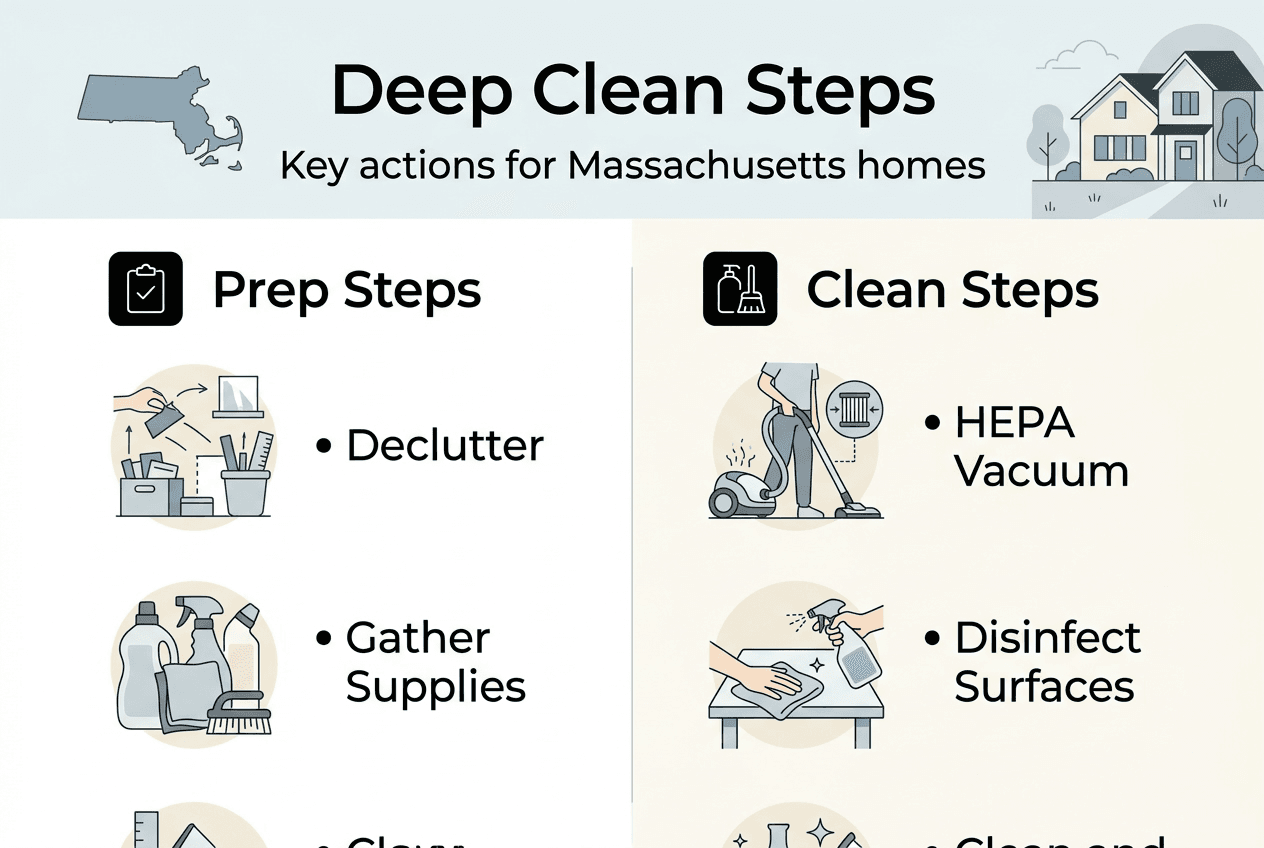
Before you spray a single surface, proper preparation determines whether your deep cleaning effort succeeds or wastes hours. Decluttering is your foundation. Remove items from countertops, floors, and furniture surfaces so cleaners can access every inch without obstacles. This step alone cuts cleaning time by 30% and prevents the frustration of working around clutter.
Product selection matters intensely in Massachusetts, where humidity swings and seasonal temperature shifts create unique cleaning challenges. Homeowners should schedule quarterly deep cleans to maintain health and air quality, using non-toxic products suited for the state’s climate variability. EPA Safer Choice certified cleaners deliver hospital-grade disinfection without releasing volatile organic compounds that aggravate respiratory conditions. Look for plant-based degreasers, hydrogen peroxide-based disinfectants, and fragrance-free formulas that won’t trigger sensitivities in occupants or pets.
Your materials checklist should include microfiber cloths in multiple colors (assign colors to specific room types to prevent cross-contamination), a HEPA-filter vacuum with attachments for upholstery and crevices, extendable dusters for ceiling fans and crown molding, scrub brushes with varying stiffness levels, and a steam cleaner for chemical-free sanitization. Stock separate buckets for clean and dirty water to avoid spreading grime. Massachusetts winters bring road salt and mud, so add entrance mats and a wet-dry vacuum to your arsenal.
Timing your deep clean strategically amplifies results. Schedule sessions during mild weather when you can open windows for ventilation without losing heat or inviting humidity. Spring and fall offer ideal conditions. Property managers should coordinate deep cleans between tenant turnovers or before listing photos to maximize visual appeal and justify premium rental rates.
Pro Tip: Create a room-by-room inventory before starting. Photograph each space to document baseline conditions, then compare post-cleaning results to verify thoroughness and identify any missed areas that need attention.
For comprehensive guidance on organizing your approach, review our deep clean house checklist guide and explore essential cleaning best practices 2025 for additional preparation strategies.
Step-by-step deep cleaning process checklist
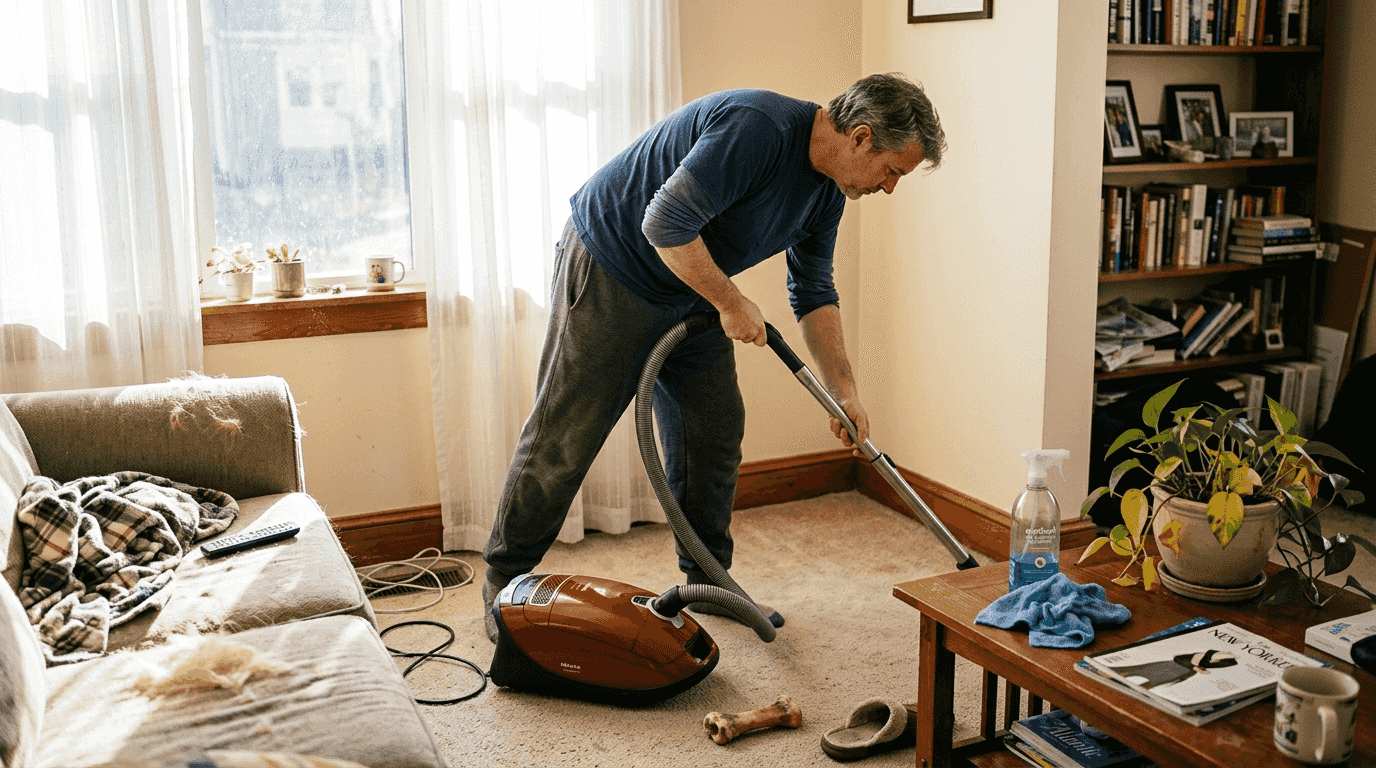
Executing deep cleaning in the correct sequence prevents recontamination and maximizes efficiency. Start every room with HEPA vacuuming from top to bottom. Ceiling corners, light fixtures, and wall surfaces harbor dust that falls during cleaning, so capturing it first stops particles from settling on freshly cleaned floors. Work systematically across crown molding, door frames, window sills, and baseboards before touching furniture or floors.
Disinfection requires patience, not just product application. Key mechanics include HEPA vacuuming first, then targeted disinfectants with proper dwell times for 99.9% pathogen kill rates, steam cleaning for chemical-free sanitization, and degreasers for kitchen surfaces. Most disinfectants need 3 to 10 minutes of wet contact time to eliminate bacteria and viruses effectively. Spray surfaces until visibly wet, then wait the full duration before wiping. Rushing this step wastes product and leaves harmful microorganisms alive.
Steam cleaning offers a powerful alternative for families avoiding chemicals. Units reaching 212°F kill pathogens instantly while loosening grime from tile grout, shower doors, and sealed hardwood. Steam penetrates porous surfaces standard cleaners can’t reach, making it invaluable for bathroom fixtures and kitchen backsplashes. Always test steam on inconspicuous areas first to prevent damage to delicate finishes.
Kitchen degreasing demands targeted attention. Range hoods accumulate sticky residue that traps odors and poses fire risks. Remove filters and soak them in hot water mixed with degreasing dish soap for 15 minutes, then scrub with a stiff brush. Wipe down interior hood surfaces with a degreaser, working from back to front. Tackle oven interiors with baking soda paste (three parts baking soda to one part water), letting it sit overnight before scrubbing and rinsing thoroughly.
Often-missed areas separate adequate cleaning from exceptional results:
- Air vents and return grilles accumulate dust that recirculates allergens throughout your home
- Window tracks collect dirt, dead insects, and mold that standard dusting ignores
- Behind and beneath large appliances where crumbs and grease build up unnoticed
- Light switch plates and door handles that harbor bacteria from constant contact
- Baseboards and floor corners where dust bunnies congregate despite regular vacuuming
Pro Tip: Work in a U-shaped pattern around each room, starting at the door and moving clockwise. This systematic approach ensures you never clean the same area twice or accidentally skip sections.
For detailed room-specific instructions, consult our deep cleaning consist checklist, kitchen deep cleaning checklist, and house cleaner checklist Massachusetts resources.
Time, cost, and efficiency benchmarks for Massachusetts homes
Understanding realistic time and cost expectations helps you budget appropriately and decide between DIY and professional services. A 2,000 square foot home takes 4 to 8 hours to deep clean, averaging 6 hours with a two-person professional team, while DIY efforts typically require 12 to 15 hours for the same space. Professional efficiency stems from specialized equipment, systematic processes, and experience that eliminates trial-and-error delays.
Cost structures in Massachusetts reflect regional labor rates and service quality. Professional deep cleaning averages $180 to $375 for standard homes, with a typical cost around $260 for comprehensive service. Per-square-foot pricing ranges from $0.10 to $0.30, varying based on home condition, accessibility, and service add-ons like carpet shampooing or window washing. Property managers should budget $300 to $450 for turnover deep cleans in rental units to ensure move-in readiness.
| Home Size | Professional Time | DIY Time | Average Cost | Cost per Sq Ft |
|---|---|---|---|---|
| 1,000 sq ft | 2 to 4 hours | 6 to 8 hours | $130 to $200 | $0.13 to $0.20 |
| 2,000 sq ft | 4 to 8 hours | 12 to 15 hours | $180 to $375 | $0.09 to $0.19 |
| 3,000 sq ft | 6 to 12 hours | 18 to 22 hours | $270 to $550 | $0.09 to $0.18 |
Professional teams deliver measurably superior results beyond speed advantages. Commercial-grade HEPA vacuums capture particles as small as 0.3 microns, removing significantly more allergens than consumer models. Steam cleaners reach sanitizing temperatures consumer units can’t match. Professionals also carry liability insurance protecting you from accidental damage, a critical consideration for property managers overseeing multiple units.
Timing considerations affect both DIY and professional scheduling:
- Spring deep cleaning addresses winter salt damage and prepares homes for allergy season
- Fall sessions remove summer humidity effects and prepare HVAC systems for heating season
- Pre-listing deep cleans boost home sale prices by 3% to 5% through enhanced visual appeal
- Rental turnover cleaning reduces vacancy periods by presenting move-in-ready conditions immediately
Choosing between deep cleaning and regular maintenance depends on your situation. Schedule deep cleaning quarterly or when moving, hosting events, or preparing properties for sale. Regular cleaning suffices for weekly or biweekly maintenance between deep sessions. Combining both services optimally balances cost and cleanliness.
Explore our residential deep cleaning services Massachusetts page for detailed pricing or compare service levels through our regular clean vs deep clean guide.
Verifying deep cleaning effectiveness and avoiding common pitfalls
Confirming your deep cleaning achieved its goals prevents wasted effort and identifies areas needing additional attention. Walk through each room with your preparation photos, checking that the top-to-bottom sequence was followed completely. Run your hand along baseboards, window sills, and door frames. Any dust or grime indicates incomplete execution.
Air quality improvements provide measurable verification. Notice whether musty odors have disappeared, whether allergy symptoms decrease in the days following cleaning, and whether surfaces stay cleaner longer between maintenance sessions. These indicators confirm allergen removal and proper sanitization. Consider using an air quality monitor to track particulate levels before and after deep cleaning for objective data.
Common mistakes undermine even well-intentioned cleaning efforts:
- Skipping decluttering forces cleaners to work around obstacles, leaving hidden areas untouched
- Ignoring dwell times on disinfectants wastes product without killing pathogens effectively
- Using dirty cleaning tools spreads contamination rather than removing it
- Mixing incompatible cleaning products creates toxic fumes or neutralizes active ingredients
- Overlooking ventilation traps chemical vapors and moisture that promote mold growth
Expert guidance emphasizes decluttering first and following top-to-bottom order as essential, while eco-friendly products balance efficacy and safety without compromising pathogen kill rates. This nuanced approach protects occupants while delivering hospital-grade cleanliness.
Pro Tip: Create a verification checklist rating each room on a 1 to 5 scale for dust removal, surface shine, odor elimination, and overall appearance. Any room scoring below 4 needs targeted re-cleaning before you consider the job complete.
Missed spots frequently include:
- Vent covers and return air grilles where dust accumulates invisibly
- Under furniture that wasn’t moved during cleaning
- Inside cabinet interiors and drawer tracks
- Behind toilets and under sink pedestals
- Ceiling fan blades and light fixture globes
“The difference between adequate and exceptional deep cleaning lies in the details others overlook. Baseboards, vents, and hidden corners reveal whether a cleaner truly understands thoroughness or simply goes through motions.”
For additional verification strategies and professional insights, review our cleaning tips from professional cleaners resource.
Explore professional deep cleaning services in Massachusetts
Mastering deep cleaning theory is valuable, but executing it flawlessly while managing your busy schedule presents real challenges. Professional services eliminate the physical strain and time commitment while delivering results that exceed DIY capabilities through specialized training and commercial-grade equipment.
E.C. House Cleaning brings over 20 years of experience to Massachusetts homes and rental properties, offering customized deep cleaning tailored to local climate conditions and property needs. Our insured, family-owned team uses eco-friendly products that protect your family and pets while achieving hospital-grade sanitization. Whether you manage multiple rental units requiring turnover cleaning or want to restore your home’s air quality, our systematic approach ensures nothing gets overlooked.
Discover how expert residential deep cleaning services transform your property’s health and value. Learn more about residential cleaner services overview or explore additional cleaning services in Massachusetts including Airbnb and vacation rental preparation.
FAQ
What is included in a deep cleaning checklist?
A comprehensive deep cleaning checklist includes thorough dusting of all surfaces from ceiling to floor, HEPA vacuuming to capture microscopic allergens, disinfection with proper dwell times for 99.9% pathogen elimination, steam cleaning for chemical-free sanitization, and degreasing of kitchen appliances and surfaces. The process also addresses commonly overlooked areas like air vents, baseboards, window tracks, behind appliances, and inside cabinets. This systematic approach removes deeply embedded grime and allergens that regular cleaning misses, significantly improving indoor air quality and home hygiene. Review our deep cleaning checklist guide for room-by-room details.
How often should Massachusetts homeowners schedule deep cleaning?
Massachusetts homeowners should schedule quarterly deep cleaning to maintain optimal health and air quality throughout seasonal climate changes. This frequency addresses the state’s humidity fluctuations, winter salt and mud tracking, and seasonal allergen variations that impact indoor environments. Property managers with high-turnover rentals may need more frequent deep cleaning between tenants, while homes with pets or allergy sufferers benefit from scheduling every 8 to 10 weeks. Adjust your frequency based on occupancy levels, lifestyle factors, and individual sensitivity to allergens.
What are key benefits of professional deep cleaning versus DIY?
Professional teams complete deep cleaning twice as fast as DIY efforts and remove 95% more allergens through commercial-grade HEPA equipment and systematic processes. Professionals bring specialized tools like industrial steam cleaners, extendable dusters, and hospital-grade disinfectants that deliver superior sanitization beyond consumer products. Their training ensures proper disinfectant dwell times, correct product applications, and thorough coverage of overlooked areas. Professional services also include liability insurance protecting your property, plus the convenience of reclaiming 12 to 15 hours you’d spend on DIY deep cleaning.
How do I choose eco-friendly products for Massachusetts deep cleaning?
Select EPA Safer Choice certified products specifically formulated for effectiveness without harsh chemicals that trigger respiratory issues or harm pets. Look for plant-based degreasers, hydrogen peroxide disinfectants instead of bleach, and fragrance-free formulas that won’t aggravate sensitivities. Massachusetts climate variability requires products that perform in both humid summers and dry winters without leaving residue or requiring excessive ventilation. Read labels for biodegradability, non-toxic ingredients, and third-party certifications. Avoid products with warning labels about skin contact or fume inhalation, as these indicate harsh chemical compositions incompatible with family-safe cleaning.
What preparation steps maximize deep cleaning results?
Declutter all surfaces before cleaning begins, removing items from countertops, floors, and furniture to provide unobstructed access to every area. Create a room-by-room inventory with photos documenting baseline conditions for post-cleaning verification. Gather all necessary supplies including color-coded microfiber cloths, HEPA vacuum with attachments, extendable dusters, scrub brushes, and separate buckets for clean and dirty water. Schedule cleaning during mild weather allowing window ventilation without temperature extremes. Move lightweight furniture away from walls to clean baseboards and floor edges thoroughly. These preparation steps reduce cleaning time by 30% and ensure comprehensive coverage.
When should I hire professionals instead of DIY deep cleaning?
Hire professionals when time constraints prevent dedicating 12 to 15 hours to thorough cleaning, when preparing properties for sale or rental listings requiring maximum visual appeal, or when health concerns demand hospital-grade allergen removal beyond consumer equipment capabilities. Professional services make sense for property managers overseeing multiple units needing consistent turnover standards, homeowners with physical limitations preventing intensive scrubbing and reaching high surfaces, or situations requiring specialized equipment like commercial steam cleaners and industrial HEPA vacuums. The investment pays dividends through superior results, liability protection, and reclaimed personal time.
Recommended
- Deep Cleaning Essentials 2025: Guide for Massachusetts Homes | E.C. House Cleaning
- Essential Cleaning Supplies Checklist for Massachusetts in 2025 | E.C. House Cleaning
- Vacation Rental Cleaning Checklist 2025 for Massachusetts Homes | E.C. House Cleaning
- Move out cleaning checklist free: Massachusetts guide 2026 | E.C. House Cleaning