That bottle labeled “all-natural” on your grocery store shelf may still contain ingredients that irritate your lungs, disrupt hormones, or wash harmful chemicals into Massachusetts waterways. Many homeowners assume that green packaging equals a safe product, but that gap between marketing and reality is exactly where health risks hide. This guide walks you through how to choose certified natural cleaners, make your own effective solutions, and build a cleaning routine that genuinely protects your family and aligns with Massachusetts environmental standards.
Table of Contents
- Why natural cleaning matters in Massachusetts
- Understanding natural cleaning product certifications
- Making your own natural cleaners: DIY recipes and science
- Limits and safety tips for natural cleaners
- How to build your Massachusetts natural cleaning routine
- Get expert help for natural cleaning solutions in Massachusetts
- Frequently asked questions
Key Takeaways
| Point | Details |
|---|---|
| Certified products matter | Choose EPA Safer Choice or DfE-labeled cleaners for verified health and environmental safety. |
| DIY recipes work for routine | Vinegar, tea tree oil, and soap solutions can reduce germs effectively for everyday surfaces. |
| Local laws support eco choices | Massachusetts restricts phosphorus and promotes safer alternatives, making natural cleaning both a smart and compliant approach. |
| Know each cleaner’s limits | Natural cleaners aren’t full disinfectants and shouldn’t be used on acid-sensitive surfaces like marble or granite. |
| Pro routine for healthy homes | A regular schedule combining physical cleaning and natural products maintains a safer, healthier Massachusetts household. |
Why natural cleaning matters in Massachusetts
Massachusetts takes household chemical safety seriously at the state level. Massachusetts law limits phosphorus in household cleaners to trace quantities to protect local waterways, and the Toxics Use Reduction Institute (TURI) actively promotes safer alternatives like non-halogenated solvents. These aren’t just bureaucratic rules. They reflect real damage that phosphorus runoff causes to ponds, rivers, and coastal ecosystems across the state.
Choosing eco-friendly products for homes isn’t just about personal health. It’s about being a responsible neighbor in a state that has worked hard to reduce toxic chemical use. MassDEP and TURI safer cleaning initiatives have helped cut toxics use significantly since 2007, and your product choices at home contribute directly to that progress.
Here’s what natural cleaning actually delivers for Massachusetts households:
- Fewer VOCs (volatile organic compounds) that trigger asthma and respiratory issues
- Reduced chemical exposure for children, pets, and sensitive family members
- Compliance with state phosphorus limits without extra effort
- Support for local waterway protection every time you rinse a surface
- Lower long-term costs compared to specialty chemical cleaners
“Switching to certified natural cleaners is one of the simplest ways Massachusetts homeowners can protect both their indoor air quality and the local environment at the same time.”
Understanding green cleaning in Massachusetts means recognizing that the state’s environmental goals and your family’s health goals are pointing in the same direction.
Understanding natural cleaning product certifications
Not every product with a leaf logo or the word “natural” on the label has earned it. This is where certifications become your best tool. EPA Safer Choice and DfE labels certify that a product’s ingredients meet strict standards for reducing health and environmental risks, including VOCs, carcinogens, and ozone-depleting chemicals.
The Safer Choice certification requires manufacturers to disclose every ingredient and prove each one meets safety thresholds. That’s a very different standard from a brand simply printing “plant-based” on the front. Greenwashing, the practice of using eco-friendly language without substance, is widespread in the cleaning aisle.
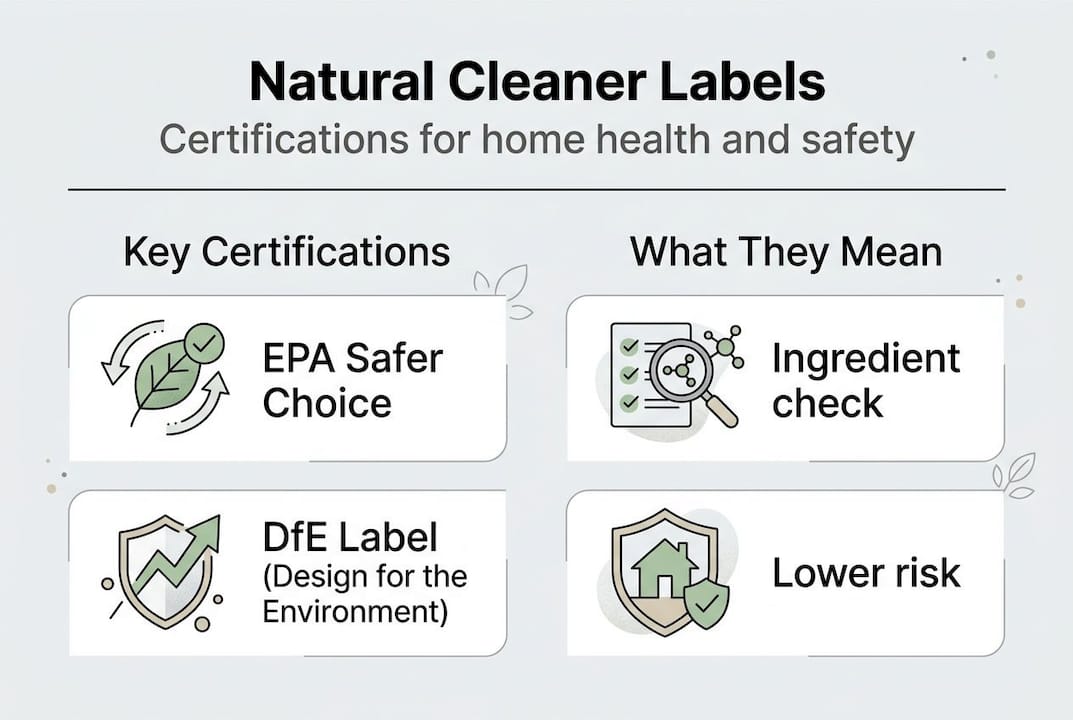
| Product type | Ingredient transparency | Health risk reduction | Environmental standard |
|---|---|---|---|
| EPA Safer Choice certified | Full disclosure required | Verified low risk | Strict waterway/air standards |
| DfE certified | Full disclosure required | Verified low risk | Ozone and VOC limits |
| Conventional cleaner | Minimal disclosure | Variable, often high | No standard required |
| “Natural” marketing only | No requirement | Unverified | No standard required |
Pro Tip: Before buying any cleaning product, search its name on the EPA Safer Choice product finder. If it’s not listed, the “natural” claim on the label is just marketing.
When you shop for natural cleaning product ingredients or browse sustainable cleaning products, look for the actual EPA seal rather than relying on color schemes or vague claims. It takes 30 seconds and makes a real difference.
Making your own natural cleaners: DIY recipes and science
DIY cleaning solutions are practical, affordable, and genuinely effective for most household surfaces. The science behind them is straightforward. Acidity breaks down grease and mineral deposits. Mild abrasives scrub away grime without scratching. Natural antimicrobials like tea tree oil and hydrogen peroxide reduce microbial load on surfaces.
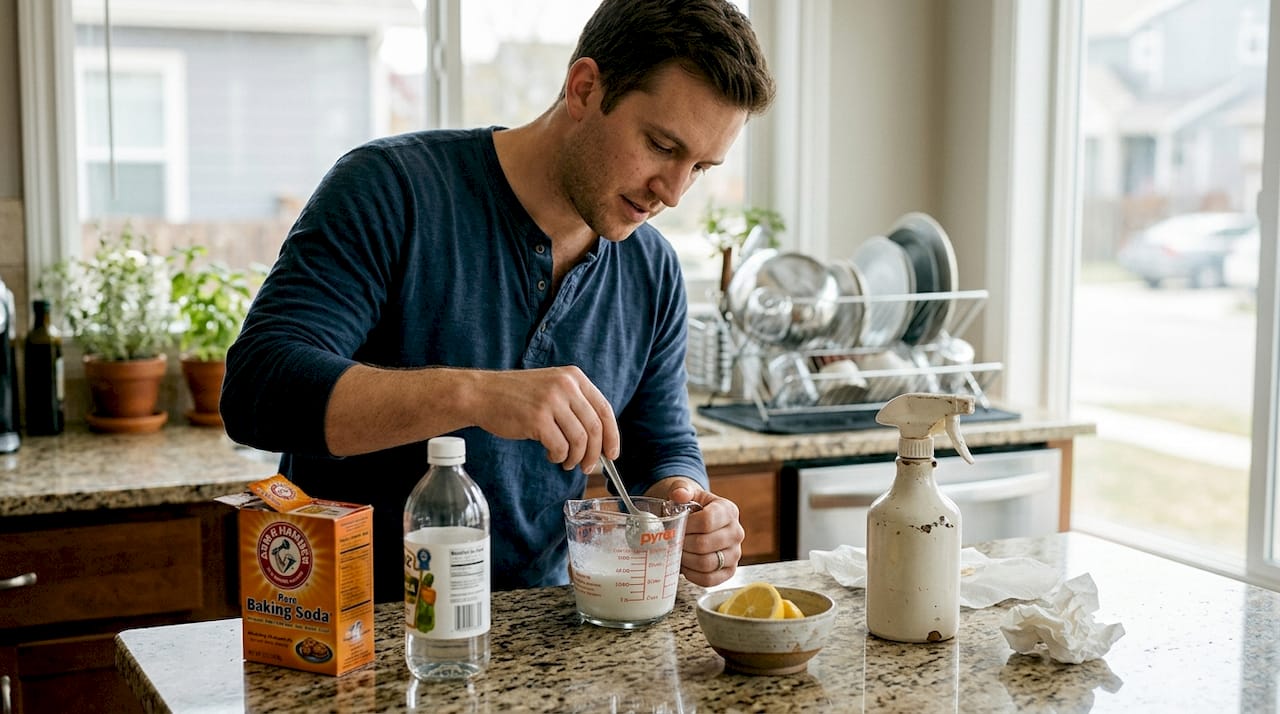
Here’s how the most common homemade cleaner recipes stack up:
| Ingredient | Mechanism | Best use |
|---|---|---|
| 5% white vinegar | Acidity dissolves minerals and grease | Glass, counters, appliances |
| Baking soda | Mild abrasive, odor neutralizer | Sinks, tubs, stovetops |
| 2% tea tree oil | Antimicrobial action | Bathroom surfaces, mold-prone areas |
| Hydrogen peroxide | Oxidizing antimicrobial | Cutting boards, tile grout |
| Castile soap | Surfactant, lifts dirt | General surfaces, floors |
An empirical study on natural cleaner efficacy found that 5% vinegar achieved a 2.1 to 2.9 log CFU/cm² bacterial reduction, while 2% tea tree oil reached 2.5 to 3.6. Baking soda alone scored below 0.8, making it ineffective as a standalone disinfectant. Soap and hot water scrubbing landed at 1.9 to 2.7. These numbers confirm that combination approaches work best.
Here’s how to mix and use the three most useful recipes:
- All-purpose cleaner: Mix equal parts white vinegar and water, then add 10 to 15 drops of essential oil. Spray on counters, appliances, and non-stone surfaces. Wipe with a microfiber cloth.
- Glass cleaner: Combine one cup water, one cup rubbing alcohol, and one tablespoon white vinegar. Spray and wipe with a lint-free cloth for streak-free results.
- Bathroom scrub: Mix half a cup of baking soda with enough castile soap to form a paste, then add a tablespoon of hydrogen peroxide. Apply to tubs, sinks, and tile. Scrub and rinse.
For organic bathroom cleaner tips and a full list of essential cleaning supplies to stock your cabinet, those resources will help you get started without overcomplicating things.
Pro Tip: Store DIY solutions in dark glass or opaque bottles. Sunlight degrades hydrogen peroxide and essential oils quickly, cutting their effectiveness in half within weeks.
Limits and safety tips for natural cleaners
Natural cleaners are powerful tools, but they have real limits you need to know before relying on them exclusively. Vinegar damages marble and granite because these surfaces are acid-sensitive. One application can etch the finish permanently. Always use a pH-neutral cleaner on stone countertops.
Natural cleaners are also not full disinfectants. If someone in your home has been sick, or if you’re dealing with raw meat contamination, you need an EPA-registered disinfectant to eliminate pathogens reliably. Natural vs. chemical cleaning comparisons consistently show that natural options are safer and biodegradable but less potent for heavy disinfection tasks. A hybrid approach, using natural cleaners for daily maintenance and EPA-registered products when true disinfection is needed, is the most practical strategy.
Key limits and best practices to keep in mind:
- Never mix vinegar and hydrogen peroxide in the same bottle. They create peracetic acid, which is corrosive.
- Avoid vinegar on stone, cast iron, and waxed surfaces. It strips protective coatings.
- Physical scrubbing is non-negotiable. No cleaner, natural or chemical, works without mechanical action to lift dirt.
- Quaternary ammonium compounds (quats) in some conventional cleaners emit PM2.5 particles and VOCs, making natural alternatives the healthier daily choice.
- Plant-based cleaners take longer to work than chemical ones. Give them dwell time before wiping.
For households with animals, eco-friendly pet cleaning tips cover which ingredients are safe around dogs and cats. And for a broader look at eco-friendly cleaning methods, that resource covers surface-specific strategies in detail.
How to build your Massachusetts natural cleaning routine
A good cleaning routine isn’t about using the most products. It’s about using the right ones in the right order. The CDC recommends cleaning first with soap and water to remove dirt and germs before sanitizing or disinfecting. For most routine home maintenance, natural cleaning alone is sufficient.
TURIs data shows that natural and safer cleaning alternatives have helped reduce toxics use by 62% in Massachusetts since 2007. That’s a meaningful shift, and your daily routine is part of it.
Here’s a practical framework:
- Daily: Wipe kitchen counters and stovetop with all-purpose vinegar spray. Rinse sinks with hot water and a drop of castile soap.
- Weekly: Scrub bathroom surfaces with baking soda paste. Mop hard floors with a diluted castile soap solution. Clean glass surfaces with alcohol-vinegar mix.
- Monthly: Deep clean appliances, grout lines, and high-touch areas. Use hydrogen peroxide on cutting boards and tile. Assess whether any area needs an EPA-registered disinfectant.
- Seasonally: Rotate your DIY solutions, check expiration on store-bought certified products, and reassess your supply list.
Rooms like kitchens and bathrooms benefit most from the hybrid approach. Living rooms, bedrooms, and hallways are ideal for purely natural methods. Understanding why use eco-friendly cleaning products helps reinforce the habit, and reviewing essential cleaning best practices keeps your routine sharp and effective year-round.
Get expert help for natural cleaning solutions in Massachusetts
Building a natural cleaning routine takes time, and even the most organized homeowner can benefit from professional support. E.C. House Cleaning brings over 20 years of experience serving Massachusetts homes with eco-friendly, certified cleaning methods that align with state environmental standards.
Our team understands what residential cleaner tasks actually involve at a professional level, from surface-specific product selection to deep cleaning techniques that protect your home’s finishes. Whether you need a one-time deep clean or ongoing maintenance, our residential cleaning services in Massachusetts are designed to complement your natural cleaning efforts. We use products that meet the same standards you’ve read about here. Learn more about the eco-friendly product benefits we bring to every job and schedule a free consultation today.
Frequently asked questions
Which certifications guarantee a natural cleaning product is safe?
The EPA Safer Choice and DfE labels indicate a product meets stringent safety standards for both human health and the Massachusetts environment. Look for these seals directly on the packaging, not just green-themed branding.
Are DIY natural cleaners as effective as store-bought disinfectants?
DIY cleaners like vinegar and tea tree oil reduce germs effectively for routine cleaning, but natural cleaner efficacy studies confirm they are less potent than EPA-registered disinfectants when dealing with serious pathogens.
Can vinegar-based cleaners safely be used on stone countertops?
No. Acidic cleaners like vinegar damage marble and granite by etching the surface. Always use a pH-neutral cleaner on stone to avoid permanent damage.
Is natural cleaning enough for regular home maintenance according to health authorities?
Yes. The CDC confirms natural cleaning with soap and water often suffices for routine home maintenance when done consistently and paired with physical scrubbing.
How does Massachusetts law affect your household cleaning choices?
Massachusetts phosphorus limits restrict the phosphorus content in household cleaners, and TURI encourages safer alternatives. Choosing certified natural products keeps you compliant without any extra steps.
Recommended
- Why use eco-friendly products: healthier homes in Massachusetts 2026 | E.C. House Cleaning
- Essential Cleaning Supplies Checklist for Massachusetts in 2025 | E.C. House Cleaning
- What Is Green Cleaning? A Simple Guide for Massachusetts
- Eco Friendly Pet Cleaning Products: Safer Homes, Healthier Pets | E.C. House Cleaning