Most American families spend thousands on home cleaning supplies each year, but many new homeowners in Massachusetts are discovering smarter ways to keep their living spaces safe and pristine after construction. Choosing eco-friendly products and careful techniques means less exposure to harsh chemicals and better indoor air quality. This guide reveals practical, budget-friendly strategies to help you tackle post-construction cleanup efficiently while protecting your health and the environment.
Table of Contents
- Step 1: Assess Cleanup Needs and Gather Eco-Friendly Supplies
- Step 2: Remove Construction Debris and Dust Safely
- Step 3: Clean Surfaces Methodically Using Proper Techniques
- Step 4: Address Floors, Carpets, and Ventilation Systems
- Step 5: Inspect Results and Tackle Missed Areas
Quick Summary
| Key Point | Explanation |
|---|---|
| 1. Assess Cleaning Needs Thoroughly | Conduct a detailed walkthrough to identify areas needing cleaning and prioritize tasks based on severity and type of residue present. |
| 2. Use Eco-Friendly Cleaning Supplies | Choose Green Seal certified products that minimize harmful chemicals, focusing on safer indoor air quality and reduced environmental impact. |
| 3. Follow Systematic Cleaning Techniques | Clean from top to bottom, using appropriate methods for different surfaces to avoid cross-contamination and effectively trap dust. |
| 4. Address Ventilation and Flooring | Replace HVAC filters and clean exhaust systems to ensure dust does not circulate, while addressing floors and carpets to maintain hygiene. |
| 5. Conduct a Final Inspection | Perform a detailed walkthrough using bright light to spot any missed areas and clean them immediately to ensure a thorough job. |
Step 1: Assess Cleanup Needs and Gather Eco-Friendly Supplies
Starting your post-construction cleanup requires strategic planning and smart supply selection. Understanding your specific cleaning requirements will help you tackle the project efficiently while minimizing environmental impact.
Begin by conducting a comprehensive assessment of the construction site. Walk through each room and note areas with dust, debris, paint splatters, and construction residue. Some zones might need intense cleaning, like floors with sawdust or walls with adhesive remnants. When selecting cleaning products, prioritize eco-friendly solutions certified to minimize harmful chemical exposure. Look for cleaning supplies with Green Seal certification, which ensures lower volatile organic compound (VOC) levels and safer indoor air quality.
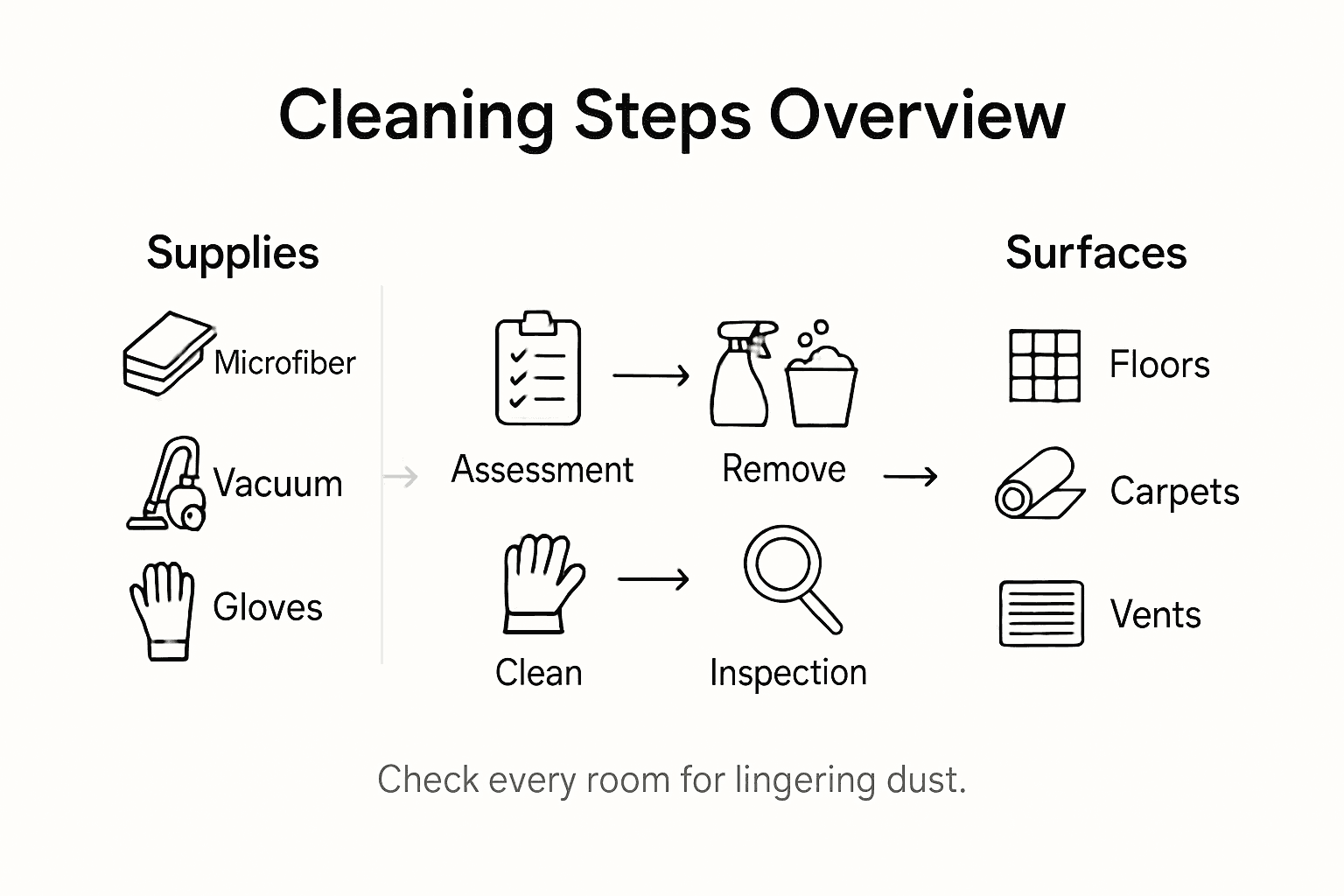
Your cleanup kit should include microfiber cloths, HEPA-filter vacuum cleaners, biodegradable all-purpose cleaners, protective gloves, and disposable masks. Organize your supplies by room and cleaning task to streamline the process. Consider purchasing concentrated cleaning solutions that can be diluted, reducing packaging waste and offering better value.
Here’s a quick comparison of eco-friendly vs. conventional cleaning supplies commonly used in post-construction cleanup:
| Aspect | Eco-Friendly Supplies | Conventional Supplies |
|---|---|---|
| Chemical impact | Low VOC, biodegradable ingredients | High VOC, harsh chemicals |
| Indoor air quality | Improves air quality | May decrease air quality |
| Packaging waste | Reduced, often reusable packaging | More single-use plastic waste |
| Long-term costs | Saves money with reusables | Higher expense over time |
Pro tip: Invest in reusable microfiber cloths instead of disposable wipes to reduce environmental waste and save money in the long run.
Step 2: Remove Construction Debris and Dust Safely
Cleaning up post-construction debris requires a systematic approach that protects your health and maintains your new living space. Your primary goals are removing potentially hazardous materials while minimizing dust spread and potential respiratory risks.
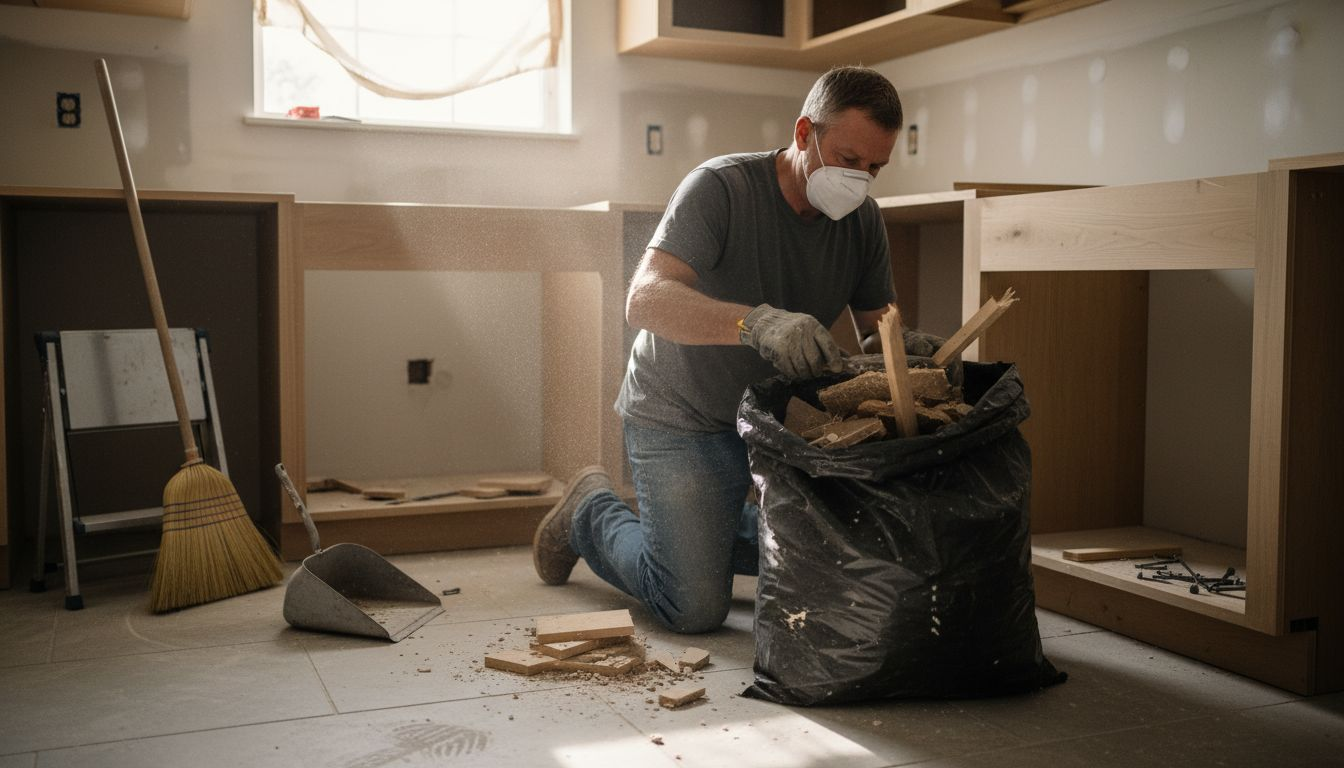
Responsible construction waste management involves strategic sorting and careful removal. Start by wearing protective gear including an N95 mask, safety glasses, and disposable gloves. Begin with large debris removal first sweeping or scooping larger items like wood scraps, packaging materials, and leftover construction supplies. Use heavy-duty trash bags and separate recyclable materials from general waste. For dust control, work systematically from top to bottom using HEPA-filter vacuums and microfiber cloths that trap fine particles instead of dispersing them into the air.
Pay special attention to hard-to-reach areas like window sills, baseboards, ceiling corners, and ventilation systems. Use extension tools and gentle cleaning motions to prevent dust from becoming airborne. Vacuum fabric surfaces like curtains and upholstery using soft brush attachments, and consider using slightly damp microfiber cloths on hard surfaces to capture dust effectively without scratching delicate finishes.
Pro tip: Change or clean your vacuum filters immediately after post construction cleaning to prevent redistributing trapped dust in future cleaning sessions.
Step 3: Clean Surfaces Methodically Using Proper Techniques
Post construction cleaning demands a strategic approach to ensure every surface becomes spotless while protecting your health and the environment. Your goal is to transform your newly constructed space from a dusty work site into a pristine living area.
Systematic surface cleaning techniques require careful planning and the right tools. Start by working from the highest points in each room downward cleaning ceiling corners, light fixtures, and top shelves first to prevent dust from falling onto already cleaned surfaces. Use microfiber cloths with gentle cleaning solutions that trap particles instead of spreading them around. For hard surfaces like countertops and floors, use slightly damp cloths that collect dust effectively without leaving residue. Pay special attention to areas prone to dust accumulation such as window sills, baseboards, and electrical outlets.
Consider the specific material of each surface when selecting cleaning methods. Delicate surfaces like marble or wood require different approaches compared to ceramic or stainless steel. Always test cleaning solutions on a small inconspicuous area first to ensure they do not damage the finish. Use soft brushes for textured surfaces and avoid abrasive materials that might scratch or compromise the new construction.
Pro tip: Keep separate cleaning cloths for different surface types to prevent cross-contamination and potential damage during your post construction cleanup.
Step 4: Address Floors, Carpets, and Ventilation Systems
Addressing floors, carpets, and ventilation systems is a critical phase of post-construction cleaning that ensures your new living space remains healthy and pristine. Your objective is to remove construction dust and debris while protecting the integrity of these crucial home components.
Post construction cleaning of ventilation systems and flooring requires a systematic and careful approach. Start with your HVAC system by replacing air filters and using specialized vacuum attachments to clean air vents and ductwork. For hard floors, begin with a thorough dry cleaning using microfiber mops to capture fine dust particles before applying any liquid cleaners. Carpeted areas demand extra attention use a HEPA-filtered vacuum with multiple attachments to extract dust from deep within carpet fibers. Work methodically across each room moving furniture and accessing hard-to-reach areas around baseboards and corners.
Each surface requires specific cleaning techniques. Hardwood floors need gentle microfiber treatments with minimal moisture, while tile and ceramic surfaces can tolerate slightly more aggressive cleaning methods. For carpets, consider professional deep cleaning if construction dust has penetrated deeply into the fibers. Pay special attention to your ventilation system, as accumulated construction dust can circulate throughout your home and compromise indoor air quality.
The table below summarizes recommended cleaning techniques for various surface types encountered during post-construction cleanup:
| Surface Type | Recommended Cleaning Method | Key Precaution |
|---|---|---|
| Hardwood Floor | Microfiber mop, minimal moisture | Avoid excess water |
| Tile/Ceramic | Damp microfiber or soft brush | Prevent abrasive scratches |
| Carpet | HEPA vacuum, deep cleaning option | Check for deep-set dust |
| Marble/Stone | Mild cleaner, soft cloth | Test cleaner in hidden area |
| Stainless Steel | Gentle spray, microfiber wipe | Prevent streaks and corrosion |
Pro tip: Invest in disposable HEPA vacuum bags and change them outdoors to prevent re-releasing dust inside your newly cleaned home.
Step 5: Inspect Results and Tackle Missed Areas
Final inspection is the critical last stage of your post-construction cleaning process that ensures no dust or debris remains hidden in your newly transformed space. Your thorough review will transform a good cleaning job into an exceptional one.
Systematic post construction cleaning verification requires a methodical walkthrough with natural lighting and careful observation. Use a bright flashlight to illuminate corners, baseboards, and hard-to-see areas where construction dust tends to accumulate. Start at one end of each room and move systematically across surfaces checking window sills, light fixtures, electrical outlets, and behind furniture. Look for fine dust particles on top of door frames, inside cabinet interiors, and along floor edges. Pay special attention to areas near air vents and ceiling corners where construction residue often lingers unnoticed.
When you discover missed areas, address them immediately using the same cleaning techniques you applied earlier. Use microfiber cloths for delicate surfaces and targeted cleaning solutions for specific materials. If certain areas seem persistently dusty, consider using compressed air for electronics and specialized attachments for intricate spaces. Remember that patience and attention to detail separate a good cleaning from an exceptional one.
Pro tip: Wear white cotton gloves during your final inspection to easily spot dust and grime that might blend into colored surfaces.
Make Your Post Construction Cleanup Hassle-Free with Expert Help
After a construction project the challenge of removing stubborn dust debris and residues while keeping your home safe and fresh can feel overwhelming. You want to protect your indoor air quality avoid harsh chemicals and tackle every surface methodically. This article’s focus on eco-friendly supplies HEPA vacuuming and detailed inspection highlights key pain points that homeowners and property managers face during post construction cleaning.
Discover the advantage of professional cleaning services that share your commitment to quality and environmental care through How to Clean Dust after Renovation | E.C. House Cleaning.
Trust E.C. House Cleaning a family owned Massachusetts business with over 20 years’ experience to deliver thorough affordable post construction cleanup that restores your living space quickly and safely. Visit our main site E.C. House Cleaning to schedule your free consultation and see how our skilled professionals can make your home shine with care and precision. Don’t let construction dust linger book now for a fresh start in your new space.
Frequently Asked Questions
What eco-friendly supplies should I use for post construction cleaning?
To ensure a safe and fresh home, opt for eco-friendly cleaning supplies such as microfiber cloths, biodegradable cleaners, and HEPA-filter vacuum cleaners. Gather these supplies before starting your cleanup to minimize the environmental impact while maximizing efficiency.
How do I safely remove construction debris and dust?
Begin by wearing protective gear like an N95 mask and safety glasses. Start with large debris, using heavy-duty trash bags to separate recyclable materials from waste, and follow up with a HEPA-filter vacuum to control dust and protect your health.
What are effective methods for cleaning various surfaces after construction?
Systematically clean surfaces in a top-to-bottom order, starting with ceiling corners and light fixtures. Use slightly damp microfiber cloths and suitable cleaners based on the surface material to ensure no damage occurs and to trap dust effectively.
How should I clean floors and carpets after construction?
For floors, begin with a thorough dry cleaning using microfiber mops before applying any liquid cleaners. For carpets, utilize a HEPA-filter vacuum to extract dust from the fibers, and consider professional deep cleaning if necessary to ensure a dust-free environment.
How can I ensure I don’t miss any areas during final inspection?
Perform a systematic walkthrough with a bright flashlight to catch hidden dust or debris. Check corners, baseboards, and behind furniture to ensure every surface is clean, and address any missed areas immediately using your established cleaning techniques.