Cleaning bathrooms in Massachusetts presents unique challenges that go beyond typical scrubbing and disinfecting. Hard water stains from regional mineral content, strict environmental regulations limiting certain cleaning chemicals, and the need for eco-friendly solutions compliant with state law all demand specialized approaches. Whether you manage multiple rental properties or maintain your own home, understanding these Massachusetts-specific factors transforms routine cleaning into an effective, sustainable practice. This guide delivers practical, actionable tips tailored to local conditions, helping you achieve spotless bathrooms while respecting environmental standards and protecting your surfaces from damage.
Table of Contents
- Key takeaways
- Understanding Massachusetts-specific cleaning criteria
- Top-to-bottom cleaning method for efficient bathroom maintenance
- Managing hard water stains and mineral buildup in Massachusetts bathrooms
- Systematic cleaning checklists for property managers and homeowners
- Discover professional cleaning services tailored for Massachusetts bathrooms
- FAQ
Key Takeaways
| Point | Details |
|---|---|
| Massachusetts compliant cleaners | Select pH neutral, plant based cleaners that comply with state phosphorus limits and reduce harmful fumes. |
| Top to bottom method | Use a dry to wet sequence starting with decluttering and dusting to prevent recontamination and save time. |
| Address hard water | Tackle mineral stains with vinegar and baking soda while avoiding harsh chemicals. |
| Safety labeling matter | Check product labels for EPA Safer Choice or Green Seal to ensure compliance and performance. |
Understanding Massachusetts-specific cleaning criteria
Massachusetts homeowners and property managers must navigate specific environmental regulations that directly impact cleaning product choices. Massachusetts law limits phosphorus in household cleaning products to trace quantities except for specific commercial uses, promoting eco-friendly alternatives like vinegar and plant-based cleaners. This restriction protects the state’s waterways from nutrient pollution that causes harmful algal blooms and ecosystem damage.
Selecting eco-friendly cleaning products isn’t just about compliance. It safeguards your family’s health and reduces indoor air pollution. Plant-based formulas and vinegar-based solutions deliver powerful cleaning action without toxic fumes or residues that irritate respiratory systems. These natural agents align perfectly with Massachusetts environmental goals while providing effective sanitization.
When shopping for bathroom cleaners, avoid products containing:
- High phosphorus levels banned under state regulations
- Harsh ammonia or chlorine bleach combinations that create toxic fumes
- Artificial fragrances that mask chemical odors and trigger allergies
- Non-biodegradable surfactants that persist in water systems
Pro Tip: Check product labels for certification marks like EPA Safer Choice or Green Seal to quickly identify compliant, effective cleaners that meet Massachusetts standards.
pH-neutral cleaners work best for regular maintenance, protecting tile, grout, and fixture finishes from gradual erosion. Acidic or alkaline cleaners remove stubborn buildup effectively but should be reserved for occasional deep cleaning to prevent surface damage over time.
Top-to-bottom cleaning method for efficient bathroom maintenance
The top-to-bottom, dry-to-wet methodology revolutionizes bathroom cleaning efficiency by preventing recontamination and reducing wasted effort. This systematic approach starts with decluttering surfaces, then progresses through dust removal from high areas, fixture cleaning, surface scrubbing, and finally floor washing. Each step builds on the previous one, allowing dirt and debris to fall naturally downward where it gets captured in the final floor cleaning.
Follow this proven sequence for optimal results:
- Remove all items from countertops, shelves, and shower areas to access surfaces completely
- Dust ceiling corners, light fixtures, and exhaust vents using dry microfiber cloths that trap particles
- Wipe mirrors, cabinet fronts, and towel bars with appropriate cleaners
- Scrub sinks, toilets, and tubs using designated tools for each fixture
- Clean shower walls and doors from top to bottom
- Finish by mopping floors, sweeping debris toward the exit
Starting with dry cleaning in upper areas prevents dust from settling on freshly cleaned lower surfaces. Microfiber cloths excel at trapping dust particles through electrostatic attraction, unlike cotton rags that simply push debris around. This approach saves significant time in busy Massachusetts homes where efficiency matters.
Pro Tip: Keep separate color-coded microfiber cloths for different bathroom zones (blue for mirrors, green for counters, red for toilets) to prevent cross-contamination and maintain hygiene standards.
Property managers maintaining multiple units benefit enormously from this method. The predictable workflow allows cleaning teams to move quickly through apartments while ensuring thorough sanitization. Tenants notice the difference in cleanliness, and systematic approaches reduce the risk of overlooked areas that become hygiene problems. The Massachusetts deep cleaning checklist provides additional guidance for comprehensive maintenance schedules.
Managing hard water stains and mineral buildup in Massachusetts bathrooms
Hard water affects numerous Massachusetts regions, particularly areas like Natick and Middlesex County, where mineral content in municipal water supplies leaves stubborn deposits on bathroom surfaces. These white, chalky stains accumulate on tiles, grout, shower doors, and fixtures, creating an unsightly appearance that resists ordinary cleaning. Understanding how to address this local challenge preserves your bathroom’s beauty and prevents permanent damage.
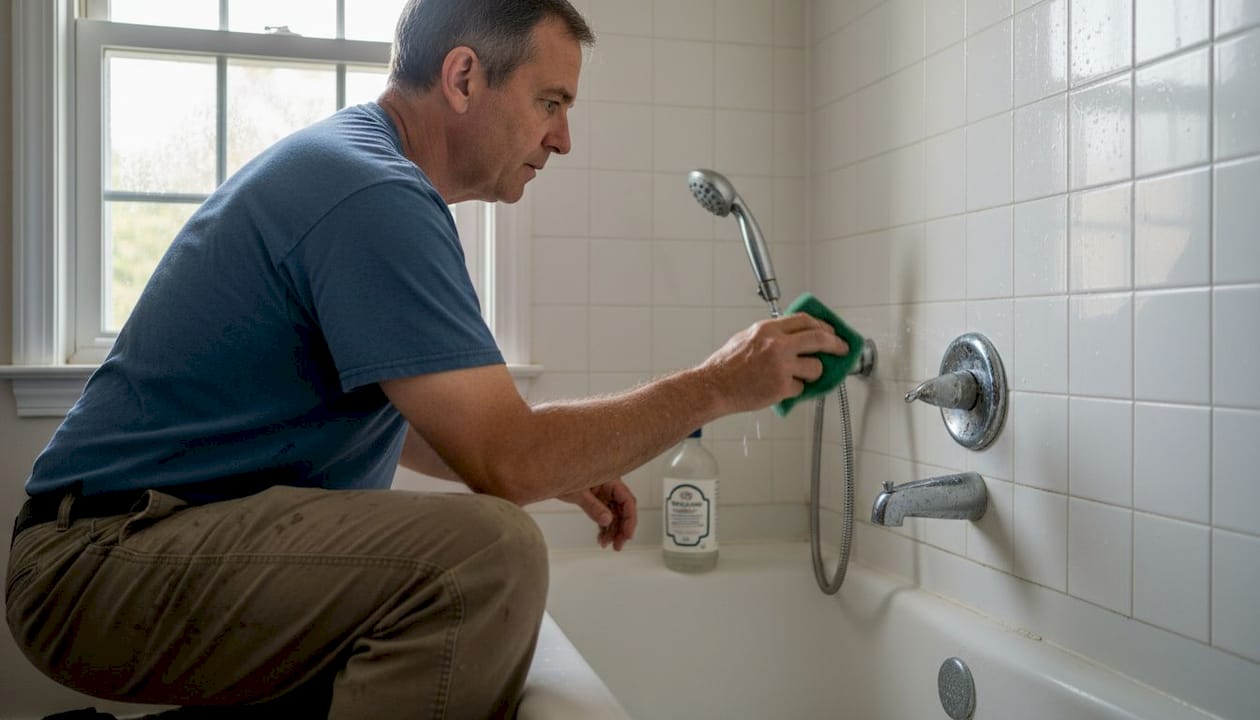
Vinegar and baking soda create a powerful natural paste for removing tile and grout buildup common in Massachusetts homes. Mix equal parts white vinegar with baking soda to form a thick paste, apply it directly to stained areas, let it sit for 15-20 minutes, then scrub with a soft brush. The mild acid in vinegar dissolves calcium and magnesium deposits while baking soda provides gentle abrasion without scratching surfaces.
Hydrogen peroxide and vinegar dissolve minerals better than bleach for hard water stains, offering a safer alternative that protects both your health and bathroom finishes. Bleach actually reacts poorly with mineral deposits and can discolor grout or damage certain tile glazes over time.
Implement these preventive measures to reduce buildup:
- Squeegee shower walls and doors immediately after each use to remove standing water
- Wipe down faucets and fixtures daily with a dry cloth
- Run bathroom exhaust fans during and 20 minutes after showers to reduce humidity
- Apply water-repellent treatments to glass shower doors quarterly
| Solution | Effectiveness | Cost | Ease of use | Surface safety |
|---|---|---|---|---|
| Vinegar + baking soda | High | Very low | Easy | Excellent |
| Commercial lime removers | Very high | Medium | Moderate | Good (test first) |
| Hydrogen peroxide | High | Low | Easy | Excellent |
| Water softener (prevention) | Excellent | High initial | Professional install | N/A |
Weekly cleaning with pH-neutral products maintains surfaces between deep treatments and prevents mineral layers from hardening into stubborn deposits. Consistency matters more than product strength when managing hard water issues.
Pro Tip: Consider installing a whole-house water softener or point-of-use shower filter to inhibit mineral buildup at the source, dramatically reducing cleaning time and extending the life of bathroom fixtures and finishes.
For essential cleaning supplies that work effectively against Massachusetts water challenges, focus on products specifically formulated for hard water regions rather than generic all-purpose cleaners.
Systematic cleaning checklists for property managers and homeowners
Structured cleaning routines transform bathroom maintenance from reactive scrambling to proactive management. Property managers overseeing multiple Massachusetts units need reliable systems that ensure consistent hygiene across all properties, while busy homeowners benefit from clear schedules that prevent overwhelming buildup. Checklists eliminate guesswork and guarantee thorough attention to every critical area.
Systematic checklists focusing on high-touch surfaces ensure tenant hygiene and regulatory compliance, particularly important in multi-unit buildings where infection prevention remains a priority post-COVID. Daily attention to frequently contacted areas prevents pathogen transmission and maintains sanitary conditions between deep cleaning sessions.
Daily tasks require just 5-10 minutes but deliver outsized hygiene benefits:
- Wipe door handles, light switches, and faucet handles with disinfectant
- Clean toilet seats, handles, and exterior surfaces
- Rinse sinks and wipe countertops after use
- Empty trash and replace liners
- Spot-clean mirrors and address visible spills immediately
Weekly deep cleaning sessions tackle areas that accumulate grime gradually. Allocate 30-45 minutes for thorough scrubbing of tubs, showers, and tile surfaces. Wash bath mats, shower curtains, and fabric items. Disinfect toothbrush holders, soap dispensers, and other accessories. Clean exhaust fan covers and check for mold in grout lines or caulking.
Monthly inspections identify maintenance needs before they become costly repairs:
- Examine grout condition and reseal if necessary
- Deep-clean exhaust vents and replace filters
- Check under sinks for leaks or water damage
- Inspect caulking around tubs and showers for deterioration
- Descale showerheads and faucet aerators
Property managers should document completion of each checklist item, creating accountability and providing records for tenant disputes or regulatory inspections. Digital checklists accessible via smartphone apps enable real-time updates and photo documentation of conditions.
For comprehensive support maintaining additional cleaning services in Massachusetts properties, professional teams can execute these systematic routines with efficiency that busy owners and managers cannot match individually.
Discover professional cleaning services tailored for Massachusetts bathrooms
Maintaining pristine bathrooms while juggling work, family, and property management responsibilities challenges even the most organized individuals. Professional cleaning services familiar with Massachusetts regulations and environmental priorities deliver results that save time and ensure thoroughness. These experts understand local water conditions, comply with state chemical restrictions, and use proven techniques refined through thousands of cleaning sessions.
Residential cleaning services in Massachusetts customize bathroom maintenance to your specific needs, whether you require weekly upkeep or occasional deep cleaning. Professional teams bring commercial-grade equipment, eco-friendly products, and systematic approaches that transform bathrooms efficiently. Understanding what a residential cleaner does helps you appreciate the comprehensive attention professionals provide beyond surface-level tidying. From tackling stubborn hard water stains to sanitizing high-touch areas with eco-friendly cleaning products, experienced cleaners deliver peace of mind and sparkling results.
FAQ
How can I remove stubborn hard water stains without damaging my bathroom surfaces?
Use hydrogen peroxide and vinegar solutions instead of harsh bleach, as they dissolve minerals better while protecting surfaces. Apply the solution with a baking soda paste to grout and tile, let it sit for 15-20 minutes, then scrub gently with a soft brush. Avoid abrasive scrubbing pads or steel wool that scratch tile glazes and fixture finishes, creating roughened surfaces where stains accumulate faster.
What eco-friendly cleaning products comply with Massachusetts regulations?
Look for phosphorus-free, plant-based, or vinegar-based products that meet state environmental standards. Avoid cleaners with restricted chemicals under Massachusetts law, particularly those containing high phosphorus levels or non-biodegradable surfactants. Check product labels for EPA Safer Choice or Green Seal certifications to confirm compliance and effectiveness.
How often should high-touch surfaces in multi-unit Massachusetts properties be disinfected?
High-touch areas like handles and switches should be cleaned daily to prevent pathogen transmission between tenants. Weekly deep cleaning and monthly comprehensive inspections provide additional hygiene layers. Consistency matters more than occasional intensive cleaning, particularly in shared facilities where infection prevention remains essential post-COVID.
Can I use the same cleaning products on all bathroom surfaces?
No, different surfaces require specific product formulations to avoid damage. Natural stone tiles need pH-neutral cleaners, while porcelain tolerates mildly acidic solutions. Glass shower doors benefit from vinegar-based cleaners, but the same products can etch marble countertops. Always test new products on inconspicuous areas first and follow manufacturer recommendations for your specific materials.
What causes bathroom mold in Massachusetts homes and how do I prevent it?
Excess humidity from showers combined with inadequate ventilation creates ideal mold growth conditions. Run exhaust fans during showers and for 20 minutes afterward to remove moisture. Squeegee shower walls after use, fix leaks promptly, and maintain indoor humidity below 50 percent. Regular cleaning with mold-inhibiting products prevents spores from establishing colonies in grout and caulking.
Recommended
- Essential Cleaning Supplies Checklist for Massachusetts in 2025 | E.C. House Cleaning
- Massachusetts deep cleaning checklist for homeowners 2026 | E.C. House Cleaning
- Why use eco-friendly products: healthier homes in Massachusetts 2026 | E.C. House Cleaning
- Customized Cleaning Plans for Massachusetts: 2025 Guide