TL;DR:
- Switching to certified eco-friendly cleaning products reduces VOCs and water pollution in Massachusetts homes.
- Effective eco swaps include Swedish dishcloths, refillable concentrates, wool dryer balls, and enzyme drain cleaners.
- Proper use and consistency are key; property owners benefit from a systematic, community-wide approach.
Choosing cleaning products in Massachusetts feels harder than it should. Labels shout “natural” and “green” with no proof behind the claims, and the sheer number of options makes it easy to grab whatever’s cheapest or most familiar. Meanwhile, the cleaners under your sink may be releasing volatile organic compounds (VOCs) into your air and washing harmful chemicals into local waterways. Swapping out conventional products for credible eco-friendly alternatives can protect your family’s health, keep you on the right side of Massachusetts law, and shrink your environmental footprint without sacrificing results. This guide walks you through how to pick the right swaps, the top seven options worth trying, a clear performance comparison, common pitfalls, and a practical room-by-room action plan.
Table of Contents
- How to choose eco-friendly cleaning swaps: Key criteria
- Top 7 eco-friendly cleaning swaps for every room
- Eco-friendly versus traditional cleaners: Performance and health impact
- Limitations, edge cases, and pro tips for Massachusetts homes
- Room-by-room guide: How to start your sustainable swaps
- Our take: The real impact of eco-friendly cleaning swaps in Massachusetts homes
- Get help making your home cleaner and greener
- Frequently asked questions
Key Takeaways
| Point | Details |
|---|---|
| Choose certified swaps | Look for EPA Safer Choice or Green Seal for Massachusetts-approved safety and environmental standards. |
| Match method to surface | Always select cleaning swaps and techniques based on your surface material for best results and fewer risks. |
| Eco products improve air | Most eco-friendly cleaners reduce indoor pollutants like VOCs up to 60% for a healthier home. |
| Start with one room | Make sustainable changes easier by focusing first on a single room’s highest-impact swaps. |
| Compliance matters | Massachusetts law restricts certain ingredients, so check product content to avoid fines and pollution. |
How to choose eco-friendly cleaning swaps: Key criteria
Let’s ground our search for better cleaning swaps with the criteria that matter most in Massachusetts.
Not every product with a leaf on the label deserves a spot in your cleaning cabinet. Before you buy anything, measure it against these five filters:
- Effectiveness. The swap must actually clean. That means removing visible grime, neutralizing odors, and reducing harmful microbes to an acceptable level. If it can’t do the job, no amount of eco-friendly branding makes it worth using.
- Certification. Look for EPA Safer Choice or Green Seal certification. These third-party labels confirm that ingredients have been reviewed for safety, not just marketed as such. Massachusetts encourages both through its Environmentally Preferable Products (EPP) program, and prioritizing certified products is the clearest path to local compliance.
- Legal compliance. Massachusetts bans phosphorus in household cleaners above 0.5%. Always check the ingredient list before purchasing. Products that pass EPA Safer Choice review are already screened for this.
- Cost and convenience. Factor in price per use, not just sticker price. Refillable concentrate bottles cost more upfront but often run 30 to 50 percent cheaper per cleaning session over time. Consider whether the swap fits your storage and routine.
- Material compatibility. Some eco-ingredients are surprisingly harsh on certain surfaces. Vinegar works well on glass and tile but will etch natural stone. Castile soap can leave a film on wood floors. Always match the swap to the surface.
A solid MA product compliance guide can help you cross-reference products before you commit. Starting room-by-room also keeps the process manageable. Pick one space, replace one product, and build from there.
Pro Tip: When trying a new eco cleaner, patch test it on a small hidden area first. Give it 24 hours before using it across the whole surface.
Top 7 eco-friendly cleaning swaps for every room
With your selection criteria in mind, here are the most high-impact, research-backed cleaning swaps to try in your Massachusetts home.
Swedish dishcloths, silicone wraps, wool dryer balls, refillable concentrates, and reusable mop pads consistently rank among the best eco swaps available. Here are the top seven, organized by where you’ll use them:
- Swedish dishcloths (kitchen). Replace paper towels with these compostable, washable cloths. They absorb 20 times their weight, last about a year, and cut paper waste dramatically.
- Refillable concentrate bottles (all-purpose surfaces). Add a concentrate tablet to water in a reusable spray bottle. Cost drops sharply after the first purchase, and you eliminate plastic waste per use.
- Cellulose sponges (kitchen and bathroom). Unlike synthetic sponges, cellulose versions biodegrade fully. Drawback: they need frequent rinsing to avoid harboring bacteria.
- Plant-based multi-surface spray (bathroom and kitchen). Certified plant-derived sprays are among the best sustainable products for routine surface wiping and are safe around children and pet-safe options that work well for households with animals.
- Wool dryer balls (laundry). Replace dryer sheets, which often contain synthetic fragrance chemicals. Wool balls reduce drying time by up to 25 percent and last for hundreds of loads.
- Enzyme-based drain cleaners (bathroom). Use instead of caustic chemical drain openers. Enzymes break down organic buildup safely and won’t corrode older pipes common in historic Massachusetts homes.
- Reusable microfiber mop pads (floors). Swap disposable floor cleaning pads for washable microfiber versions. They pick up more debris per pass and don’t require chemical sprays to be effective.
Eco-friendly products can reduce VOCs by up to 60%, which is a meaningful air quality gain you’ll feel, especially in tightly insulated New England homes. The eco-cleaning benefits go beyond air quality, extending to reduced water pollution and lower household chemical exposure.
Pro Tip: Buying a starter kit that bundles a concentrate, microfiber cloths, and a reusable spray bottle usually costs less than buying each item separately.
Eco-friendly versus traditional cleaners: Performance and health impact
But do these eco-friendly swaps really stack up against old-school chemical cleaners? Here’s what the latest evidence and real-world trials show.
Eco products cut VOCs by 60% and deliver microbial reduction comparable to traditional products, and some green protocols actually outperform in hospital settings. That’s not marketing. That’s controlled research.
Here’s a side-by-side look at how common options compare:
| Cleaning agent | VOC emissions | Microbial reduction (log10) | Surface compatibility | MA-compliant |
|---|---|---|---|---|
| Bleach-based cleaner | High | Greater than 3.8 | Limited (bleaches finishes) | Check phosphorus level |
| Isopropyl alcohol | Moderate-high | Greater than 3.8 | Good on hard surfaces | Generally yes |
| Plant-based spray (certified) | Low | 2.5 to 3.5 | Broad | Yes |
| White vinegar solution | Very low | 2.1 to 2.9 | Avoid stone/marble | Yes |
| Enzyme cleaner | Very low | 2.0 to 3.0 | Broad, gentle | Yes |
As the data shows, bleach and isopropyl alcohol achieve log10 reductions above 3.8, making them the strongest options for heavy-duty disinfection. Vinegar lands between 2.1 and 2.9, which is adequate for routine cleaning but not for sanitizing surfaces after raw meat contact or illness.
For everyday cleaning in a healthy household, certified eco products close the performance gap significantly. Reserve traditional disinfectants for high-risk moments, not routine maintenance.
Massachusetts homes tend to be older, with varying ventilation quality. Reducing VOC load matters year-round, but especially in winter when windows stay shut. Choosing why switch to green products isn’t just an environmental stance. It’s a practical indoor air quality decision.
Limitations, edge cases, and pro tips for Massachusetts homes
No cleaning method is perfect, or one-size-fits-all. Here’s how to avoid missteps and tailor eco-friendly swaps to your real-life needs.
Even well-chosen eco swaps fail when used incorrectly. Here are the most common mistakes and how to fix them:
- Using vinegar on natural stone. Vinegar damages stone at pH below 4.5, leaving permanent etching on marble, limestone, or granite countertops. Use a pH-neutral certified cleaner instead.
- Applying castile soap on hardwood floors. It leaves a waxy residue that builds up over time and attracts dirt. Diluted plant-based floor cleaners formulated specifically for wood are a better choice.
- Skipping dwell time. Eco cleaners often need 30 to 60 seconds of contact time to work. Spraying and immediately wiping cuts their effectiveness in half.
- Not ventilating after cleaning. All cleaning temporarily spikes PM2.5 and VOCs indoors, including eco products. Open a window or run a fan for 10 to 15 minutes after cleaning any room.
- Expecting eco methods to handle heavy mold alone. Eco agents are less effective on mold embedded in porous materials. Use mechanical action first, like scrubbing with a stiff brush, then apply the cleaner.
For moisture-heavy areas in Massachusetts homes, especially basements and bathrooms during humid summers, mechanical scrubbing combined with a plant-based antimicrobial spray usually outperforms spray-and-wipe alone. Explore eco cleaning strategies and bathroom-specific tips tailored to the region’s climate.
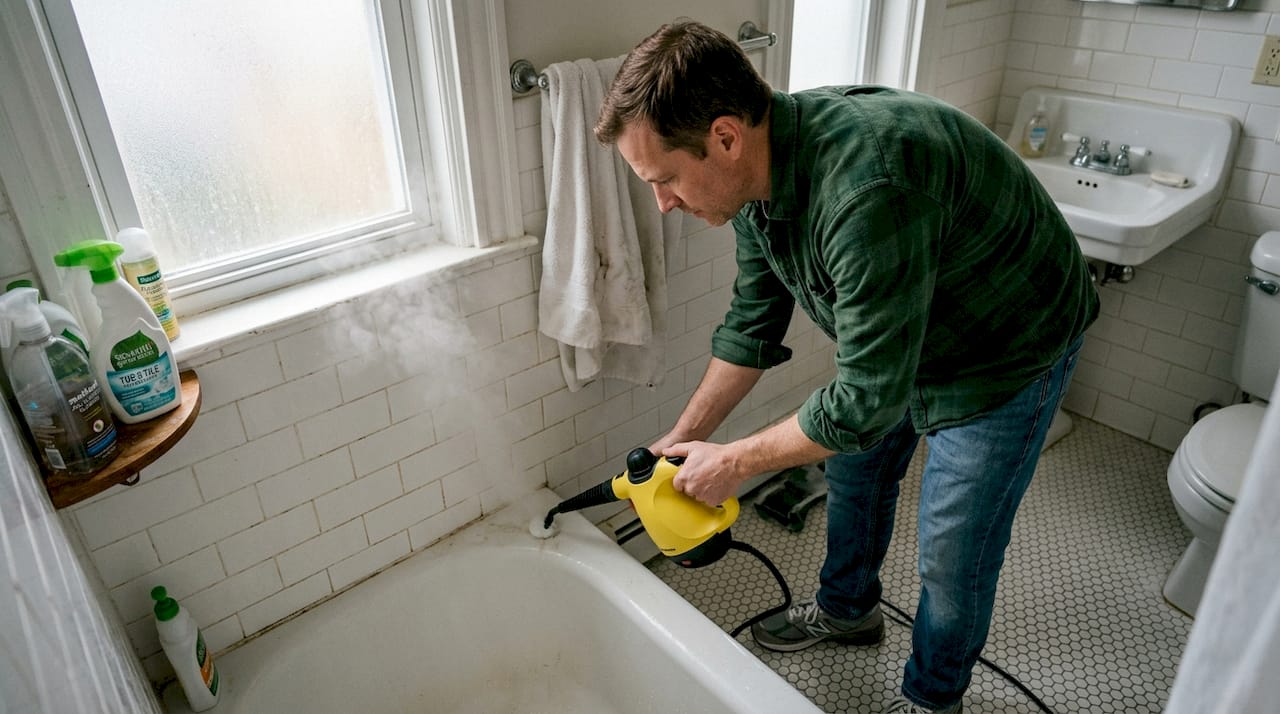
For historic homes with sensitive surfaces, steam cleaning is often the safest high-impact option. It disinfects without chemicals and works on tile grout, fixtures, and sealed floors.
Pro Tip: Keep a simple cleaning log for 30 days after switching to eco products. Note what worked, what needed adjustment, and what you’d change. This makes it much easier to build a routine that sticks.
Room-by-room guide: How to start your sustainable swaps
Ready to begin? Here’s a room-by-room guide to help you switch out what matters most, at your pace.
The research is clear: starting swaps room-by-room drives lasting change more reliably than overhauling everything at once. Focus first on high-impact areas like the kitchen and laundry room, where chemical exposure is highest.
- Week one: Kitchen. Replace paper towels with Swedish dishcloths. Swap your all-purpose spray for a certified concentrate bottle. These two changes alone significantly cut waste and VOC exposure.
- Week two: Bathroom. Switch to an enzyme-based drain cleaner and a plant-based tile and toilet spray. Add a cellulose sponge to replace the synthetic one.
- Week three: Laundry room. Introduce wool dryer balls and switch to a fragrance-free, plant-based detergent. Avoid synthetic scent boosters, which are a major VOC source.
- Week four: Living spaces and floors. Replace disposable mop pads with washable microfiber versions. Try a diluted concentrate for baseboards and hard surfaces.
| Room | Conventional product | Eco swap | Estimated cost | Key benefit |
|---|---|---|---|---|
| Kitchen | Paper towels | Swedish dishcloths | $10 to $15 for 3 | Reusable, compostable |
| Bathroom | Chemical tile spray | Plant-based certified spray | $8 to $12 | Lower VOCs, pet safe |
| Laundry | Dryer sheets | Wool dryer balls | $15 to $20 for 6 | Lasts 1,000-plus loads |
| All rooms | Plastic spray bottle | Refillable concentrate kit | $12 to $20 | Less plastic, lower cost |
| Floors | Disposable mop pads | Washable microfiber pads | $10 to $18 | Reusable, no chemicals |
Property managers can track air quality complaints and tenant feedback before and after switching. The eco apartment checklist makes it straightforward to standardize eco practices across multiple units.
Our take: The real impact of eco-friendly cleaning swaps in Massachusetts homes
Here’s an honest observation after working with Massachusetts homeowners and property managers for over two decades: most people come into eco-friendly cleaning expecting a silver bullet. One product, one swap, instant transformation. That’s not how it works.
Real sustainable cleaning is a mindset shift, not a product swap. The homes and properties where we see the biggest health and compliance wins are the ones where owners and managers treat cleaning as a system. They choose certified products, build consistent routines, and get everyone involved, tenants, family members, and cleaning staff alike.
The data backs this up. Even imperfect eco swaps deliver real benefits when used correctly and consistently. Massachusetts’ rules around phosphorus and EPP aren’t obstacles. They’re guardrails that push property owners toward choices that genuinely improve air quality and water safety. Embracing them, rather than just tolerating them, tends to show up in property value and tenant retention over time. Explore how eco cleaning for professional spaces applies the same principles at scale for landlords and commercial managers.
Progress over perfection. That’s the real standard to hold yourself to.
Get help making your home cleaner and greener
If you’re ready to upgrade your home’s health and sustainability, here’s how to take the next step.
Understanding which products to use is one thing. Actually implementing a consistent eco-cleaning routine across your home or rental property is another. That’s where having experienced, local support makes a real difference.
At E.C. House Cleaning, we’ve spent over 20 years helping Massachusetts homeowners and property managers build cleaning routines that actually work. We use products that meet the standards you’ve read about here, and we can help you figure out why use eco-friendly cleaning in your specific space. Browse our best products to try or connect with our local green cleaning experts to get a personalized plan that fits your home, budget, and goals.
Frequently asked questions
What is the simplest eco-friendly cleaning swap for beginners?
Switching paper towels for washable Swedish dishcloths or cloth rags is an easy, high-impact first step. Replacing single-use paper towels with reusable alternatives is one of the most recommended eco swaps for households just getting started.
How do I know if a cleaning swap is approved for use in Massachusetts?
Look for EPA Safer Choice or Green Seal certification, and confirm the product doesn’t contain over 0.5% phosphorus. Massachusetts promotes the EPP program and bans household cleaners exceeding that phosphorus threshold.
Are eco-friendly cleaners as effective as regular ones for tough messes?
Research shows eco products match or outperform traditional cleaners for routine use, but bleach is still the strongest option for high-risk disinfection. Both categories reduce microbes significantly, with traditional bleach achieving the highest log10 reductions.
Can I use vinegar-based cleaners on all surfaces?
Avoid using vinegar on natural stone or marble, as its acidity can cause permanent damage. Vinegar’s pH below 4.5 makes it too corrosive for stone surfaces, even diluted.
Does green cleaning really improve indoor air quality?
Yes, eco products can lower VOCs in your home by up to 60%, making air meaningfully healthier for your family, especially in well-insulated Massachusetts homes where air exchange is limited.
Recommended
- Eco-Friendly Cleaning Methods – Why Healthier Homes Matter | E.C. House Cleaning
- Benefits of Using Eco-Friendly Cleaning Products: Why You Should Make the Switch
- Why Use Eco Friendly Cleaning Products at Home | E.C. House Cleaning
- Why use eco-friendly products: healthier homes in Massachusetts 2026 | E.C. House Cleaning