TL;DR:
- Small apartments can quickly become chaotic due to clutter, despite their size, making daily routines essential. Implementing a short, regular reset combined with decluttering, proper supplies, and zone management keeps these spaces livable and healthy. Hiring professional cleaners occasionally can provide deep cleans and maintain overall cleanliness with less stress.
Small apartments have a sneaky way of going from tidy to chaotic faster than larger homes. You put down one bag, leave a dish on the counter, and suddenly the whole space feels out of control. Cleaning small apartments is not easier just because there is less square footage. Clutter has nowhere to hide, so every misplaced item hits harder visually and mentally. This guide cuts through the generic advice and gives you a real system: the right supplies, a realistic routine, smart decluttering methods, and health habits that keep your compact space genuinely clean and livable.
Table of Contents
- Key takeaways
- Cleaning small apartments starts with the right supplies
- A step-by-step routine built for small spaces
- Decluttering strategies that actually stick
- Maintaining a healthy environment in a small space
- Common cleaning mistakes and how to fix them
- My honest take on cleaning small apartments
- When a professional cleaner makes all the difference
- FAQ
Key takeaways
| Point | Details |
|---|---|
| Systems beat effort | A 15-minute daily reset beats a monthly cleaning marathon every time. |
| Declutter before you organize | Buying storage bins before purging adds clutter. Get rid of excess first. |
| Microfiber is non-negotiable | Microfiber cloths remove 99% of bacteria, making them the most efficient tool for small spaces. |
| Zone your space | Assign every flat surface a purpose and stick to it to stop clutter from migrating. |
| Humidity control prevents mold | Keep indoor humidity between 30 and 50% to protect air quality in compact, low-ventilation spaces. |
Cleaning small apartments starts with the right supplies
Before you touch a single surface, you need the right tools. And in a small apartment, the supply list needs to stay short. A cluttered cleaning cabinet defeats the purpose.
Here is what you actually need:
- Microfiber cloths (at least 6): Microfiber removes 99% of bacteria compared to just 30% for cotton cloths. They work wet or dry, on every surface.
- A compact spray mop: Skip the bucket. A spray mop with a washable pad handles hard floors fast.
- Two multi-surface sprays: One general cleaner, one bathroom disinfectant. That is it.
- A small caddy or tote: Store all supplies in one portable container. You carry it from room to room.
- A handheld vacuum or stick vacuum: Ideal for quick floor and furniture cleanups without dragging out a full-size machine.
- Baking soda and white vinegar: Affordable, effective, and non-toxic options for deodorizing and light scrubbing.
The minimalist supply philosophy matters here. Every product you own needs a home, and in a small apartment, cabinet space is precious. Check out these cleaning supply storage ideas if you are struggling to find spots for even a short list of items.
| Supply | Why it works for small spaces |
|---|---|
| Microfiber cloths | High bacteria removal, reusable, compact to store |
| Spray mop | No bulky bucket, fast dry time |
| Multi-surface sprays | Two bottles cover everything |
| Handheld vacuum | Quick, easy to store, handles spot cleaning |
| Baking soda/vinegar | No extra storage needed, dual-purpose |
Pro Tip: Store your cleaning caddy on the inside of a cabinet door using a tension rod shelf or over-door organizer. This keeps supplies accessible without taking up floor or counter space.
A step-by-step routine built for small spaces
The biggest mistake people make is waiting until the apartment is a disaster before cleaning. In a small space, that takes about three days. The fix is a two-tier system: a daily reset and a weekly deeper clean.
The 15-minute daily reset is your foundation. It is not about scrubbing. It is about returning everything to its assigned home, clearing surfaces, and running a quick wipe-down of the kitchen and bathroom. This system works because it prevents the buildup that makes cleaning feel like a full-day project.
Here is a practical weekly routine for small apartments:
- Grab a laundry basket. Walk through the apartment and drop anything out of place into it. Do not sort yet. Just collect.
- Return items to their homes. Every item you own should have a designated spot. Return basket contents to those spots.
- Wipe kitchen surfaces. Counter, stovetop, and sink. This is the highest-impact zone in a small apartment.
- Clean the bathroom. Toilet, sink, and mirror take under ten minutes with the right supplies on hand.
- Vacuum or sweep floors. Work from the furthest room toward the front door.
- Mop hard floors. Your spray mop makes this a five-minute task, not a production.
- Take out trash. In a small space, even a half-full bag starts to smell. Empty it weekly at minimum.
Research shows that a 25-to-30 minute weekly session is realistic for maintaining a small apartment, provided you are doing short resets daily. If you skip the daily habit, the weekly session balloons into something much heavier.
Pro Tip: Tackle cleaning one room at a time rather than jumping between areas. Room-by-room cleaning prevents the scattered chaos of half-cleaned surfaces everywhere.
The distinction between “resetting” and “deep cleaning” is worth naming. A reset restores visual calm and order. A deep clean handles sanitation: scrubbing grout, cleaning behind appliances, washing baseboards. You need both, but at different frequencies. Resets happen daily. Deep cleaning happens monthly or seasonally. For a guided approach to your weekly schedule, this weekly cleaning guide breaks it down further.
Decluttering strategies that actually stick
You cannot maintain a clean small apartment if there is too much stuff in it. That is not a mindset statement. It is physics. When every drawer, shelf, and surface is at capacity, there is no margin for everyday life. Things pile up because there is nowhere to put them.
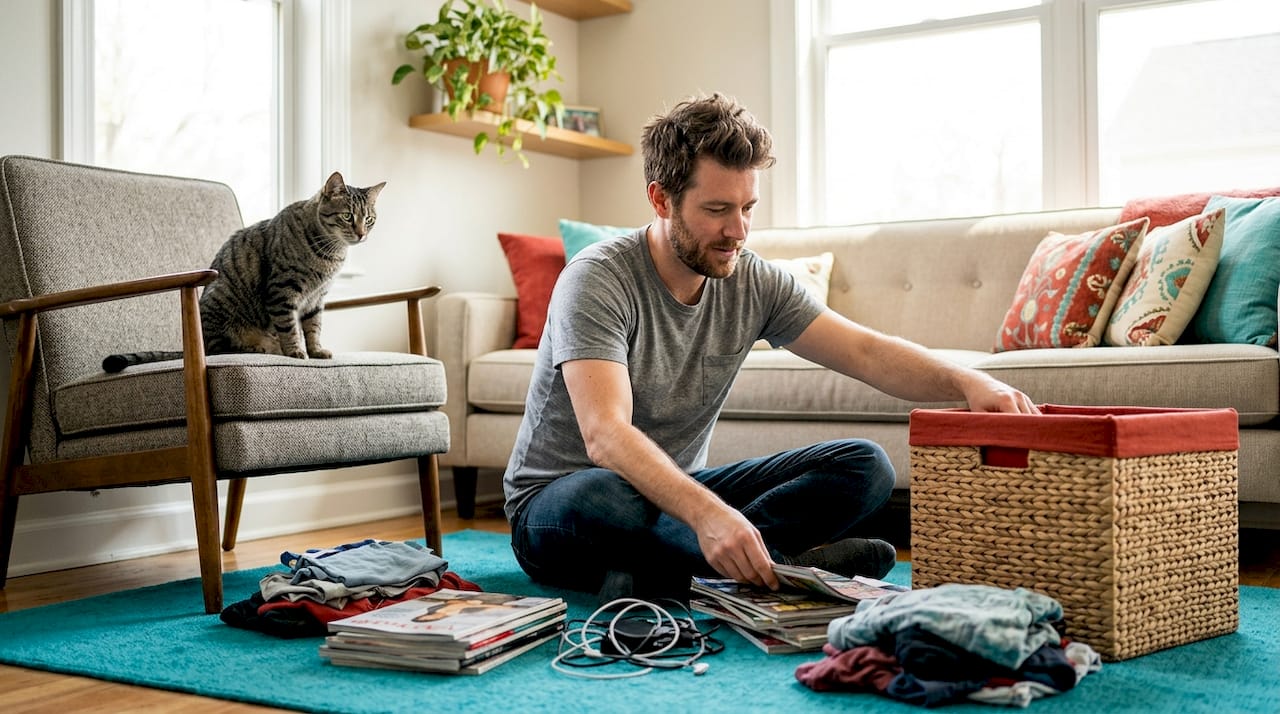
Start with a one-time purge before you do anything else. Go through every category of item you own: clothes, kitchen tools, paper, toiletries, books, and miscellaneous. Pull things out, handle each one, and ask whether it earns its square footage. Be honest. A small apartment demands it.
Once you have cleared the excess, shift to micro-decluttering sessions to maintain that baseline. These are focused 10-to-15 minute bursts where you tackle one small area: a drawer, a shelf, a corner of the closet. The research is clear that micro-decluttering in short increments prevents the overwhelm that causes people to give up on organization entirely.
Here are the strategies that separate people who stay organized from those who do not:
- Assign every item a specific home. If something does not have a designated spot, it lives on a surface. That is how counters disappear.
- One-in, one-out rule. Every time something new comes into the apartment, something old leaves. Non-negotiable in a small space.
- Do not buy storage before decluttering. Buying bins before purging leads to wrong-sized containers full of things you should have discarded anyway.
- Use vertical space. Shelving on walls frees up floor space and creates organized zones without crowding.
- Box the maybes. If you are unsure about an item, box it and date it. If you have not opened the box in 60 days, donate it without looking inside.
| Approach | What it solves |
|---|---|
| One-time purge first | Removes excess before organizing begins |
| Micro-decluttering sessions | Maintains order without overwhelming effort |
| Assigned item homes | Stops clutter from landing on random surfaces |
| One-in, one-out rule | Prevents gradual accumulation over time |
| Storage after purging | Prevents wrong-sized and unnecessary bins |
For more depth on the mental and practical benefits of letting things go, the Echousecleaning guide on decluttering small spaces is worth bookmarking.
Maintaining a healthy environment in a small space
Cleaning is not only about appearances. In a small apartment, poor ventilation, tight quarters, and limited airflow create real health risks if you do not stay on top of a few key practices.
Mold is the biggest threat in compact homes. The EPA recommends keeping indoor humidity between 30 and 50% to prevent mold growth, particularly in bathrooms and kitchens with limited airflow. A small digital hygrometer (under $15) tells you exactly where your humidity sits. If it creeps above 60%, run a dehumidifier or crack a window.
When mold does appear on non-porous surfaces, clean it with mild detergent and water. Bleach sounds like the obvious choice, but bleach is ineffective on porous materials and can actually drive mold deeper into the surface. Dry the area completely within 24 to 48 hours to prevent regrowth.
Additional health-focused habits for small apartment dwellers:
- Run your range hood during and after cooking. Cooking releases moisture, grease, and particulates that settle on every surface. Run it for 10 to 20 minutes after you finish cooking, not just during.
- Wash bedding weekly. In a studio or one-bedroom, your sleeping area is never far from your living area. Allergens accumulate fast.
- Disinfect high-touch surfaces twice a week. Door handles, light switches, faucets, and remote controls harbor bacteria that routine tidying misses.
- Vacuum upholstered furniture monthly. Dust mites and pet dander accumulate in sofas and chairs, especially in spaces where furniture is multi-purpose.
“In small apartments, indoor air quality suffers faster than in larger homes because there is less volume to dilute pollutants. Ventilation habits are a health practice, not just a comfort preference.” — EPA guidance on indoor air quality
Common cleaning mistakes and how to fix them
Even people with good intentions make the same errors when managing a small space. Knowing these pitfalls in advance saves you a lot of frustration.
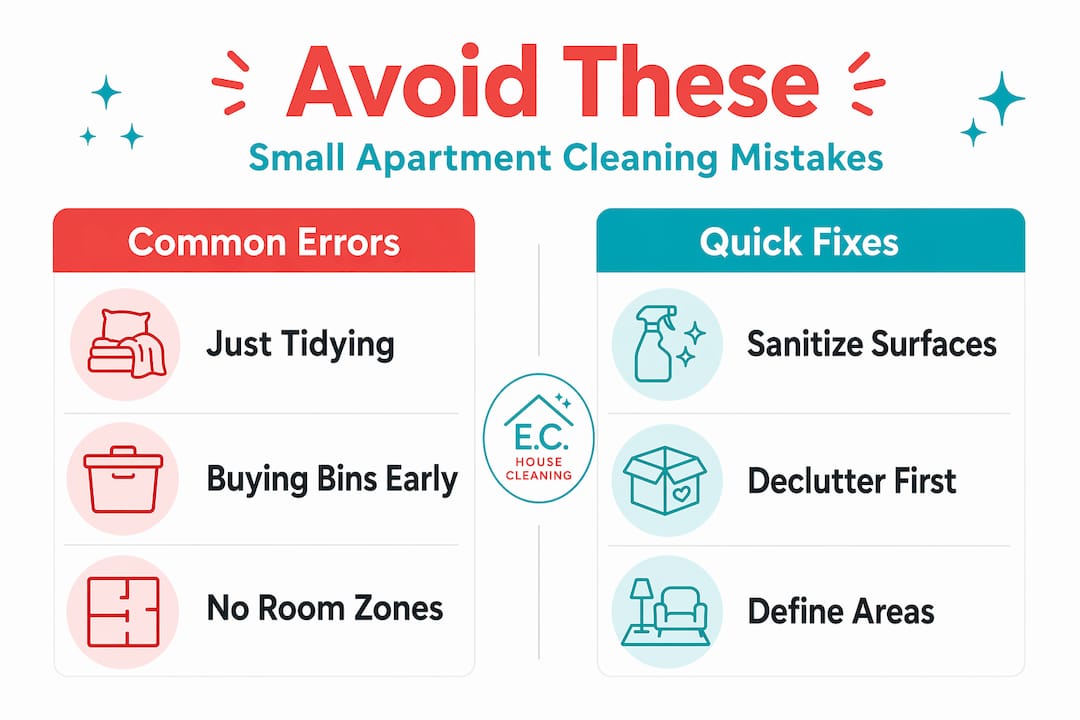
Mistaking tidying for cleaning. Putting things away makes a space look better, but it does not sanitize surfaces or remove allergens. Both are necessary and they serve different purposes.
Buying storage before decluttering. This one cannot be said enough. A bin full of things you do not need is still clutter. Decluttering first is not optional. It determines what storage you actually need.
Ignoring functional zones. Every area of your apartment should have a defined purpose. When zones are unclear, items migrate. The kitchen chair becomes a clothes holder. The entryway becomes a dumping ground. Define your zones and defend them.
Over-scheduling and burning out. Committing to a two-hour weekly deep clean that never happens is worse than a 20-minute realistic routine that does. Sustainability beats intensity every time.
Pro Tip: When clutter returns (and it will), do not restart the whole system. Just run a single 15-minute reset, reassign any homeless items, and continue. One rough week does not mean the system failed.
If you want perspective from professional cleaners who see these mistakes play out in real homes, these tips from professional cleaners are grounded in actual experience.
My honest take on cleaning small apartments
I have worked with a lot of people who live in small apartments. They are often the most frustrated clients, not because they are messy, but because they are fighting their space instead of working with it.
What I have seen consistently is this: effort is not the problem. Most people try hard. The issue is that they clean reactively, when things get bad, rather than maintaining a system that prevents the buildup in the first place. A daily reset routine fundamentally changes how a small apartment feels to live in, and it takes less time per week than a single reactive cleaning session.
I also think the mental health angle is underestimated. In a small space, clutter is inescapable. You cannot close a door and ignore it. It sits in your field of vision constantly, which is genuinely draining. The research on decluttering and mental clarity backs this up, but honestly, most people know it from lived experience. A tidy apartment just feels easier to breathe in.
My strongest advice: get rid of more than you think you need to, set up a system built around your actual schedule, and stop waiting for motivation to clean. Motivation follows action, not the other way around.
— Andrew
When a professional cleaner makes all the difference
Maintaining a clean small apartment on your own is absolutely doable, and the strategies above will get you most of the way there. But there are times when calling in a professional makes real sense.
Maybe you are moving into a new place and need a deep reset before you bring your belongings in. Maybe life got busy for a few weeks and the apartment needs more than a reset can handle. Or maybe you just want someone else to handle the monthly deep clean so you can focus on the daily maintenance. Echousecleaning offers residential cleaning services across Massachusetts designed for exactly these situations. From standard cleaning to full deep cleaning, every service is backed by over 20 years of experience. Learn more about what a residential cleaner does and whether a one-time or recurring service fits your situation. Getting a personalized quote takes minutes and the difference it makes in your living space is immediate.
FAQ
How often should you clean a small apartment?
A 15-minute daily reset combined with a 25-to-30 minute weekly cleaning session is enough to keep most small apartments consistently tidy. Deep cleaning of bathrooms, kitchens, and floors should happen at least once a month.
What are the best cleaning supplies for small apartments?
Microfiber cloths, a compact spray mop, a handheld vacuum, and two multi-surface sprays cover nearly every cleaning task. Microfiber cloths remove 99% of bacteria, making them the single most effective tool for small spaces.
How do you stop clutter from building up in a small apartment?
Assign a specific home to every item you own and follow a one-in, one-out rule for new purchases. Regular micro-decluttering sessions of 10 to 15 minutes prevent small messes from compounding.
How do you prevent mold in a small apartment?
Keep indoor humidity between 30 and 50%, run your kitchen range hood after cooking, and dry any moisture-prone surfaces quickly. If mold appears, use mild detergent and water rather than bleach, especially on porous surfaces.
Is it worth hiring a cleaning service for a small apartment?
Yes, particularly for move-in deep cleans, post-busy-period resets, or monthly deep cleaning that complements your daily routine. Professional services like Echousecleaning handle the intensive work so your maintenance routine stays manageable.
Recommended
- Deep Cleaning for Renters: Achieve Spotless Move-Out Results | E.C. House Cleaning
- Top House Cleaner Tips for Spotless Homes and Offices | E.C. House Cleaning
- House Cleaning Before Move In: Complete Step-by-Step Guide | E.C. House Cleaning
- Cleaning Apartment Checklist: Eco-Friendly Boston Solutions | E.C. House Cleaning