Poor office cleaning costs more than you think. UK businesses lose £77 billion yearly due to employee illness linked to workplace cleanliness. For Massachusetts property managers and small business owners, this isn’t just about appearances. It’s about protecting your bottom line, keeping employees healthy, and maintaining professional standards that clients notice immediately. This guide delivers expert-backed best practices tailored specifically for Massachusetts offices in 2026, showing you how strategic cleaning prevents costly problems before they start.
Table of Contents
- Why Effective Office Cleaning Matters For Massachusetts Businesses
- Core Office Cleaning Best Practices For Small Businesses
- Advanced Cleaning Strategies And Professional Service Benefits
- Implementing A Sustainable Office Cleaning Plan In Massachusetts
- Discover Expert Office Cleaning Services In Massachusetts
- Frequently Asked Questions
Key takeaways
| Point | Details |
|---|---|
| Consistent high-touch cleaning | Daily disinfection of phones, keyboards, and doorknobs prevents illness spread and reduces sick leave. |
| Professional service ROI | Expert cleaning services deliver measurable productivity gains and cost savings within months. |
| Avoid surface-only approaches | Deep cleaning prevents equipment damage and allergen buildup that routine wiping misses. |
| Structured cleaning schedules | Daily, weekly, and monthly task calendars ensure nothing gets overlooked and maintain standards. |
| Legal compliance awareness | Massachusetts lease provisions regarding cleaning requirements may not be enforceable without proper review. |
Why effective office cleaning matters for Massachusetts businesses
Office cleanliness directly impacts your core business metrics in ways most property managers underestimate. A Singapore tech startup experienced a 30% productivity drop due to inadequate cleaning. When employees breathe poor air quality, touch contaminated surfaces, and work in cluttered spaces, their focus deteriorates rapidly. The financial consequences extend far beyond buying extra paper towels.
Consider the real costs accumulating in neglected offices. IT equipment fails faster when dust clogs ventilation systems, forcing expensive replacements. Employee turnover increases when workers feel their health isn’t valued. Client meetings in visibly dirty conference rooms damage your professional reputation instantly. These aren’t minor inconveniences. They’re profit-draining problems that compound over time.
The health dimension alone justifies serious attention to cleaning protocols. High-touch surfaces like light switches, shared printers, and break room appliances become germ transmission hotspots. One sick employee touching a doorknob can spread illness to dozens of coworkers within days. Professional cleaning interventions led to a 40% reduction in sick leave, translating directly to maintained productivity and reduced healthcare costs.
Morale suffers in dirty environments too. Employees interpret neglected workspaces as signals that management doesn’t care about their wellbeing. This perception erodes engagement and loyalty, increasing the likelihood of talented staff seeking opportunities elsewhere. Meanwhile, clients forming first impressions notice every dusty corner and stained carpet, questioning whether your attention to detail extends to your actual services.
Smart Massachusetts property managers recognize cleaning as a strategic business function, not merely facility maintenance. Partnering with office cleaning professionals Massachusetts ensures consistent standards that protect both employee health and business reputation. The investment in proper cleaning delivers returns through sustained productivity, reduced absenteeism, and preserved equipment lifespan.
“Clean offices aren’t luxuries. They’re operational necessities that directly influence every business metric from retention to revenue.”
The evidence is clear. Offices maintained with professional standards outperform neglected spaces across productivity, health, and cost metrics. For small businesses operating on tight margins, these differences determine competitive success or failure.
Core office cleaning best practices for small businesses
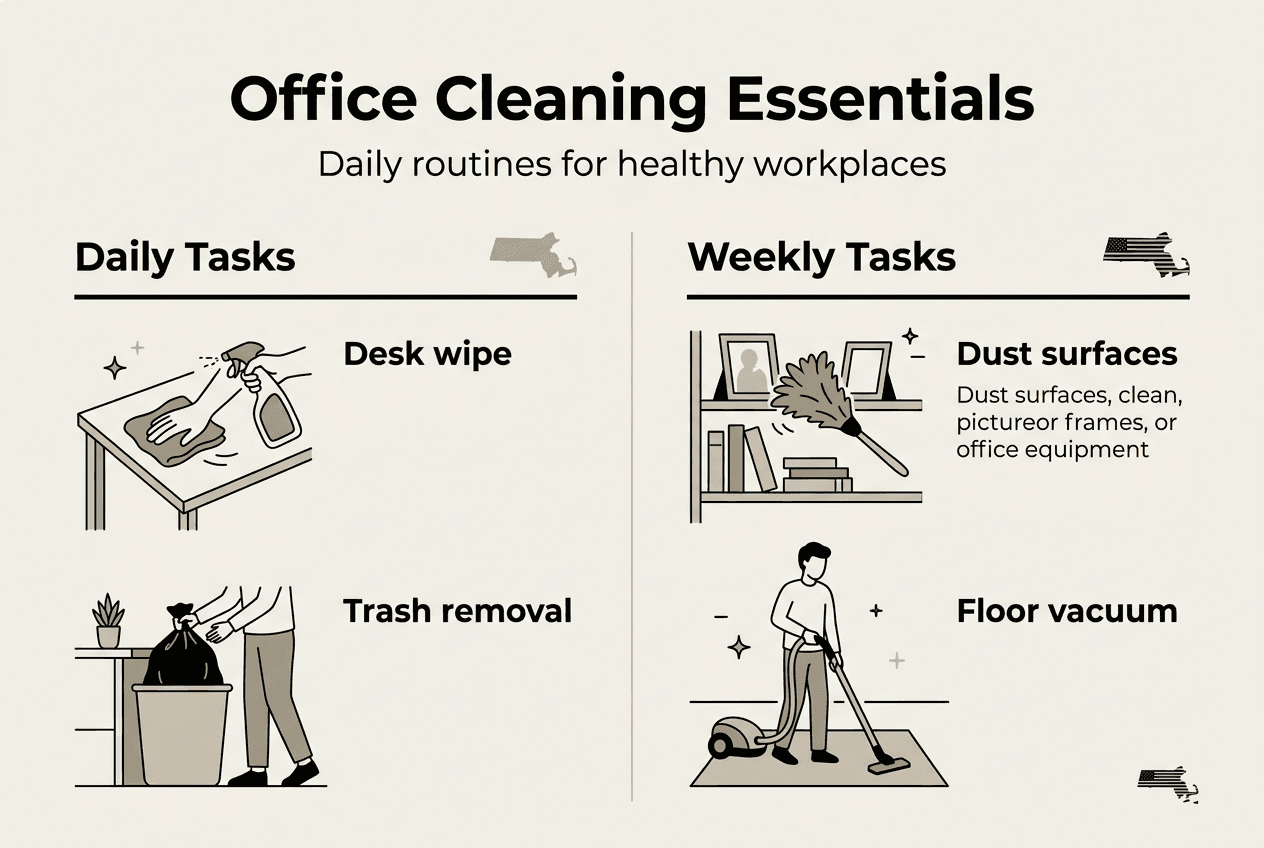
Structured cleaning schedules form the foundation of effective office maintenance. Without clear daily and weekly routines, critical tasks get overlooked until problems become visible and expensive. Daily cleaning tasks like restroom cleaning and restocking supplies maintain hygiene levels and prevent buildup that becomes harder to address later.
Your daily routine should prioritize these essential tasks:
- Disinfect all restroom surfaces including toilets, sinks, mirrors, and door handles using appropriate cleaners.
- Empty all trash receptacles and replace liners to prevent odors and pest attraction.
- Wipe down communal kitchen surfaces, microwaves, refrigerator handles, and coffee stations.
- Vacuum high-traffic areas and spot-clean visible spills immediately.
- Restock paper products, soap dispensers, and hand sanitizer stations.
- Disinfect shared equipment like printers, copiers, and conference room technology.
Weekly tasks should address areas that accumulate slower but still impact health and appearance. Dust all horizontal surfaces including desks, shelves, and window sills. Mop hard floors thoroughly using appropriate cleaning solutions. Clean interior glass surfaces and mirrors to maintain professional appearance. Sanitize keyboards, phones, and other personal workspace items that employees might neglect.
Common mistakes undermine even well-intentioned cleaning efforts. Many businesses clean only when dirt becomes visible, allowing bacteria and allergens to proliferate invisibly. Over-reliance on disinfectant wipes creates a false sense of cleanliness while missing embedded dirt and grime. Using incorrect products damages surfaces and equipment, creating costly replacement needs.
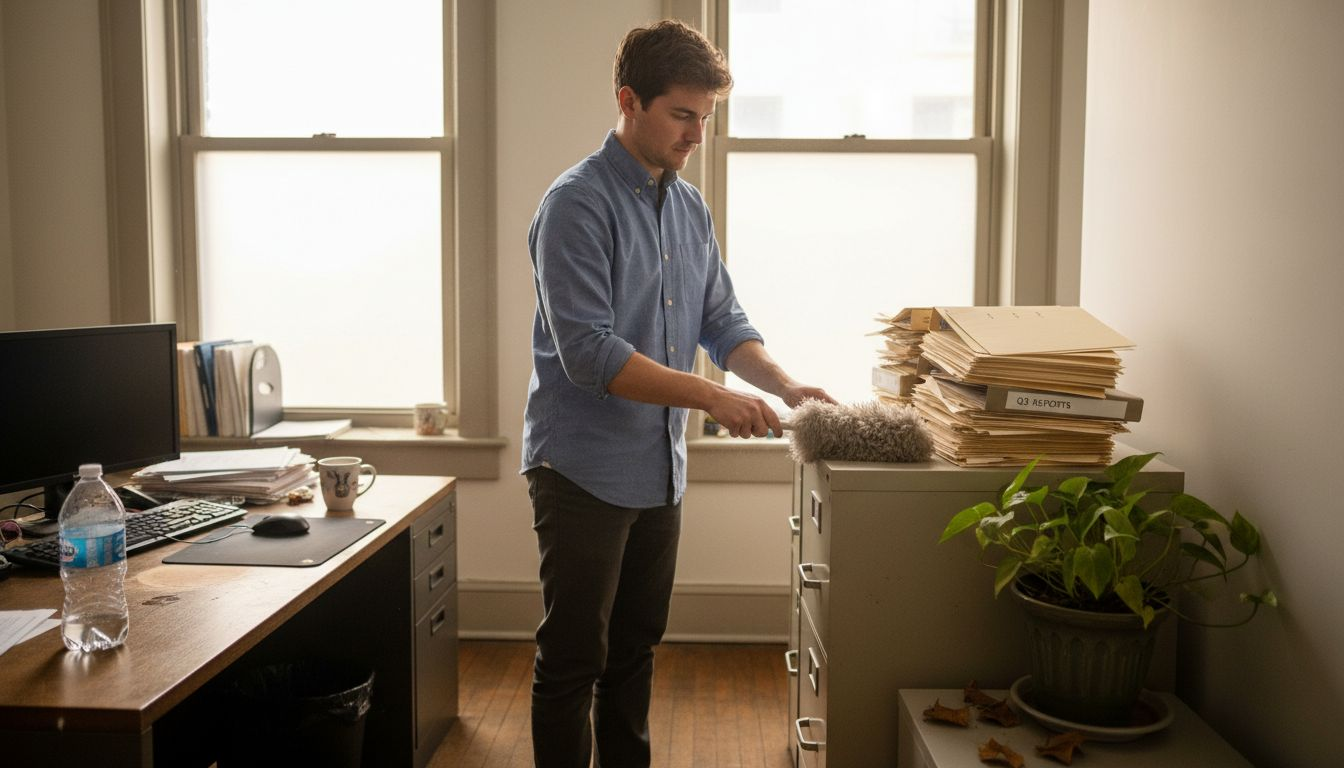
Product selection matters more than most realize. Harsh chemicals can degrade electronics, fade upholstery, and irritate employees with sensitivities. Choose pH-neutral cleaners for most surfaces and verify compatibility before applying anything to expensive equipment. Understanding office cleaning essentials manager tips Massachusetts helps avoid these costly errors.
Pro Tip: Switch to microfiber cloths and HEPA-filter vacuums for superior dust and allergen removal compared to traditional cotton rags and standard vacuums. Microfiber traps particles rather than spreading them, while HEPA filtration prevents recirculation of allergens into office air.
Consistency beats intensity in office cleaning. A mediocre routine performed daily outperforms occasional deep cleaning marathons. Employees develop habits around predictable schedules, maintaining tidier personal spaces when they know cleaning happens regularly. For businesses needing support implementing these practices, cleaning services for small businesses provide expertise and accountability that in-house efforts often lack.
Advanced cleaning strategies and professional service benefits
Routine cleaning maintains baseline standards, but deep cleaning elevates office environments to peak performance levels. The distinction matters significantly for health outcomes and equipment longevity. Deep cleaning addresses HVAC systems, carpet fibers, upholstery interiors, and other areas where allergens and contaminants accumulate beyond surface wiping reach.
Consider this comparison between approaches:
| Cleaning Type | Frequency | Focus Areas | Primary Benefits |
| — | — | — |
| Routine Cleaning | Daily/Weekly | Surfaces, floors, restrooms | Maintains appearance, prevents visible dirt |
| Deep Cleaning | Quarterly/Biannual | HVAC, carpets, upholstery, baseboards | Removes allergens, extends equipment life, eliminates odors |
Professional cleaning services deliver measurable business value beyond what in-house staff typically achieve. Professional cleaning boosts productivity by 20% through improved air quality, reduced allergen exposure, and enhanced workspace comfort. Employees working in professionally maintained offices report fewer headaches, respiratory issues, and fatigue symptoms.
The return on investment often surprises business owners focused solely on upfront costs. Implementing professional cleaning standards can yield a 300% ROI within 3 months when accounting for reduced sick leave, extended equipment lifespan, and improved employee retention. One prevented IT equipment failure or avoided employee replacement easily justifies months of professional cleaning expenses.
Advanced cleaning techniques employ specialized equipment and methods unavailable to typical in-house operations. HEPA filtration systems capture 99.97% of particles as small as 0.3 microns, dramatically improving indoor air quality. Microfiber technology removes bacteria more effectively than traditional cleaning cloths while using less chemical cleaner. Hot water extraction for carpets eliminates embedded dirt that vacuuming alone cannot reach.
Environmental and health advantages extend beyond immediate cleanliness. Proper EPA indoor air quality standards require attention to ventilation systems, moisture control, and pollutant source elimination. Professional services understand these interconnected factors and address root causes rather than symptoms.
Pro Tip: Schedule comprehensive deep cleans quarterly or biannually to sustain a high-performance workspace that supports rather than hinders employee productivity. Mark these sessions on annual calendars to ensure they happen consistently rather than only when problems become obvious.
Massachusetts property managers should also understand legal nuances regarding cleaning requirements in lease agreements. Recent court decisions have challenged provisions mandating specific cleaning arrangements, potentially invalidating clauses that seemed standard. Consulting office cleaning professionals Massachusetts helps navigate these requirements while maintaining compliant, effective cleaning programs.
The expertise gap between amateur and professional cleaning becomes most apparent in specialized situations. Post-construction cleaning, biohazard remediation, and restoration after water damage require training and equipment that general staff lack. Attempting these tasks without proper knowledge risks health hazards and incomplete remediation. Investing in deep cleaning services Massachusetts for these scenarios protects both employees and business assets.
Implementing a sustainable office cleaning plan in Massachusetts
Creating an effective cleaning plan requires more than good intentions. You need structured schedules, clear responsibilities, quality checks, and legal compliance awareness specific to Massachusetts regulations. Start by documenting current cleaning activities and identifying gaps between actual practices and necessary standards.
Key components of a comprehensive cleaning plan include:
- Detailed task lists specifying exactly what gets cleaned, how often, and to what standard
- Assigned responsibilities clearly designating who performs each task and who verifies completion
- Quality control checkpoints ensuring standards are maintained consistently over time
- Supply management systems preventing shortages that disrupt cleaning routines
- Training protocols teaching proper techniques and product usage to all cleaning staff
- Budget allocations covering both routine supplies and periodic professional services
Legal considerations deserve careful attention in Massachusetts. Lease provisions requiring professional cleaning were recently challenged and deemed invalid in state courts. Property managers cannot automatically enforce blanket cleaning requirements without proper justification and reasonable terms. Review existing lease agreements with legal counsel to ensure compliance with current Massachusetts law.
Balancing in-house cleaning with professional services optimizes both cost efficiency and quality outcomes. Handle routine daily tasks internally using trained staff following documented procedures. Schedule professional services for deep cleaning, specialized equipment maintenance, and periodic quality audits. This hybrid approach maintains standards without unnecessary expense.
Training staff on consistent procedures prevents the quality deterioration that occurs when different people interpret tasks differently. Create visual guides showing proper techniques for common tasks. Demonstrate correct product dilution ratios to avoid waste and surface damage. Establish feedback loops where staff can report supply needs or equipment problems before they disrupt cleaning schedules.
A sample cleaning schedule helps visualize task distribution:
| Task Category | Daily | Weekly | Monthly | Responsible Party |
| — | — | — | — |
| Restroom sanitation | Full cleaning | Deep scrub | Drain treatment | In-house staff |
| Trash removal | All receptacles | Outdoor bins | Dumpster area | In-house staff |
| Floor care | Vacuum traffic areas | Mop all hard floors | Strip/wax as needed | Professional service |
| Kitchen/break room | Wipe surfaces, restock | Clean appliances | Deep clean refrigerator | In-house staff |
| Desk/workspace | Empty trash, spot clean | Dust surfaces | Sanitize phones/keyboards | In-house staff |
| Windows/glass | Interior spot clean | Interior full clean | Exterior cleaning | Professional service |
| HVAC/air quality | Replace simple filters | Vent cleaning | System inspection | Professional service |
This framework ensures nothing gets overlooked while distributing tasks appropriately between internal staff and professional services. Adjust frequencies based on your specific office size, employee count, and usage patterns.
Documentation supports accountability and continuous improvement. Maintain cleaning logs where staff record completed tasks and note any issues requiring attention. Review these logs weekly to identify patterns suggesting needed schedule adjustments or additional training. Understanding why hire a commercial cleaning service helps property managers make informed decisions about which tasks to outsource versus handle internally.
Sustainability requires regular plan reviews and updates. Office needs change as businesses grow, relocate, or modify operations. Schedule quarterly reviews assessing whether current cleaning protocols still meet actual requirements. Solicit employee feedback about cleanliness concerns they observe. Adjust schedules and methods based on this ongoing input rather than waiting for problems to become severe.
Discover expert office cleaning services in Massachusetts
Implementing best practices becomes significantly easier with experienced professional support. Massachusetts property managers and small business owners partnering with expert cleaning services gain immediate access to proven systems, trained staff, and quality assurance processes that deliver consistent results.
E.C. House Cleaning brings over 20 years of specialized experience serving Massachusetts offices with customized cleaning plans designed specifically for small business needs. Our professional teams understand the unique challenges property managers face, from maintaining tenant satisfaction to controlling operating costs. We deliver the office cleaning professionals Massachusetts businesses rely on for spotless, healthy work environments.
Our comprehensive cleaning services for small businesses include daily maintenance, deep cleaning, and specialized services tailored to your schedule and budget. We use eco-friendly products that protect employee health while delivering superior cleaning results. Every service includes quality checks ensuring our work meets the high standards your business deserves.
Ready to elevate your office environment? Contact us today for a personalized consultation. Discover how professional commercial cleaning services Massachusetts transform workspaces into productive, welcoming environments that employees appreciate and clients notice. Let our family-owned, insured team show you the difference expert cleaning makes.
Frequently asked questions
How often should daily office cleaning tasks be performed?
Restrooms, high-touch surfaces, and supply restocking should happen every business day without exception. Daily cleaning tasks like restroom upkeep and supply restocking are essential for hygiene and prevent bacterial buildup that occurs within 24 hours on contaminated surfaces. Consistent daily routines reduce pathogen transmission significantly, directly supporting employee health and reducing sick leave costs.
What are the key high-touch areas that need frequent cleaning?
Focus your disinfection efforts on phones, keyboards, doorknobs, light switches, shared printers, and break room appliances. High-touch points such as light switches, doorknobs, phones, and keyboards are breeding grounds for germs that spread illness rapidly among employees. Regular disinfection of these surfaces, ideally multiple times daily in high-traffic offices, decreases illness transmission substantially and protects workforce productivity.
Can professional cleaning services improve employee productivity?
Absolutely. Professional cleaning services boost productivity by up to 20% through improved air quality, reduced allergen exposure, and enhanced workspace comfort. Cleaner environments reduce sick days, minimize distractions from unpleasant odors or visible dirt, and create psychological benefits that help employees focus better on their work rather than environmental discomforts.
Are there legal considerations for office cleaning requirements in Massachusetts?
Yes, property managers must understand current Massachusetts law regarding lease provisions. Lease clauses mandating professional cleaning were challenged and ruled invalid in Massachusetts courts when they lacked proper justification or reasonable terms. Review all lease agreements with legal counsel to ensure cleaning requirements comply with current regulations and avoid unenforceable provisions that could create disputes.
Recommended
- Essential Cleaning Supplies Checklist for Massachusetts in 2025 | E.C. House Cleaning
- Customized Cleaning Plans for Massachusetts: 2025 Guide
- Move out cleaning checklist free: Massachusetts guide 2026 | E.C. House Cleaning
- Deep Cleaning Essentials 2025: Guide for Massachusetts Homes | E.C. House Cleaning