TL;DR:
- Eco cleaning reduces costs, tenant complaints, and boosts property value in Massachusetts.
- It relies on non-toxic materials like microfiber, HEPA vacuums, and steam cleaning.
- Proper certification, staff training, and tailored protocols are essential for success.
Managing properties in Massachusetts means balancing tight budgets, tenant expectations, and a growing list of sustainability requirements. Many property managers assume eco-friendly cleaning costs more and delivers less. That assumption is costing them money. Green cleaning cuts costs 20%, reduces waste by 30%, boosts tenant retention by 15 to 18%, and cuts complaints by 40 to 60%. Those numbers change the conversation entirely. This article walks you through the real business case for eco cleaning, the methods and materials that work, how to stay compliant with Massachusetts regulations, and what to do in tricky situations like post-construction cleanups and high-traffic rentals.
Table of Contents
- Why eco cleaning matters for Massachusetts property managers
- Essential eco cleaning methods, materials, and equipment
- Certification, compliance, and staff training
- Special scenarios: Rentals, post-construction, and high-traffic sites
- The overlooked ROI: Why forward-thinking managers double down on eco cleaning
- Partner with experts for your eco cleaning transformation
- Frequently asked questions
Key Takeaways
| Point | Details |
|---|---|
| Eco cleaning cuts costs | Adopting eco-friendly cleaning methods can reduce operational expenses for Massachusetts property managers by up to 20 percent. |
| Tenant satisfaction rises | Eco cleaning boosts tenant retention and property appeal by minimizing complaints and enhancing indoor air quality. |
| Compliance builds value | Meeting BERDO and MassSave standards through certified eco cleaning preserves both legal standing and property value. |
| Special cases need strategy | Turnovers and renovations require targeted eco protocols for optimal speed, safety, and compliance. |
Why eco cleaning matters for Massachusetts property managers
Eco cleaning is not a feel-good trend. For Massachusetts property managers, it is a strategic business decision with measurable returns. The numbers speak clearly: properties that switch to green cleaning protocols see tenant retention rise 15 to 18%, prospect conversion improve by 23%, and operational costs drop by up to 20%. That is real money staying in your budget.
Tenants today pay attention to how a building is maintained. A unit that smells like harsh chemicals signals risk, not cleanliness. Eco-friendly products create healthier indoor air quality, which translates directly into fewer complaints and longer lease terms. Fewer turnovers mean lower marketing costs, less downtime, and more predictable cash flow.
On the regulatory side, Massachusetts is moving fast. BERDO and MassSave programs push building owners toward energy-efficient, sustainable operations. Cleaning protocols that align with these standards position your properties ahead of compliance deadlines, not scrambling to catch up.
Here is what eco cleaning delivers for Massachusetts property managers:
- Lower supply costs through concentrated, dilution-controlled products
- Reduced liability from fewer chemical-related incidents and slip-and-fall risks
- Higher property appeal to health-conscious tenants and corporate lessees
- Regulatory alignment with BERDO and Massachusetts sustainability goals
- Improved air quality that supports LEED certification and property value
“Properties using green cleaning protocols report a 23% improvement in prospect conversion and up to a 60% reduction in tenant complaints.” — 2026 Guide to Eco-Friendly Cleaning
The eco-friendly benefits extend beyond tenant satisfaction. Insurance carriers are beginning to factor indoor air quality and chemical safety records into commercial property premiums. Understanding Massachusetts green cleaning standards now puts you in a stronger negotiating position later.
Essential eco cleaning methods, materials, and equipment
Knowing why eco cleaning matters is step one. Knowing exactly what to use and how to use it is where property managers gain a real operational edge.
Eco-friendly cleaning in Massachusetts relies on non-toxic, plant-based products, microfiber cloths, HEPA vacuums, steam cleaning, and natural solutions like vinegar, baking soda, and essential oils. Each of these tools serves a specific purpose and replaces a conventional chemical with something safer and often more cost-effective at scale.
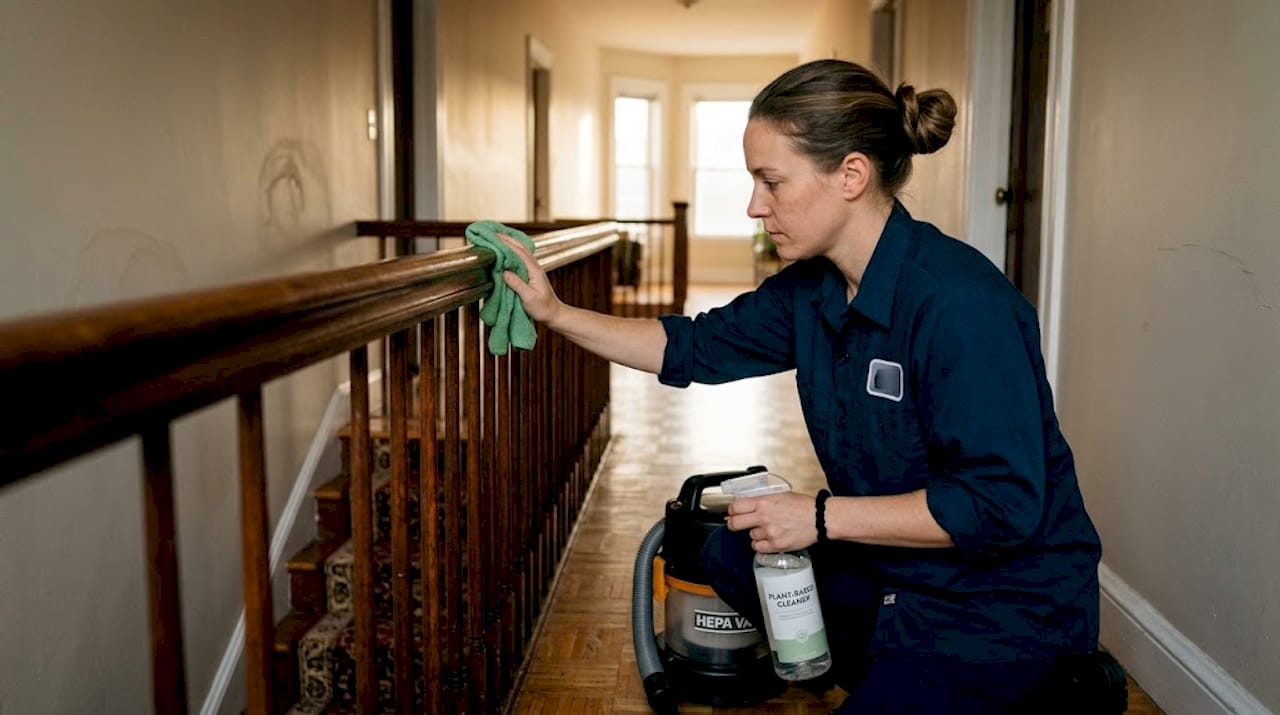
Comparison: Conventional vs. eco cleaning materials
| Category | Conventional | Eco alternative |
|---|---|---|
| Surface cleaner | Ammonia-based sprays | Plant-based enzyme cleaners |
| Floor cleaning | Solvent mops | Microfiber mop systems |
| Air filtration | Standard vacuum | HEPA vacuum (99.97% particle capture) |
| Disinfection | Bleach solutions | Steam cleaning (no chemicals) |
| Odor control | Synthetic fragrances | Baking soda, essential oils |
Microfiber systems reduce water and chemical use significantly. HEPA vacuums capture 99.97% of airborne particles, including allergens and fine dust. Steam cleaners kill germs and bacteria without any chemical residue, making them ideal for units with children, pets, or allergy-prone tenants.
Here is a practical sequence for implementing eco cleaning across your properties:
- Audit current products and identify which contain VOCs (volatile organic compounds) or known irritants
- Replace high-use items first, starting with surface sprays and floor cleaners
- Switch to microfiber cloths and phase out single-use paper towels
- Invest in HEPA vacuums for all units, especially carpeted spaces
- Introduce steam cleaning for bathrooms, kitchens, and grout lines
- Set up dilution stations to control product concentration and reduce waste
Pro Tip: Start your eco cleaning supplies checklist with microfiber and HEPA equipment. These two upgrades alone cut chemical use and improve results faster than any product swap.
For properties with animals, safe cleaning for pets requires avoiding pine oil, phenol, and certain essential oils that are toxic to cats and dogs. Enzyme-based cleaners handle odors and stains without the risk. Pairing your cleaning protocols with energy-efficient HVAC tips also improves overall indoor air quality between cleaning cycles.
Certification, compliance, and staff training
Selecting the right products and equipment is only part of the equation. Without proper certification alignment and trained staff, even the best eco cleaning program breaks down in practice.
Green Seal and ISSA CIMS certifications are the two most recognized standards for eco cleaning products and processes. Green Seal evaluates products for environmental impact and performance. ISSA CIMS (Cleaning Industry Management Standard) certifies the entire cleaning operation, from training and safety to quality control and management systems. Holding or requiring these certifications from your cleaning vendors signals accountability.
For Massachusetts properties, compliance intersects with cleaning in ways many managers overlook. BERDO mandates emissions reporting for larger buildings, and the cleaning products used inside contribute to indoor VOC levels that affect those reports. Choosing certified, low-VOC products keeps your building’s data clean.
ISSA appearance scale: Cost and result benchmarks
| Appearance level | Description | Estimated cost per sq ft | Labor impact |
|---|---|---|---|
| Level 1 | Spotless, orderly | Highest | Premium |
| Level 2 | Ordinary tidiness | $0.08 to $0.11 | Baseline |
| Level 3 | Casual inattention | Below baseline | Reduced |
| Level 4 | Moderate dinginess | Minimal | Low |
| Level 5 | Unkempt neglect | Reactive only | Crisis-driven |
Each level up adds 15 to 25% in labor cost, which is why most property managers target Level 2 as their standard and reserve Level 1 protocols for move-in readiness or premium units.
Staff training must cover three core areas:
- Dilution control: Overuse of even eco products wastes money and can irritate skin or surfaces
- Dwell times: Disinfectants need contact time to work. Wiping too fast defeats the purpose
- Safety protocols: Staff must know which products cannot be mixed and how to ventilate spaces properly
Pro Tip: Use a simple laminated reference card at each cleaning station listing dwell times and dilution ratios for every product. It takes ten minutes to create and eliminates the most common training gaps. Review your operation against the GS-37 Standard annually to stay current.
For commercial spaces, office cleaning best practices in Massachusetts now include documented cleaning logs that support BERDO compliance reporting.
Special scenarios: Rentals, post-construction, and high-traffic sites
Standard cleaning routines work for steady-state properties. But Massachusetts property managers regularly face situations that demand a different approach.
Rental turnovers are the most time-sensitive. Speed matters, but so does thoroughness. A missed allergen source in a turned unit can trigger complaints within the first week of a new tenancy.
For rental turnover, follow this eco checklist:
- Steam clean all hard surfaces, including counters, tile, and appliances
- HEPA vacuum carpets and upholstered surfaces before any wet cleaning
- Use plant-based degreasers on kitchen surfaces and range hoods
- Wipe all high-touch points with microfiber cloths and enzyme-based disinfectants
- Air out the unit for at least two hours before final inspection
Post-construction cleaning is a different challenge. Post-construction dust requires HEPA vacuums and plant-based degreasers. Avoid spray-based products in enclosed post-renovation spaces because fine particles suspended in the air bond with chemical residues and create new irritants. Steam cleaning is the safest method for surfaces after drywall, paint, or flooring work.
“Avoid spraying products into the air in post-construction environments. Train staff to apply product to the cloth, not the surface, to prevent aerosolizing construction dust.” — GS-37 Standard
High-traffic sites like lobbies, stairwells, and shared amenity spaces need frequent, low-impact maintenance. The goal is minimizing airborne contaminants while managing visible wear. Microfiber dry mopping twice daily beats a wet chemical mop once a day for both air quality and surface longevity.
Pro Tip: For post-renovation work, always run a HEPA air purifier in the space for 24 hours before the final cleaning pass. It captures what vacuuming misses and dramatically reduces the risk of air quality complaints from new tenants.
The eco apartment cleaning checklist and post-renovation cleaning tips provide ready-to-use frameworks for both scenarios.
The overlooked ROI: Why forward-thinking managers double down on eco cleaning
Here is the uncomfortable truth most property management advice skips: the managers who resist eco cleaning are not saving money. They are deferring costs and accumulating risk.
Upfront eco-product costs run 10 to 30% higher, but health savings, reduced surface damage, and LEED points that boost property value more than offset that gap. Meanwhile, cheap conventional cleaning creates hidden liabilities. A single slip-and-fall claim from a residue-slicked floor can cost $50,000 or more. VOC-related tenant health complaints can trigger lease disputes and reputation damage that takes years to recover from.
The Massachusetts market rewards properties that take sustainability seriously. Tenants with options choose buildings that feel clean and safe, not just buildings that look clean. The difference is invisible to the eye but felt in the air, and tenants notice.
We have seen this pattern repeatedly: property managers who invest in detailed eco cleaning protocols hold tenants longer, file fewer insurance claims, and command stronger lease renewals. The ROI is not always visible on a monthly cost sheet. It shows up in occupancy rates, lease renewal percentages, and the absence of costly problems.
The real risk is not spending more on eco products. It is underestimating what cutting corners on cleaning actually costs.
Partner with experts for your eco cleaning transformation
You now have a clear picture of what eco cleaning can do for your Massachusetts properties. The next step is putting it into practice with a team that already knows the protocols, the products, and the local compliance landscape.
E.C. House Cleaning has over 20 years of experience serving Massachusetts property managers with reliable, eco-conscious cleaning services. Whether you need residential cleaning services for a multifamily portfolio or additional services for property managers like post-construction or Airbnb turnover cleaning, our team is trained, insured, and ready. Not sure where to start? Learn what a residential cleaner does and how our services fit your specific property needs. Contact us today for a free consultation and personalized quote.
Frequently asked questions
What are the main benefits of eco cleaning for property managers?
Eco cleaning reduces costs by up to 20%, cuts tenant complaints significantly, and improves retention rates, all while supporting compliance with Massachusetts sustainability regulations like BERDO.
Is eco cleaning more expensive up front?
Eco products cost 10 to 30% more initially, but Massachusetts property managers typically recover that difference through fewer tenant turnovers, reduced surface damage, and long-term health savings.
What Massachusetts regulations impact property cleaning protocols?
BERDO and MassSave programs prioritize energy efficiency and sustainability, which directly influences the cleaning products and methods acceptable for multifamily and commercial properties in Massachusetts.
Which certifications should property managers look for in eco cleaning?
Green Seal and ISSA CIMS are the gold standard certifications, confirming that products and cleaning operations meet rigorous safety, environmental, and quality benchmarks.
How do I handle cleaning after construction or renovation?
Use HEPA vacuums and plant-based degreasers for post-construction dust, apply steam cleaning to surfaces, and run a HEPA air purifier for 24 hours before the final pass to meet air quality standards.