TL;DR:
- Effective multifamily cleaning links cleanliness to tenant retention and reduces costly turnover.
- Using eco-friendly, certified products and standardized systems improves health and builds tenant trust.
- Regular inspections, clear standards, and accountability are key to reliable, green cleaning outcomes.
Most property managers assume that any cleaning service will keep tenants happy. The reality is more specific: 70% of tenants would pay a premium to live in a green-certified building, and cleanliness is one of the top factors they associate with that label. In Massachusetts multifamily properties, where tenant expectations run high and competition for quality renters is fierce, standard mop-and-bucket routines simply do not cut it. This guide breaks down exactly what it takes to maintain a clean, healthy, and eco-friendly property, from daily protocols to post-construction cleanups, so you can protect your investment and keep your best tenants renewing year after year.
Table of Contents
- Why cleaning matters in multi-family buildings
- Best practices: Proven cleaning methodologies for multi-family properties
- Handling turnovers, construction, and special cleaning scenarios
- Eco-friendly cleaning: Health, value, and Massachusetts incentives
- What most managers miss about multi-family cleaning
- How to ensure reliable, eco-friendly cleaning for your property
- Frequently asked questions
Key Takeaways
| Point | Details |
|---|---|
| Cleanliness drives retention | A spotless building keeps tenants happy and encourages them to renew their leases. |
| Eco-friendly matters | Green cleaning boosts health, earns tenant trust, and can unlock Massachusetts incentives. |
| Protocols prevent problems | Standardized cleaning routines and checklists reduce emergencies and costly turnovers. |
| Special cases need expertise | Edge situations like turnovers or post-renovation cleanups require specialized methods for safety and compliance. |
Why cleaning matters in multi-family buildings
There is a direct, measurable connection between how clean your building looks and how long tenants stay. Cleanliness is directly linked to resident retention rates, which means every skipped trash room or grimy elevator lobby is quietly pushing good tenants toward the exit. Turnover is expensive. Between lost rent, unit prep costs, and marketing, losing a single tenant can cost thousands of dollars. Keeping the building clean is one of the most cost-effective retention tools you have.
Multifamily buildings present cleaning challenges that single-family homes simply do not have. You are managing high-touch surfaces that dozens of people contact every day: door handles, elevator buttons, mailbox panels, and package lockers. You are dealing with shared amenity spaces like gyms, laundry rooms, and lounges that accumulate grime fast. And you are managing trash rooms that can generate odors strong enough to reach hallways and unit entryways.
“A building that smells clean and looks maintained signals to tenants that management cares. That perception directly influences lease renewal decisions.”
Massachusetts tenants, particularly in urban markets like Boston, Cambridge, and Somerville, are increasingly eco-conscious. The demand for eco-friendly apartment cleaning is not just a preference. It is becoming an expectation. Buildings that use certified green products and communicate that commitment to residents gain a real competitive edge.
Here are the core pain points that multifamily cleaning must address:
- High-touch surfaces in common areas that spread bacteria and viruses quickly
- Trash rooms and dumpster areas that generate persistent odors
- Amenity spaces like fitness centers and lounges that see heavy, varied use
- Entryways and lobbies that create first impressions for prospects and residents alike
- Stairwells and elevators that are often overlooked but used constantly
The green cleaning impact on tenant health is also real. Reducing chemical exposure in enclosed, shared spaces lowers the risk of respiratory complaints and allergy flare-ups, which protects you from maintenance requests and liability concerns. With the importance established, let’s break down the proven approaches top property managers use to achieve truly effective cleaning.
Best practices: Proven cleaning methodologies for multi-family properties
Effective cleaning in a multifamily building is not about working harder. It is about working smarter with a repeatable system. The most reliable rental property cleaning protocols start with a zone-based assessment of your building, identifying which areas carry the highest germ load and foot traffic.
The gold standard methodology combines several proven techniques. Top-to-bottom cleaning, zone cleaning, and microfiber use prevent cross-contamination and ensure no surface is missed. Color-coded microfiber cloths are a simple but powerful tool: one color for bathrooms, another for kitchens, another for common areas. This prevents bacteria from one zone spreading to another.
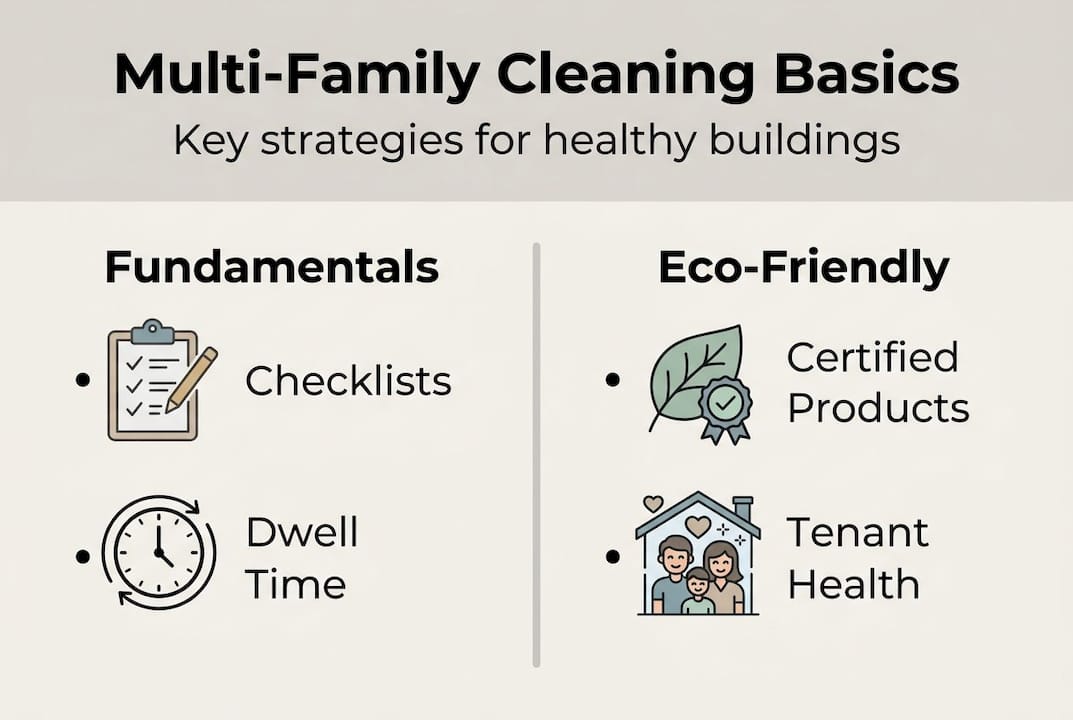
Dwell time is a term every property manager should understand. It refers to the amount of time a disinfectant must remain wet on a surface to actually kill pathogens. Most people spray and wipe immediately, which renders the product nearly useless. Proper dwell time, usually 30 seconds to 4 minutes depending on the product, is what separates a sanitized surface from one that just looks clean.
Recommended cleaning frequency by area:
| Area | Routine cleaning | Deep cleaning |
|---|---|---|
| Lobbies and entryways | Daily | Monthly |
| Elevators | Daily | Quarterly |
| Trash rooms | 3x per week | Monthly |
| Fitness centers | Daily | Quarterly |
| Stairwells | Weekly | Quarterly |
| Laundry rooms | Daily | Monthly |
Here is a numbered framework for building your cleaning program:
- Map your building by zone and traffic level before writing any schedule
- Standardize your products using EPA or Green Seal certified options for every surface type
- Train staff on dwell time and proper application techniques, not just speed
- Color-code all tools to prevent cross-contamination between zones
- Schedule deep cleans separately from routine maintenance, with documented checklists
Pro Tip: Use a digital checklist tool with photo verification. When staff can upload before-and-after photos, accountability increases and quality gaps become visible fast. Pair this with a quarterly walk-through using your eco-friendly cleaning guide as a reference for product standards.
Understanding foundational protocols makes it easier to address the challenges that come with tenant turnover and special cases.
Handling turnovers, construction, and special cleaning scenarios
Turnover cleaning is where most multifamily properties either win or lose their reputation. A unit that is not properly cleaned between tenants creates immediate problems: odors that linger, stains that set, and health risks that can lead to complaints or even legal exposure. A thorough move-out cleaning guide covers every surface, from inside appliances to window tracks, and addresses odor sources at the root rather than masking them.
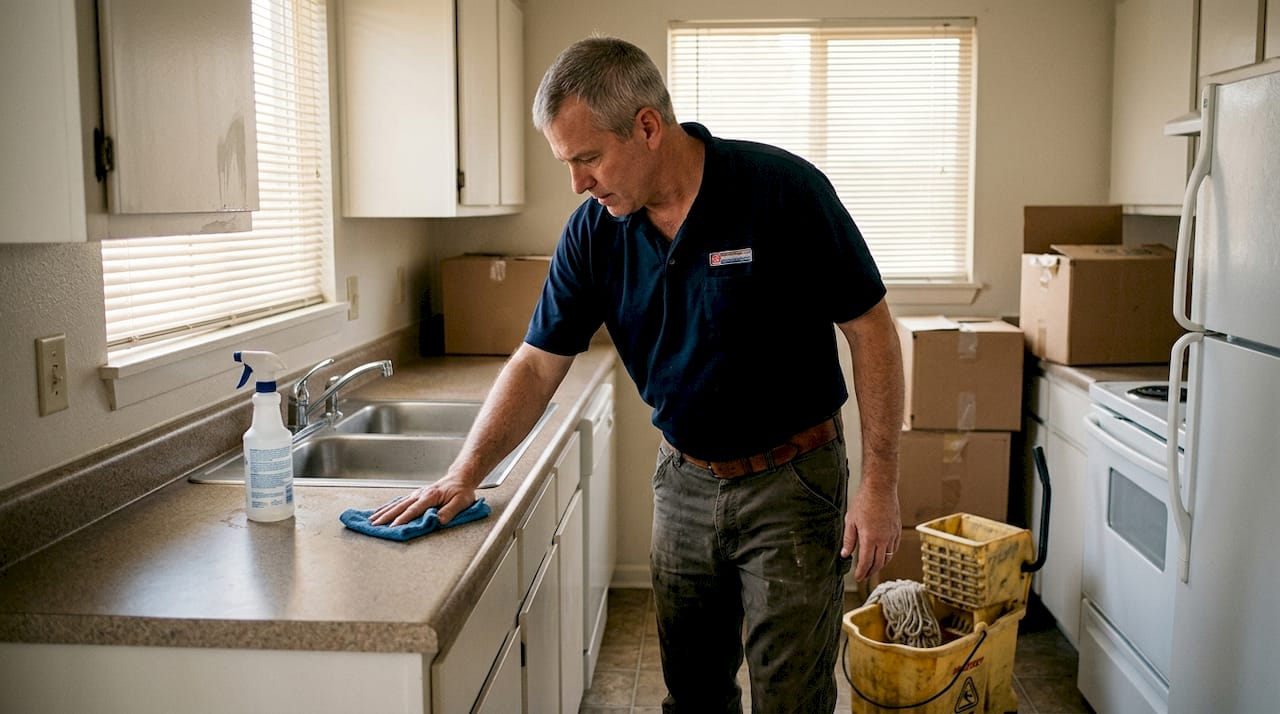
Post-construction and renovation cleanups are a different beast entirely. Fine construction dust settles into HVAC vents, light fixtures, cabinet interiors, and flooring gaps. Standard cleaning tools do not reach these areas effectively. Specialized post-construction cleaning tips include HEPA-filter vacuuming, damp-wiping all surfaces before dry cleaning, and flushing vents before the system runs. Skipping this step means tenants breathe construction particulate for weeks after move-in.
Trash rooms deserve their own strategy. Air fresheners are not a solution. They mask odor temporarily while the source continues to grow. Effective post-construction cleaning overview and trash room protocols use microbial cleaners that break down organic matter at the source, combined with ozone treatment for persistent odor problems.
Routine vs. crisis cleaning comparison:
| Scenario | Routine approach | Crisis/special approach |
|---|---|---|
| Unit turnover | Standard clean plus touch-up | Full deep clean, odor treatment, pest check |
| Trash room odor | Regular disinfection | Microbial cleaner plus ozone treatment |
| Post-renovation | Standard wipe-down | HEPA vacuuming, vent flush, multi-pass clean |
| Pest evidence | Standard clean | Targeted sanitation, professional coordination |
Key areas to address in every special scenario:
- Odor sources behind appliances, under sinks, and inside HVAC systems
- Mold-prone zones in bathrooms and laundry rooms after extended vacancy
- Fine dust in vents, fixtures, and flooring seams after construction
- Exterior surfaces including entryways and trash enclosures that need pressure washing
Pro Tip: Build a vendor shortlist before you need it. Having a pre-vetted partner for ozone treatment, pest coordination, and post-construction cleaning means you can respond fast when edge cases like trash odor or mold arise, instead of scrambling under pressure.
Now, let’s explore how eco-friendly strategies deliver maximum value to properties and tenants alike.
Eco-friendly cleaning: Health, value, and Massachusetts incentives
Green cleaning is not just a marketing angle. In a multifamily building where dozens of people share air, surfaces, and spaces, the products you use have a real impact on collective health. Conventional cleaning chemicals contain volatile organic compounds (VOCs), which are airborne irritants that can trigger asthma attacks and allergic reactions. In a building with 20 or 50 units, even one sensitive tenant can generate repeated complaints if the cleaning products are harsh.
Eco-friendly cleaning reduces health risks and appeals strongly to today’s renters. Buildings that communicate their green practices, through signage, lease materials, or community updates, see higher occupancy rates and stronger lease renewal numbers. That 70% tenant premium willingness is not theoretical. It shows up in your vacancy rate.
Massachusetts offers incentive and rebate programs for properties that adopt certified green practices. Using EPA Safer Choice or Green Seal certified products may qualify your building for state-level recognition or financial incentives under Massachusetts green building programs. It is worth checking with your local housing authority or energy office for current eligibility.
When selecting products, focus on these criteria:
- EPA Safer Choice or Green Seal certification for verified efficacy and safety
- Concentrated formulas that reduce packaging waste and per-use cost
- Fragrance-free or low-fragrance options to protect sensitive tenants
- Biodegradable ingredients that do not harm building drainage systems
“The best eco-friendly products do not ask you to choose between safety and performance. Certified options clean just as effectively as conventional products when used correctly.”
Refer to your apartment cleaning checklist to match the right certified product to each surface type in your units and common areas. Avoid products that use vague language like “natural” or “non-toxic” without third-party certification. That is greenwashing, and it can leave your building both under-cleaned and over-marketed.
What most managers miss about multi-family cleaning
After working with property managers across Massachusetts, one pattern stands out clearly. The managers who struggle most with cleaning outcomes are not the ones with the smallest budgets. They are the ones who optimize for price and speed without building any system for accountability or standards.
Choosing the cheapest cleaning vendor feels like smart cost control until you see the downstream costs. Higher turnover rates, health complaints from tenants, and negative online reviews that hurt your leasing pipeline all trace back to inconsistent cleaning. The math rarely works in your favor when you factor in what a single bad review or early lease termination actually costs.
The managers who get it right focus on three things: documented standards, regular inspections, and honest communication with their cleaning team. They walk the property weekly. They use actionable checklists rather than vague instructions. And they learn to spot faux-green products by checking for expert cleaner tips and third-party certification rather than trusting label language alone.
The uncomfortable truth is that cleaning is a systems problem, not a vendor problem. Even the best cleaning team will underperform without clear expectations, regular feedback, and a manager who shows up to verify the work.
How to ensure reliable, eco-friendly cleaning for your property
Ready to turn these insights into real-world results for your multi-family building?
Consistent property value and tenant satisfaction do not happen by accident. They are the result of proven systems, trained teams, and certified products applied on a reliable schedule. At E.C. House Cleaning, we bring over 20 years of experience serving Massachusetts properties with eco-friendly, insured cleaning services built for exactly the challenges multifamily managers face. Whether you need routine common area maintenance, turnover cleans, or post-construction recovery, we have the protocols to deliver results your tenants will notice. Explore reliable cleaning services in Massachusetts, learn what professional cleaners provide for your property type, or request a custom quote for detailed cleaning solutions tailored to your building.
Frequently asked questions
What areas in multi-family buildings are most vulnerable to germs and contamination?
High-traffic amenities and trash rooms require special disinfection, along with entryways, elevator buttons, and mail areas that multiple residents touch daily.
How often should deep cleaning be scheduled in multi-family buildings?
Deep cleaning should happen at least quarterly in common areas, plus after every turnover or renovation. Routine versus deep cleaning frequency depends on traffic volume and amenity type.
Can eco-friendly cleaning products effectively kill viruses and bacteria?
Yes. EPA or Green Seal certified products used with proper dwell time match conventional disinfectants in efficacy without the chemical exposure risks.
Are there Massachusetts-specific incentives for green cleaning in multi-family buildings?
Green buildings in Massachusetts can qualify for state incentives or rebates when adopting certified eco-friendly cleaning practices. Check with your local housing authority for current program details.
Recommended
- 7 Essential Cleaning Best Practices 2025 for Busy Clients | E.C. House Cleaning
- Essential Cleaning Supplies Checklist for Massachusetts in 2025 | E.C. House Cleaning
- Simple strategies to keep your Massachusetts home spotless | E.C. House Cleaning
- Top House Cleaner Tips for Spotless Homes and Offices | E.C. House Cleaning