
TL;DR:
- Most Massachusetts tenants risk losing their security deposit without proper documentation or understanding of legal procedures.
- A detailed move-in and move-out checklist with timestamped photos creates a legal paper trail and prevents deposit disputes.
Most renters in Massachusetts hand over their keys with no idea whether they’ll see their security deposit again. They clean what they can see, assume the landlord will be reasonable, and hope for the best. That approach costs people hundreds of dollars every year. A solid move in and move out checklist changes that entirely. It creates a paper trail, sets clear expectations, and gives you legal standing if a dispute ever ends up in court. This guide walks you through exactly what Massachusetts law requires, what to document, and how to clean so nothing falls through the cracks.
Table of Contents
- Understanding Massachusetts move-in and move-out condition requirements
- Practical move-in and move-out inspection and documentation best practices
- Comprehensive move-in and move-out cleaning checklist for Massachusetts homes
- Avoiding common move-out mistakes that cost deposits
- Why mastering move-in and move-out checklists is your best tenant and landlord strategy
- Professional move-in and move-out cleaning services in Massachusetts
- Frequently asked questions
Key Takeaways
| Point | Details |
|---|---|
| Statement of condition | A signed move-in condition statement within 10 days is legally required and protects tenants from wrongful damage charges. |
| Photo documentation | Timestamped before and after photos with scale references provide crucial evidence for deposit disputes. |
| Cleaning focus areas | Kitchens and bathrooms require the most detailed cleaning to meet inspection standards and avoid deductions. |
| Deposit return timeline | Landlords must return deposits or provide itemized deductions within 30 days after tenancy ends, conditioned on tenant giving a forwarding address. |
| Early preparation | Starting move-out preparations at least 30 days ahead reduces stress and improves chances of full deposit return. |
Understanding Massachusetts move-in and move-out condition requirements
Most people think of cleaning when they think about moving. The law thinks about paperwork first. Massachusetts has specific legal requirements that govern how security deposits are handled, and ignoring them is one of the most expensive mistakes a tenant or landlord can make.
When you move in, your landlord is legally required to give you a Statement of Condition. This document lists every existing scratch, stain, crack, and defect in the unit. Massachusetts law requires that landlords provide a signed Statement of Condition within 10 days of tenancy start, identifying all existing damages. Tenants then have 15 days to review, agree, or add their own notes. This document becomes the legal baseline for what you owe at move-out, excluding normal wear and tear, per MGL Ch. 186 §15B.
Why does this matter so much? Because without it, landlords lose significant legal ground. If a landlord never delivers the Statement of Condition, the law essentially presumes the unit was in perfect condition when you moved in. That makes deducting from your deposit extremely difficult for them to justify.
Here is what the Statement of Condition process looks like in practice:
- Landlord delivers the document within 10 days of your move-in date
- You review every room and item noted
- You add any damage the landlord missed and initial your additions
- Both parties keep signed copies
- This document anchors every damage claim made at move-out
“The Statement of Condition is not optional paperwork. It is the legal foundation of every security deposit dispute in Massachusetts. Tenants who skip reviewing it carefully are handing landlords a blank check.”
Before your first night in a new place, take the time to read a detailed house cleaning before move in guide so you know what condition to expect and what to flag immediately.
With a clearer picture of legal requirements, let’s explore practical move-in and move-out inspection and cleaning strategies.
Practical move-in and move-out inspection and documentation best practices
Knowing the law is step one. Building the evidence to enforce it is step two. This is where most tenants fall short, not because they are careless, but because no one ever told them how to document a rental properly.
Your move-in inspection should happen before a single box is unloaded. Photographing pre-existing damage in every room and for every appliance, and then documenting with the landlord’s signature, protects you from false claims later. Courts pay close attention to timestamps. A photo taken three days after you moved in carries far less weight than one taken the morning of move-in.

Timestamped before-and-after photos with a scale reference in each frame are what courts in Massachusetts favor most when reviewing dispute evidence. Use a coin or a ruler in the frame so the size of any damage is objectively clear.
Follow these steps every time you do a move-in or move-out inspection:
- Walk each room systematically, from ceiling to floor, left to right
- Photograph every wall, fixture, appliance, floor, and window
- Include a scale object in photos of any damage
- Record a walkthrough video with spoken narration describing what you see
- Label every photo by room and date immediately (not a week later)
- Email the labeled files to yourself to create a verifiable timestamp
- Present photos to the landlord and request their signature on the condition form
- Keep digital and printed copies stored separately
Pro Tip: Create a shared folder in cloud storage labeled by address and move-in date. Invite the landlord to view it. That single step communicates professionalism and makes it far harder for anyone to claim they were never informed of a condition issue.
Once you have your documentation in order, a thorough clean becomes the next priority. Review move-in cleaning essentials for a detailed breakdown of what to tackle first, and bookmark a reliable move-out cleaning checklist before you start packing.
Now that documentation strategies are clear, let’s look at comprehensive cleaning checklists essential for a successful move.
Comprehensive move-in and move-out cleaning checklist for Massachusetts homes
A move in move out checklist is not just a list of rooms. It is a system. The difference between a tenant who gets their full deposit back and one who loses $400 to a vague “cleaning fee” is usually this: did they treat cleaning as a checklist task or as a general chore?
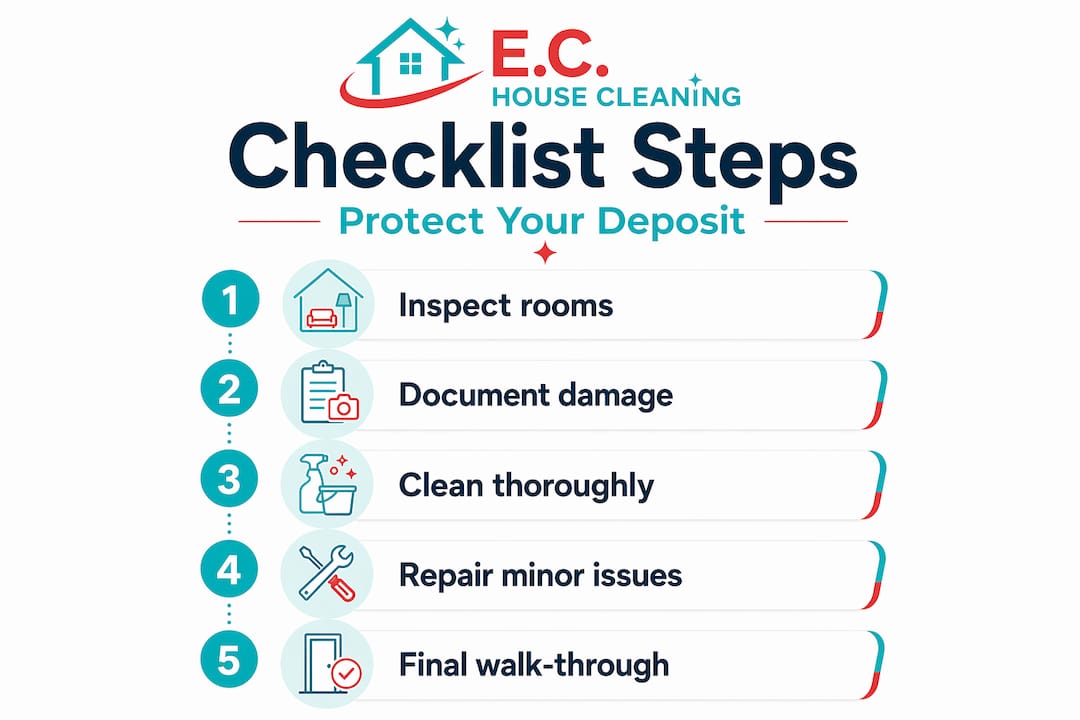
Starting move-out preparations 30 days before your move date, with decluttering, minor repairs, and deep cleaning built into that window, is the approach that gives inspectors nothing to flag. Kitchens and bathrooms are where inspectors look hardest, and they are the areas most tenants underestimate.
Here is a comparison of the most critical cleaning tasks across move-in and move-out:
| Area | Move-in cleaning focus | Move-out cleaning focus |
|---|---|---|
| Kitchen | Sanitize surfaces, check appliances | Degrease oven, wipe cabinets inside and out, clean fridge |
| Bathrooms | Disinfect toilet, sink, tub | Scrub grout, clean exhaust fan, remove soap scum |
| Bedrooms | Dust fans and vents, check closets | Patch nail holes, vacuum carpet, wipe baseboards |
| Living areas | Wipe down surfaces, check windows | Clean window sills, dust blinds, spot-clean walls |
| Utility spaces | Note condition, check for leaks | Clean washer drum, wipe dryer lint trap and surfaces |
For move-in cleaning, focus on:
- Sanitizing inside cabinets and drawers before unpacking
- Running the dishwasher and oven through a cleaning cycle
- Wiping down all vents and ceiling fan blades
- Checking under sinks for moisture or mold before storing anything
- Mopping hard floors with a disinfectant before furniture arrives
For move-out cleaning, the stakes are higher because someone is evaluating your work:
- Start with the oven. It is the single most commonly flagged item in Massachusetts apartment move-out inspections
- Clean refrigerator coils and wipe down the freezer walls
- Scrub bathroom grout and replace any caulking that has gone gray or moldy
- Repair screw holes and small wall damage with spackle before your final walkthrough
- Wash all window interiors and wipe tracks and frames
Pro Tip: Take your deep cleaning for renters seriously at least two weeks before your move date. Rushing a deep clean in the 48 hours before you hand over keys is the fastest way to miss something that costs you money.
The move-in cleaning guide from E.C. House Cleaning walks through Massachusetts-specific standards that local landlords actually check against.
With cleaning tasks understood, let’s clarify common mistakes that can jeopardize your deposit.
Avoiding common move-out mistakes that cost deposits
You can clean every surface perfectly and still lose part of your deposit if you skip certain procedural steps. These are the mistakes that hurt people even when they did everything else right.
The most overlooked one: failing to provide your forwarding address in writing. The 30-day return deadline is strict, and not providing a forwarding address in writing delays the deposit return clock entirely, potentially forfeiting your rights to timely return. Send it certified mail or email with delivery confirmation. Do not assume your landlord has it.
Other common and costly mistakes include:
- Skipping the pre-move-out inspection request. You can ask your landlord to walk the unit with you two weeks before you vacate. This gives you time to fix issues they flag, on your terms, not theirs
- Cleaning too late. A last-minute cleaning the night before move-out almost always misses spots that trained inspectors catch
- Not logging your cleaning dates. Logging cleaning tasks and dates as you go creates a documented record that carries real weight if a dispute goes to small claims court
- Leaving the Statement of Condition unread. If you never contested anything at move-in, the landlord’s version of the unit’s condition becomes the legal record
- Ignoring minor repairs. A loose towel bar, a missing door stop, or a burned-out light fixture can show up on an itemized deduction list
“Fix what you broke, document what you didn’t, and leave every forwarding address in writing. That is the whole game.”
Keep all receipts for cleaning supplies, any professional cleaning services you booked, and any materials used for minor repairs. These become supporting evidence if your landlord’s deductions seem inflated. Clean rental properties to a professional standard, and back it up with receipts and photos.
Why mastering move-in and move-out checklists is your best tenant and landlord strategy
Here is something most moving guides will not say plainly: the move in and move out checklist is not about cleaning. It is about power. Specifically, it is about who controls the narrative when two parties have conflicting memories of what a rental unit looked like.
We have seen the pattern repeat itself enough times to say this with confidence. Disputes almost never come down to whether someone cleaned well. They come down to whether anyone can prove what the unit looked like before and after. Without a properly executed Statement of Condition, landlords compromise their ability to deduct damages at move-out, and tenants who never documented anything walk into a dispute with nothing but their word.
A formal checklist paired with timestamped photos is not bureaucratic overkill. It is the difference between a two-hour dispute and a two-minute deposit return.
Landlords benefit just as much as tenants. A documented baseline means you do not have to argue about what was already scratched before a tenant moved in. Your turnover process becomes faster, your communication becomes clearer, and your tenants trust you more because the process feels fair.
The deeper insight is this: most disputes happen not because someone acted in bad faith, but because both parties filled in missing information with their own assumptions. A rigorous checklist eliminates those gaps entirely.
Treat your move-in and move-out checklist as an ongoing communication tool, not just paperwork you file and forget. Review it together. Sign it together. Update it if anything changes mid-tenancy. That approach alone would eliminate the majority of deposit disputes in Massachusetts.
Work with move in move out cleaning experts who understand what Massachusetts landlords actually look for, and your checklist becomes even more powerful.
Professional move-in and move-out cleaning services in Massachusetts
Completing a thorough move-out clean on your own is possible, but it is genuinely hard to do at professional standards while also coordinating movers, utilities, and address changes.

E.C. House Cleaning has provided move in move out cleaning in Massachusetts for over 20 years. Our team handles the areas that landlords scrutinize most: oven degreasing, bathroom grout scrubbing, cabinet interiors, exhaust fans, and floor-to-ceiling dust removal. We use eco-friendly products and work from a detailed checklist aligned with Massachusetts lease and inspection standards. Booking early within your 30-day preparation window guarantees availability and gives you enough time for a final walkthrough before you hand over keys. Whether you need deep cleaning for renters at move-out or a fresh house cleaning before move in, we will make sure the unit meets the standard your deposit deserves.
Frequently asked questions
What is the Massachusetts deadline for landlords to return a security deposit after move-out?
Landlords must return the full security deposit with interest, or provide an itemized damage statement, within 30 days of tenancy termination. Missing this deadline can expose landlords to triple damages under state law.
How can tenants protect their security deposit during move-in?
Tenants should get a signed Statement of Condition, photograph all damage with timestamps, and respond in writing to any discrepancies within the 15-day review window provided by Massachusetts law.
What are the most critical move-out cleaning areas to focus on for deposit returns?
Kitchens and bathrooms demand the deepest attention because inspectors focus most on appliances, grout, and ventilation. A missed oven clean or moldy grout line is often the first line on an itemized deduction.
Can tenants request a pre-move-out inspection in Massachusetts?
Yes. Requesting a pre-move-out inspection two weeks before vacating lets you address repair needs on your timeline, not the landlord’s, and gives you documented evidence that you acted in good faith.
What happens if a landlord fails to provide a Statement of Condition at move-in?
The law treats the unit as having been in perfect condition at move-in, which limits what a landlord can deduct at move-out. Tenants gain a strong legal presumption in their favor when this document is missing or improperly delivered.
Recommended
- Move out cleaning checklist free: Massachusetts guide 2026 | E.C. House Cleaning
- House Cleaning Before Move In: Complete Step-by-Step Guide | E.C. House Cleaning
- Deep Cleaning for Renters: Achieve Spotless Move-Out Results | E.C. House Cleaning
- Move Out Cleaning: What Massachusetts Homeowners Get | E.C. House Cleaning