Massachusetts homes face a perfect storm of cleaning challenges. Wet winters dump road salt and mud at every entrance, spring unleashes some of the highest pollen counts in the Northeast, and summer humidity creates ideal conditions for mold growth. If you’re a busy homeowner trying to stay on top of it all, the odds can feel stacked against you. The good news is that with the right tools, a realistic routine, and a clear understanding of when to call in extra help, keeping your home genuinely clean is very achievable. This article walks you through exactly what to do, how often, and how to save real time doing it.
Table of Contents
- Preparing for success: Essential tools and supplies
- Routine cleaning strategies for busy Massachusetts homeowners
- Deep cleaning: When, why, and how to tackle Massachusetts mold and allergens
- Maintaining a clean entrance: Managing Massachusetts mud, salt, and seasonal debris
- What most homeowners get wrong about keeping their Massachusetts home clean
- Ready to go further? Explore top cleaning services for Massachusetts homeowners
- Frequently asked questions
Key Takeaways
| Point | Details |
|---|---|
| Quarterly deep cleans | Scheduling deep cleans every three months reduces mold and allergens significantly in Massachusetts homes. |
| HEPA vacuum benefits | Using a HEPA vacuum is proven to deliver up to 95% more allergen removal than regular household vacuums. |
| Seasonal entrance cleaning | Regularly clearing mud and salt at entrances prevents messes and boosts indoor air quality. |
| Time-saving routines | Structured weekly routines and the right tools make maintaining a clean home far easier for busy homeowners. |
| Professional help advantage | Hiring expert cleaners is faster and more effective for deep cleaning, especially when dealing with tough Massachusetts-specific challenges. |
Preparing for success: Essential tools and supplies
Now that you understand the local challenges, it’s time to get equipped for success. The tools you choose make a bigger difference than most people realize, especially in a state where allergens, humidity, and seasonal debris are constant factors.
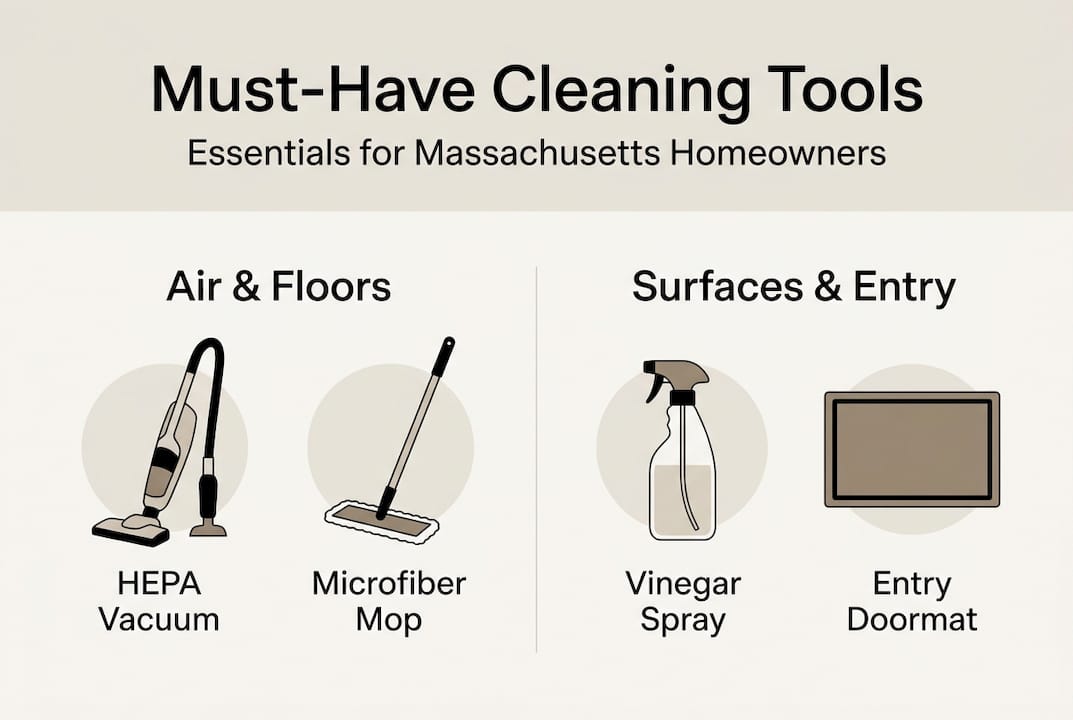
The single most important investment for a Massachusetts home is a quality HEPA vacuum. HEPA stands for High-Efficiency Particulate Air, meaning the filter traps tiny particles that regular vacuums simply blow back into the air. HEPA vacuums remove 95% more allergens than standard DIY methods, which matters a lot when spring pollen and mold spores are circulating through your rooms. Pair it with a microfiber mop and a set of color-coded microfiber cloths, and you’ve already built the foundation of an effective cleaning kit.
Beyond the vacuum, here’s what every Massachusetts home should have on hand:
- HEPA-filter vacuum for allergen and mold spore control
- Microfiber mop and cloths for streak-free surfaces without harsh chemicals
- Grout brush for bathroom and kitchen tile, where mold loves to settle
- Extendable duster for ceiling fans and high corners that collect dust year-round
- Spray bottles for homemade or eco-friendly cleaning solutions
- Boot tray and absorbent mat for the entryway during mud and salt season
- Dehumidifier for basements or rooms prone to moisture buildup
For a complete rundown of what to stock up on, the cleaning supplies checklist at E.C. House Cleaning is a practical starting point.
| Tool | Primary purpose | Frequency of use |
|---|---|---|
| HEPA vacuum | Allergen and mold control | Weekly |
| Microfiber cloths | Dusting and surface wiping | Weekly |
| Grout brush | Mold prevention in tile areas | Monthly |
| Extendable duster | High surfaces and ceiling fans | Bi-weekly |
| Dehumidifier | Moisture control in humid spaces | Seasonal |
Pro Tip: Buy two sets of microfiber cloths and label one set for bathrooms only. Cross-contamination between rooms is one of the most common ways bacteria spread during routine cleaning.
Stocking your supplies before the season changes, not during, keeps you from scrambling when mud season or allergy season hits without warning.
Routine cleaning strategies for busy Massachusetts homeowners
With the right tools at hand, let’s dive into a cleaning routine that works for busy Massachusetts households. The key is separating what needs to happen weekly from what can wait for a deeper session.
Routine cleaning covers the basics: vacuuming, wiping surfaces, cleaning bathrooms, and managing kitchen messes. Deep cleaning, which we’ll cover next, targets what routine cleaning misses, such as behind appliances, inside vents, and grout lines. Mixing the two up is one of the biggest mistakes busy homeowners make. Trying to deep clean every week burns you out, while skipping it entirely lets problems build up.
Here’s a simple weekly routine that takes under two hours for most Massachusetts homes:
- Monday: Wipe kitchen counters, stovetop, and sink. Empty trash.
- Wednesday: Vacuum all floors and rugs, paying extra attention to entryways where salt and dirt collect.
- Thursday: Clean bathrooms, including toilets, sinks, mirrors, and floors.
- Saturday: Dust all surfaces, including ceiling fans and baseboards. Mop hard floors.
- Daily: Wipe down high-touch surfaces like door handles, light switches, and countertops.
“Quarterly deep cleans are recommended in Massachusetts to combat humidity, mold, and allergens.” This is especially true during spring and fall when conditions shift dramatically.
For local adaptations, winter is your biggest test. Salt tracked in from driveways and sidewalks can damage hardwood floors if left to sit. Vacuum entryways more frequently between December and March. Spring means higher allergen loads, so bump up your vacuuming frequency and use your deep cleaning checklist to plan a thorough session in April or May.
Pro Tip: Set a 15-minute timer on weekday evenings for a quick reset. Wiping counters, putting things away, and doing a fast bathroom wipe-down keeps your home from reaching the point where cleaning feels overwhelming.
One mistake to avoid: skipping the deep cleaning essentials because the house looks clean on the surface. Dust, mold spores, and allergens hide in places you don’t see every day.
Deep cleaning: When, why, and how to tackle Massachusetts mold and allergens
Routine cleaning keeps the home comfortable, but deep cleaning is essential for long-term health and safety. In Massachusetts, the combination of humid summers, damp basements, and cold winters creates conditions where mold and allergens accumulate faster than in drier climates.
Professional services are 30% faster and 95% more effective for allergen removal compared to standard DIY methods. That’s not a small gap. It reflects the difference in equipment, technique, and product quality between a trained team and a weekend cleaning session.
Here’s a comparison to help you decide when DIY is enough and when to bring in professionals:
| Factor | DIY deep clean | Professional deep clean |
|---|---|---|
| Time required | 6 to 10 hours | 2 to 4 hours |
| Allergen removal | Standard effectiveness | 95% more effective |
| Mold detection | Surface level only | Behind walls, vents, and fixtures |
| Equipment quality | Consumer grade | Commercial HEPA and steam tools |
| Cost | Low upfront | Higher but longer-lasting results |
For a DIY deep clean, focus on these high-priority areas:
- Bathroom grout and tile where mold grows fastest in humid conditions
- Kitchen appliances including inside the oven, refrigerator coils, and dishwasher filter
- Window tracks and sills that collect condensation and mold in winter
- Air vents and returns that circulate allergens through every room
- Basement walls and floors especially if you notice any musty smell
Understanding the professional cleaning advantages helps you make a smarter decision about when to handle it yourself and when to invest in expert help. For most Massachusetts homeowners, a professional session twice a year combined with two solid DIY deep cleans covers all the bases. If you have allergy sufferers or young children at home, leaning more on deep cleaning services is worth the investment.
Maintaining a clean entrance: Managing Massachusetts mud, salt, and seasonal debris
After tackling deep cleaning inside, entrances are your first defense against dirt and allergens. Most of the grime that ends up on your floors, rugs, and furniture starts at the front door or back entry. Managing this one area well can cut your overall cleaning time significantly.
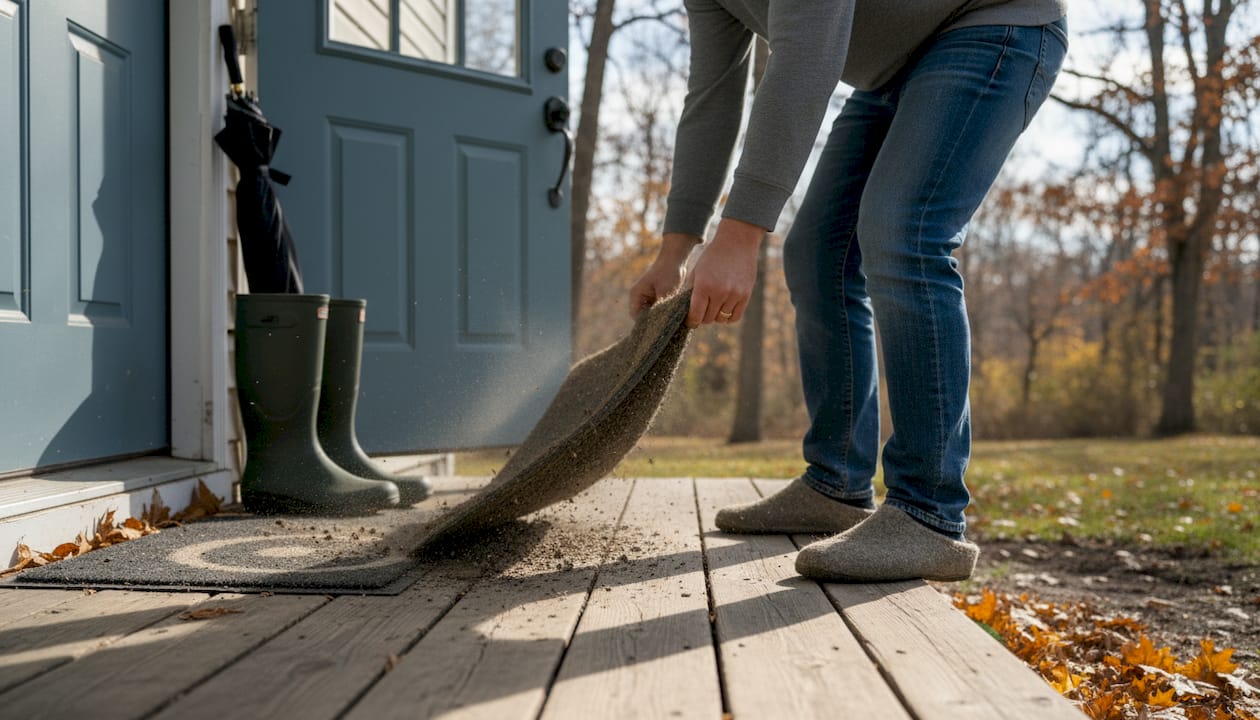
Winter road salt and mud create unique cleaning challenges at entrances in Massachusetts. Salt is especially damaging because it doesn’t just look dirty. It can corrode hardwood floors, eat into grout, and leave white residue on rugs that’s hard to remove once it sets.
Here’s how to stay ahead of entrance mess throughout the year:
- Use two mats: Place a heavy-duty scraper mat outside and an absorbent mat inside every entrance. This two-step system captures most debris before it enters the home.
- Establish a no-shoes policy: It sounds simple, but removing shoes at the door is one of the most effective ways to reduce dirt, allergens, and chemical residue tracked in from outside.
- Rinse salt immediately: During winter, use a damp mop on entryway floors at least twice a week. Salt left to dry becomes harder to remove and more damaging over time.
- Add a small bench and storage: A bench with a basket for shoes encourages the habit and keeps the area organized.
- Seasonal mat rotation: Switch to lighter, easier-to-clean mats in summer and use thicker, more absorbent options in winter and spring.
For vacation rentals or high-traffic homes, the entryway cleaning tips at E.C. House Cleaning offer a detailed approach to managing heavy use.
Pro Tip: Keep a small spray bottle with a diluted white vinegar solution near the entrance. A quick spray and wipe on hard floors after muddy days neutralizes salt residue and prevents buildup without harsh chemicals.
The most common mistake homeowners make at entrances is waiting until they can see the dirt before addressing it. By then, the damage is already happening. A two-minute daily wipe-down of your entryway floor takes almost no time and saves hours of scrubbing later.
What most homeowners get wrong about keeping their Massachusetts home clean
Even with strong routines, many homeowners still miss out on true cleanliness because of a few stubborn misconceptions. The biggest one is treating deep cleaning as a once-a-year spring ritual. In Massachusetts, that’s simply not enough. Humidity spikes in summer, allergens peak in spring and fall, and mold can establish itself in a matter of weeks under the right conditions.
The second mistake is underestimating entrances. Most people clean their living rooms and kitchens regularly but walk past a salt-crusted entryway for days without addressing it. That salt and mud doesn’t stay at the door. It gets tracked through the entire home on socks and bare feet.
The third misconception is that a clean-looking home is a clean home. Standard vacuums and surface sprays miss what matters most for air quality and health. HEPA vacuums and professional cleaners deliver measurably better results for allergen and mold control, especially in a climate like Massachusetts. If allergy symptoms persist despite regular cleaning, your tools and frequency may be the problem, not your effort. Reviewing what deep cleaning services actually cover can change your perspective on what clean really means.
Ready to go further? Explore top cleaning services for Massachusetts homeowners
If you’re ready to cut down on cleaning hassle or want expert-level results, check out these solutions tailored for Massachusetts homes.
At E.C. House Cleaning, we’ve spent over 20 years helping busy Massachusetts homeowners maintain genuinely clean, healthy homes without the stress of doing it all themselves. Whether you need a one-time deep clean before allergy season or a recurring routine that keeps things manageable week to week, we have options built around your schedule. Learn more about residential cleaner tasks to understand what a professional visit covers, explore our full range of home cleaning services, or get details on our deep cleaning services to find the right fit for your home.
Frequently asked questions
How often should I deep clean my Massachusetts home?
Quarterly deep cleans are recommended for Massachusetts homes due to the state’s humidity levels and seasonal allergen cycles. Four times a year keeps mold and allergens from building up between sessions.
Are professional cleaning services more effective than DIY in Massachusetts?
Yes. Professional services remove 95% more allergens and complete the job 30% faster than typical DIY methods, making them especially valuable for allergy-prone households.
What’s the best way to keep entrances clean during winter?
Use a two-mat system at every entrance, establish a no-shoes policy, and rinse salt residue from hard floors at least twice a week. Acting quickly prevents salt from setting and damaging your floors.
Do HEPA vacuums really help with allergens in Massachusetts homes?
HEPA vacuums remove up to 95% more allergens than standard vacuums, making them one of the most practical upgrades for any Massachusetts home dealing with seasonal pollen or mold spores.
Recommended
- Massachusetts deep cleaning checklist for homeowners 2026 | E.C. House Cleaning
- Essential Cleaning Supplies Checklist for Massachusetts in 2025 | E.C. House Cleaning
- Office cleaning best practices for Massachusetts 2026 | E.C. House Cleaning
- Decluttering Small Spaces: Smart Tips for Massachusetts in 2025 | E.C. House Cleaning